Top Secrets Why the Indian Government Appeals for a NO Gold Purchase

Abstract:Is it the effect of ongoing Israel-Iran-US conflict, the surging import of the yellow metal or any other economic indicators that the Indian Prime Minister made an appeal to the countrymen to stop buying gold for a year? Addressing the public rally, the PM also advised postponing travel, limiting the use of petrol, diesel and cooking oil, and transitioning to the work from home model as much as possible. He categorically mentioned: Save dollars, conserve India’s foreign exchange reserves. Read on!

Is it the effect of ongoing Israel-Iran-US conflict, the surging import of the yellow metal or any other economic indicators that the Indian Prime Minister made an appeal to the countrymen to stop buying gold for a year? Addressing the public rally, the PM also advised postponing travel, limiting the use of petrol, diesel and cooking oil, and transitioning to the work from home model as much as possible. He categorically mentioned: Save dollars, conserve Indias foreign exchange reserves.
The appeal assumes significance as it came during the ongoing war, which led to a spike in crude oil prices and further pressure on the rupee.
Among the announcements, avoiding gold purchase gained maximum eyeballs. Experts are analyzing what led to such an announcement and the potential outcomes should the public refrain from gold purchases for a year. In this article, we have uncovered the hidden reality that shaped the statement from the most senior statesman of India.
Where Do India‘s Forex Reserves Lie?
India’s forex reserves have slipped from $728 billion in February 2026 to approximately $690.69 billion now, according to the data released by the Reserve Bank of India (RBI). Meanwhile, the International Monetary Fund (IMF) has estimated the potential widening of Indias current account deficit (CAD) to $84.5 billion in 2026, accounting for nearly 2% of the Gross Domestic Product (GDP). A widening CAD can be interpreted as more outflow of dollars than inflow to the system.
Is the Increasing Gold Import the Reason for a No Purchase Appeal by the Government?
The widening CAD has a close linkage to the surging gold imports to India. According to market reports, Indias gold imports stood at approximately $72 billion in FY26, rising 24% from the previous year. What is driving the import surge is the fact that India is the second-largest gold buyer globally.
How Much Did Gold Account for India‘s Import Bill in FY26?
India’s total import bill stood at $775 billion in FY26, of which gold accounted for approximately 9.29%. In value terms, gold imports were $72 billion during the last financial year. Other products that contributed massively to Indias import bill were-
- Crude Oil - $134.7 billion
- Vegetable Oils - $19.5 billion
- Fertilizers - $14.5 billion
These commodities, along with gold, added over $240 billion to the countrys import bill and accounted for over 30% of the overall import.
The appeal to limit using these commodities has now found the pertinent reason.
How Much Savings India is Likely to Witness with a Potential Reduction in Gold Purchase?
According to estimates, India is likely to save around $20-25 dollars with a potential reduction in gold imports by 30-40% should the public contain purchases for a year. If the import fall remains 50%, the country will save around $36 billion, accounting for approximately 50% of the estimated CADD.
How Can India Utilize the Saved Dollars Due to Restrained Purchases?
As crude oil prices jump above $100 per barrel, those potentially saved dollars can help India, which imports 88% of its oil requirements. India can use the same to pay for essential energy imports.
How Has the Ongoing Iran-Israel-US Conflict Added to the Pressure on the Rupee?
The conflict has a telling blow to the smooth passage of oil and gas through the Strait of Hormuz, leading to a spike in oil prices worldwide and weakening the local currency, i.e., the rupee.
There is a theory with gold that people rush to purchase when uncertainties emerge due to events such as geopolitical wars. Prices rise, and so do the imports and dollar outflows. As a result, India currently sits at higher oil and gold imports. The resulting effect is the irresistible pressure on the rupee.
In such a scenario, every gold purchase means importers buying dollars from the market, leading to a spike in demand for the currency. This further results in a weak rupee.
On the other hand, a pause in gold buying would reduce the demand for the dollar, relieving the rupee of the downward pressure and causing less stress on RBI reserves.
Conclusion
India‘s appeal to temporarily reduce gold purchases appears to be rooted less in discouraging investment sentiment and more in protecting the country’s macroeconomic stability during a period of global uncertainty. With rising crude oil prices, geopolitical tensions in the Middle East, increasing pressure on the Indian rupee, and a widening current account deficit, every additional dollar spent on non-essential imports adds strain to Indias foreign exchange reserves.
Gold, despite being culturally and financially important for Indian households, has emerged as one of the largest contributors to the country‘s import bill. Since India depends heavily on imports for both oil and gold, a surge in demand for these commodities increases dollar outflows and weakens the rupee further. In such a fragile environment, the government’s call to postpone gold purchases can be viewed as an economic strategy aimed at conserving foreign exchange reserves and ensuring that essential imports such as crude oil and energy supplies remain adequately funded.
If citizens collectively reduce gold buying even temporarily, India could potentially save billions of dollars, ease pressure on the rupee, and strengthen the RBI‘s ability to manage external shocks. While the proposal may appear unusual at first glance, it reflects the government’s broader attempt to maintain economic resilience amid a volatile global landscape shaped by war, rising commodity prices, and currency pressures.
For more forex updates, visit the WikiFX app today. Download now!

More Interesting Articles for You
Review: Do Traders Lose Due to Slippage & Inappropriate Liquidation? User Reputation: A Deep Look into Real Complaints and Warning Signs


Read more

suxxessfx Review 2026: Funds Worth $5K-$42K Reportedly Lost. Check Our Investigation!
suxxessfx, a Seychelles-based brokerage entity, grabbed massive ire from traders on broker review platforms such as WikiFX, a globally recognized forex broker regulation inquiry app. Exposure reports have revealed fund losses worth over $5K-$42K on the broker’s trading platform. This suxxessfx review examines serious user allegations and its regulatory status. Read on!
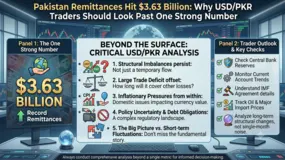
Pakistan Remittances Hit $3.63 Billion: Why USD/PKR Traders Should Look Past One Strong Number
Pakistan remittances reached $3.631 billion in July 2026, up 13% year on year and 4.5% from June, according to the latest State Bank of Pakistan data release. The SBP remittances update is a useful external-sector input, but it is not a currency forecast. This guide explains what the inflow can mean for the Pakistan forex market and USD PKR, and what it cannot prove about the next Pakistan rupee move.

Jackson Hole 2026 Preview: When Is Fed Chair Kevin Warsh Speaking and What Could Move Markets
Fed Chair Kevin Warsh is listed to deliver Jackson Hole keynote remarks on 28 August 2026. See the schedule, market scenarios and USD-gold watchlist.

Sygnum Global FCA Warning: Check sygnumglobal.co Before You Send Money
The FCA warned that Sygnum Global and sygnumglobal.co are unauthorised. Check the phone numbers, consumer protections and payment steps before dealing.
WikiFX Broker
Latest News
WikiFX Wishes You a Blessed Maulidur Rasul
WikiFXForex trading psychology: why old prices stick in your mind
WikiFXBRAC EPL Review 2026: A Major Dhaka Stockbroker with a 2.06 WikiFX Score and No Recorded Regulation
WikiFXFOMO in Forex: Why a Missed Move Feels Like a Real Loss
WikiFXRev One Trading Shuts Down as Founder Shifts Focus to Prediction Markets
WikiFXBangladesh Caps Cash Dollar at Tk126.50 to Calm Kerb Market
WikiFXHe Worked Hard and Saved Money Frugally, Now A Scammer Took It All
WikiFXHF Market Review: A CySEC Clone Warning and an Unreachable Website
WikiFXFIX API Forex in 2026: The Broker Integration Questions That Matter After the Connection is Live
WikiFXInteractive Brokers Review 2026: Regulation, Fines and Withdrawal Risks
WikiFXRate Calc

