221 Under Investigation as Scam Losses Cross RM28 Million in Two Weeks

Abstract:Singapore authorities have concluded a major anti-scam enforcement operation that resulted in 221 individuals being placed under investigation for their alleged roles in a wide range of fraudulent schemes.
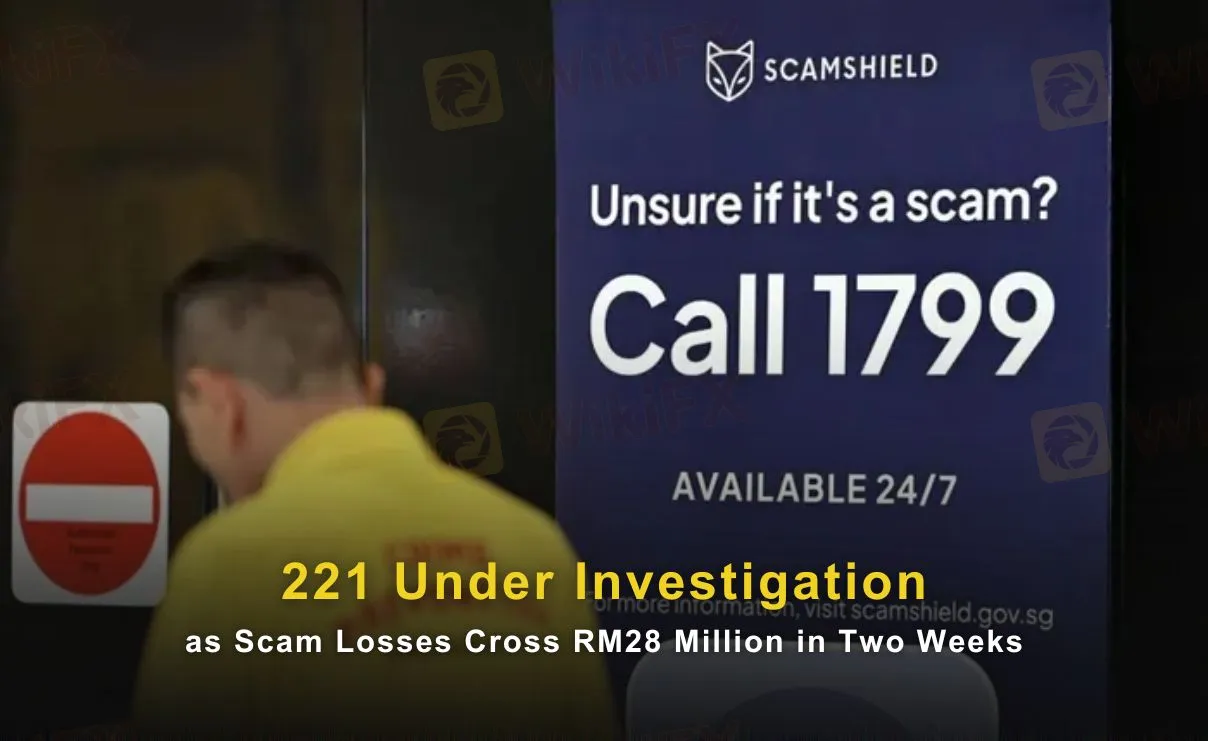
Singapore authorities have concluded a major anti-scam enforcement operation that resulted in 221 individuals being placed under investigation for their alleged roles in a wide range of fraudulent schemes. The operation ran from 21 May to 3 June 2026, and police confirmed that the suspects are linked to more than 658 reported scam cases in which victims collectively lost in excess of S$9 million (about RM28 million).
The suspects range in age from 15 to 81 years old, comprising 149 men and 72 women. They are being investigated for alleged involvement either as active scammers or as money mules, the individuals who facilitate the movement of illegal funds through their bank accounts. The offences being investigated include cheating, money laundering, and providing payment services without a valid licence.
The bulk of cases uncovered during the operation involved some of the most common forms of scam activity seen across Southeast Asia today, including e-commerce fraud, friend impersonation scams, job scams, government official impersonation, investment fraud, and rental scams. The breadth of these categories reflects how extensively scam syndicates have diversified their approaches to target="_blank" kwlink="6384064000816950219725">target different segments of the population.
Penalties for those found guilty are severe. Convictions for cheating
carry a maximum sentence of 10 years in prison and a fine. Money laundering offences can result in imprisonment of up to 10 years, a fine of up to S$500,000, or both. Individuals convicted of offering payment services without a licence face up to three years in prison and fines reaching S$125,000.
Singapore has also recently toughened its stance on scam involvement at the legislative level. Since 30 December 2025, those convicted of direct scam activity now face mandatory caning of between six and 24 strokes. Money mules who assist syndicates by laundering proceeds, supplying SIM cards, or providing Singpass credentials are subject to discretionary caning of up to 12 strokes.
Beyond criminal prosecution, individuals connected to these offences, whether under investigation, previously warned, or already convicted, may face restrictions on their banking services and mobile line subscriptions. Police reiterated that anyone with information relating to scam activity is encouraged to contact the police hotline at 1800-255-0000 or submit a tip online through the official police portal. All information submitted will be treated confidentially.

Read more

Succedo Markets Review 2026: The First Withdrawal Worked—What Happened Next?
Most traders who have opened accounts with Succedo Markets, a Saint Lucia-based brokerage entity, have reported withdrawal request denials after a pleasant first experience. Traders globally, including those from India, have made these complaints. Meanwhile, some traders have reportedly taken legal recourse to recover their stuck funds. The critical nature of these complaints made us share this in-depth Succedo Markets review. This review does not only examine user allegations but also shed light on its regulatory framework.
Tattvam Review 2026: Investigating Complaints Concerning Trade Executions
Did you encounter trade-related concerns with Tattvam, a Mauritius-based brokerage entity? Several users have reportedly accused the broker of cancelling profitable trades, allegedly citing scalping as the reason. At the same time, traders have reportedly expressed concerns over the lack of understanding among the broker officials about critical trading aspects such as copy trading. In this Tattvam review, we have carefully examined user-reported allegations. Additionally, we have given a regulatory overview of the broker.

suxxessfx Review 2026: Funds Worth $5K-$42K Reportedly Lost. Check Our Investigation!
suxxessfx, a Seychelles-based brokerage entity, grabbed massive ire from traders on broker review platforms such as WikiFX, a globally recognized forex broker regulation inquiry app. Exposure reports have revealed fund losses worth over $5K-$42K on the broker’s trading platform. This suxxessfx review examines serious user allegations and its regulatory status. Read on!
FXCM Review 2026 for India: RBI Alert, Regulation, Login and Forex Risk
Bottom line: The RBI Alert List, updated on 19 November 2025, names FXCM at row 17. RBI says listed entities are not authorised to deal in forex under FEMA or operate an authorised forex ETP in India. The FCA also lists the genuine firm Stratos Markets Limited, FRN 217689, in a warning about a separate clone. The overseas record does not create RBI authorisation.
WikiFX Broker
Latest News
Dow Jones Industrial Average round-trips a Fed that promised nothing
WikiFXJapanese Yen dips further despite hotter inflation, upbeat employment data
WikiFXOEXN Broker Review: Regulated but is it Safe for Traders?
WikiFXSilver Price Forecast: False breakout and hawkish Fed sink XAG
WikiFXMexican Peso tumbles as Warsh embarks on inflation fight
WikiFXSouth Korean Won: BoK tightening supports KRW against US Dollar – Commerzbank
WikiFXUSDCHF: Rising Channel Continuation Toward the Target Zone
WikiFXBreaking: Nonfarm Payrolls benchmark revision to lower US employment by 79,000 through March 2026
WikiFXPoland: Growth supported by investment rebound – ING
WikiFXMalaysian Ringgit: BNM seen on steady policy path – DBS
WikiFXRate Calc

