WikiFX report: CFDs: A better way to trade?
Abstract:CFDs or Contract For Differences is a widely accepted trading format amongst many traders. When investors place a trade on a CFD instrument, they enter a contract with their broker that allows them to sell it later. This form of trading benefits the trader as they can trade the markets both ways, i.e., long and short.

CFDs or Contract For Differences is a widely accepted trading format amongst many traders. When investors place a trade on a CFD instrument, they enter a contract with their broker that allows them to sell it later. This form of trading benefits the trader as they can trade the markets both ways, i.e., long and short.
The trader does not own the CFD asset but gets the profit or loss based on price movement. For example, an investor who places a short on Microsoft CFDs at 111 with 1000 shares will not own the shares. If the stock moves downward, they will gain some cash and vice versa.
CFD Trading: Some Important Features
Nigerian traders should know some important features of CFD trading to help them get an advantage in the financial industry. Our article will list all the vital benefits and demerits of CFDs to make your trading better and profitable.
Financial Instruments
CFD trading supports tons of financial instruments, including stocks, futures, forex, indices, metals, etc. Your broker may include all of them within their list of assets. This can eliminate the need to open an account with multiple exchanges.
Orders
As mentioned before, using CFDs, traders can speculate the markets on both sides. They also have access to multiple orders, including stop, limit, GTC, etc.
Using leverage
Leverage is one of the hot topics amongst many. A good margin on the account can help open positions with big lot sizes. While this helps get good profits, it can also put severe risk on balance. Brokers can provide as much as 1:3000 leverage on one account.
To understand the risk of leverage, let us consider a trader who trades with small equity of $100. With 1:3000 leverage, they can open trades with three lots on some currency pairs. If the market goes against the investor, they can suffer a margin call within 3.3 pips.
Availability of different portfolio
Brokers are now able to provide various account types in addition to the previous standard portfolio. ECN, Micro, fixed spread, etc., are a few examples. Each of these has its benefits. ECNs are beneficial for scalpers, while micro help in keeping the risk low while enjoying live conditions. Fixed spread accounts are helpful for those looking to trade news or overnight.
Regulation
Regulation in the financial markets ensures that no one is getting cheated by their exchange. Regulators impose heavy fines if the trader proves that the broker is not willing to quote the rates properly and is using stop hunting. A name of few suitable regulators are:
National Futures Association NFA and Commodity Futures Trading Commission CFTC in The United States
Financial Conduct Authority FCA and Prudential Regulation Authority PRA in The United Kingdom
Australian Securities and Investment Commission ASIC in Australia
Cyprus Securities and Exchange CommissionCySEC in Cyprus
Volume
Some traders may complain about the unavailability of enough volume. Liquidity helps get in and out of trades quickly and low slippage. The concept of volume is linked with your broker and exchange. A good brokerage will connect itself to multiple liquidity providers and banks for providing the best fills.
Capital
With multiple account options, traders also have a wide choice in the minimum deposit required for trading. Some brokers can allow traders to start with as low as $1 on cent accounts. ECN portfolios may have a higher requirement as they offer better conditions.
With CFD trading offering many benefits, traders should not forget the importance of maintaining risk through proper money management. Over leveraging and use of emotions can be detrimental to your trading.

Read more
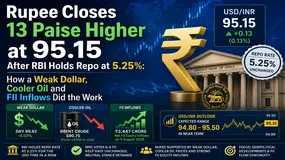
Rupee Ends 13 Paise Up at 95.15 After RBI Holds Repo at 5.25%: The Effect of a Weak USD, Cooler Oil
The Indian rupee settled at 95.15 against the US dollar on 5 August 2026, gaining 13 paise after the Reserve Bank of India's Monetary Policy Committee voted 6-0 to keep the repo rate unchanged at 5.25 percent for the third time in a row in FY27. The rupee had opened 46 paise higher, rallied to an intraday strongest of 94.89 ahead of the policy decision, and then drifted back as RBI Governor Sanjay Malhotra noted that the currency 'has not appreciated as intended despite the high flows from foreign shores.' A weak dollar index, a sharp pullback in Brent crude from above USD 100 in July, and net FII equity inflows of Rs 2,447 crore on Tuesday combined to support the rupee. USD-INR is expected to trade in a 94.80-95.50 band in the near term.

Errante Review 2026: Users Claim a Poor Trading Experience. What Does Our Investigation Reveal?
Errante, a Seychelles-based brokerage entity, is facing serious trading allegations from users globally. Users claim to have earned profits legitimately using their strategies. However, on the Errante login dashboard, many users reported an automatic deduction of earned profits. At the same time, withdrawal issues allegedly haunt many traders here. While investigating, we also found complaints concerning trade order manipulations by the broker. In this Errante review, we have examined these allegations and given an overview of its regulatory status.
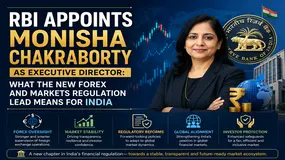
Monisha Chakraborty Appointed as RB Executive Director: What Does This Mean for India's FX Market?
The Reserve Bank of India has appointed Monisha Chakraborty as Executive Director with effect from 3 August 2026; she will oversee the Foreign Exchange Department and the Financial Markets Regulation Department. Chakraborty is a career central banker with over three decades of experience in Supervision, Foreign Exchange, and Government and Bank Accounts, and previously served as Banking Ombudsman. This report explains the significance of the new RBI Executive Director appointment for forex regulation India, the scope of the Foreign Exchange Department and the Financial Markets Regulation Department, and what authorised persons, banks, and forex market participants should monitor as the new ED takes charge.
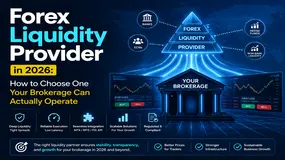
Forex Liquidity Provider in 2026: How to Choose One Your Brokerage Can Actually Operate
A forex liquidity provider decision now shapes the broker's spreads, fills, slippage, hedging cost, regulatory exposure, and exit options long after the platform is chosen. This 2026 guide explains what a forex LP actually delivers versus what the marketing claim says, how tier-1 banks, prime of prime, and multi-LP aggregators differ in practice, and how execution models (DMA, ECN, STP) change the broker's daily operating reality. It also walks through due diligence on credit, technology, reporting, governance, and exit, and shows how a 2026 broker can combine a primary LP with secondary routing without losing control of the client experience. Use the decision matrix, integration timeline, and operational tests to compare an fx liquidity provider before contract signature, not after a market event.
WikiFX Broker
Latest News
Moneycorp Review: Is This Broker’s License Really Telling the Truth?
 WikiFX
BYBIT Review: Unregulated Broker Warning After Withdrawal Complaints and Forex Profit Disputes
WikiFXONE ROYAL Faces SCM Malaysia Warning , What Traders Should Verify Before Funding an Account
WikiFXiFX Brokers Review: Is Your Deposit Safe?
WikiFXASIC Crackdown Hits 5-Year High: 150 Rogue Operators Banned
WikiFXFINEX Review: Regulated Broker, But One Trader’s Margin Call Complaint Raises Alarm
WikiFXReview 2026: octa Regulation Warnings, Withdrawal Complaints, and Platform Risks
WikiFXWeTrade Broker: Regulated but Is It Really Safe for Traders?
WikiFXHow Public Holidays and Market Hours Shape Forex Liquidity
WikiFXWhy Are African Currency Spreads So Wide?
WikiFXRate Calc

