How to Identify REAL and FAKE Brokers With The Same Name
Abstract:As you all know that there are many brokers with the same name or we can say there are many companies that are copying some real brokers name and be cheating traders.
Before you invest your money in any broker try to find out the real name of that broker so that you will not loose your money, that why WikiFX want help you and show you how you can identify the real brokers and fake brokers that are having the same name in WikiFX Application or website.
After you download WikiFX, you should sign up with your phone number or email address and make sure you verify both of them so that you can be allowed to use any feature of the WikiFX app / website.
Steps to find the difference between fake and real broker that has same name the difference are as follows
1 The real brokers will have most higher scores
2 They will have regulatory license and certificates
3 There website address is real and it can be visited with higher security
To search and identify for a real broker
Click on search bottom with the broker name that you want identify you will see them so make sure you click on top one you will see it has the most higher score and the logo is differ different from the fake broker.
After it's open, click on the scores so that you can see the full information and scores of such brokers spend some little time and get more information about it so that you will know the exact broker you are investing your money.
Always open WikiFX website or Application to know more about thousands information of forex brokers.
Related broker


Read more
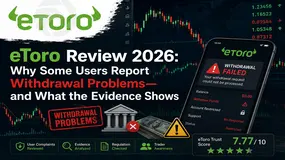
eToro Review 2026: Why Some Users Report Withdrawal Problems - and What the Evidence Shows
eToro, a United Kingdom-based brokerage entity, is facing serious user allegations concerning the basic facility a trader expects - Fund Withdrawal. Users worldwide are complaining about the lack of a withdrawal option, account restriction, and lack of customer support in real time. Many of their complaints appeared on credible broker review platforms such as WikiFX. In this eToro review, we have examined these complaints.
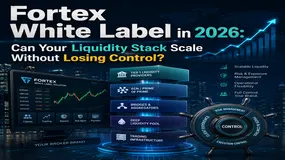
Fortex White Label in 2026: Can Your Liquidity Stack Scale Without Losing Control?
A Fortex white label can look like the fastest route to a modern branded trading environment, but a fast launch is not the same as a controlled launch. This 2026 broker guide explains what the Fortex platform is, where a Fortex broker solution can sit in a wider operating stack, and how to evaluate the difference between a white label, a server licence, and a connected CRM or Client Office setup. It also unpacks Fortex cost beyond the monthly headline, including implementation, integration, support, data, governance, migration, and exit assumptions. Use the practical questions, workflow tests, comparison table, and launch checklist to assess a Fortex provider without mistaking a feature demo for evidence that your brokerage can run the service safely at scale.
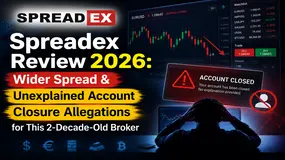
Spreadex Review: Wider Spread & Unexplained Account Closure Allegations for This 2-Decade-Old Broker
Did you incur trading losses on the Spreadex platform due to wider spreads? Have you experienced delays in trade processing by the United Kingdom-based forex broker? Has your Spreadex trading account been closed without any explanation? You are not alone! Many traders have expressed concerns on online broker review platforms. In this Spreadex review 2026, we have covered user allegations and provided a regulatory framework the broker operates under.
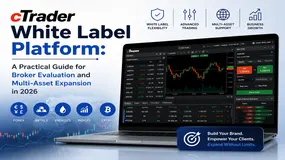
cTrader White Label Platform: A Practical Guide for Broker Evaluation and Multi-Asset Expansion in 2
A broker can launch a white-label platform quickly and still fail the first serious operating test. The failure often begins quietly: an assets expansion has been approved, the client app is branded, and a new account journey looks complete. Then a client asks why a trade-related status, funding hand-off, or account restriction looks different across channels. Support cannot see the same reference trail as operations. The product owns the screen, but no one owns the explanation. The issue is not a missing feature. It is an untested operating model. That is why a cTrader white label platform should be evaluated as a route to a multi-asset service - not as a shortcut to a more attractive terminal. The central question is whether the broker can add instruments, client channels, integrations, and service capacity without making its controls harder to operate or explain.
WikiFX Broker
Latest News
OANDA Broker: Regulated but Is It Really Safe for Traders?
 WikiFX
Yen Surges on Joint Intervention
WikiFXVonway Review: Users Report Withdrawal Blocks and Account Freezes , What Traders Should Know
WikiFXMangaluru Woman, 61, Loses Rs 16.2 Lakh in Facebook Scheme
WikiFXATFX Trading Volumes Drop 29% After Record Q1
WikiFXAI GOLD Review: Is Your Deposit Safe?
WikiFXFD Review: What Traders Should Know Before Depositing
WikiFXWhy a 90% Win Rate Can Still Lose You Money
WikiFXRazor Markets Review: What Traders Should Know Before Depositing
WikiFXMASTER MIND CAPITALS Review: Withdrawal Complaints Pile Up Against This Unregulated Broker
WikiFXRate Calc

