WIKIFX REPORT: VNDirect expects profits to hit nearly $70 million in first half of 2022
Abstract:In the first six months of 2022, VNDirect Securities Corporation's (HoSE: VND) profit before tax is estimated to reach about VNĐ1.62 trillion (US$69.7 million), an increase of 43 per cent year-on-year, said Nguyễn Vũ Long, Acting General Director of VNDirect.
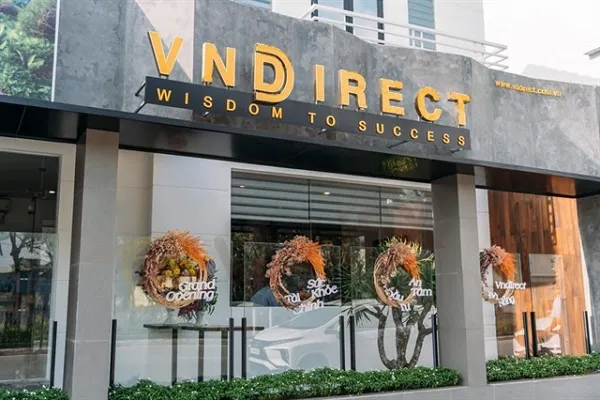
In the first six months of 2022, VNDirect Securities Corporation's (HoSE: VND) profit before tax is estimated to reach about VNĐ1.62 trillion (US$69.7 million), an increase of 43 per cent year-on-year, said Nguyễn Vũ Long, Acting General Director of VNDirect.
The result is expected to complete approximately 45 per cent of the business plan in 2022 that was approved by the General Meeting of Shareholders.
VNDirect keeps its parent companys profit plan unchanged despite recent unfavourable conditions on the market.
Accordingly, the General Meeting of Shareholders has approved the parent companys profit after tax of over VNĐ3.6 trillion, up 32 per cent over last year.
Although the target is quite challenging, the securities firm will strive to achieve it in the second half of 2022.
According to the Acting General Director, the company completed the capital raising in April, increasing equity to over VNĐ14 trillion and is one of the securities companies with the largest capital scale in the market.
It continues to diversify mobilised capital sources by continuing to make more syndicated loans in the foreign market with a value of up to $300 million. The loans are expected to be implemented in the third and fourth quarters of 2022.
The large capital helps VNDirect continue to expand its business capacity for activities in the capital market, such as consulting services and securities underwriting.
The stock market is facing risks due to macro factors caused by geopolitical conflicts, trade war-related conflicts, disruptions of global supply chains and rising inflation in many economies.
However, in the long term, in the general picture of the whole market, Việt Nam is still a bright spot with a stable macro foundation and strong economic growth prospects in the next cycle.
On Tuesday, VND shares rose 0.95 per cent to VNĐ15,900 per share. The gain ended its long losing streak of seven sessions, with four trades hitting floor prices.

Read more
Errante Review 2026: Users Claim a Poor Trading Experience. What Does Our Investigation Reveal?
Errante, a Seychelles-based brokerage entity, is facing serious trading allegations from users globally. Users claim to have earned profits legitimately using their strategies. However, on the Errante login dashboard, many users reported an automatic deduction of earned profits. At the same time, withdrawal issues allegedly haunt many traders here. While investigating, we also found complaints concerning trade order manipulations by the broker. In this Errante review, we have examined these allegations and given an overview of its regulatory status.
Monisha Chakraborty Appointed as RB Executive Director: What Does This Mean for India's FX Market?
The Reserve Bank of India has appointed Monisha Chakraborty as Executive Director with effect from 3 August 2026; she will oversee the Foreign Exchange Department and the Financial Markets Regulation Department. Chakraborty is a career central banker with over three decades of experience in Supervision, Foreign Exchange, and Government and Bank Accounts, and previously served as Banking Ombudsman. This report explains the significance of the new RBI Executive Director appointment for forex regulation India, the scope of the Foreign Exchange Department and the Financial Markets Regulation Department, and what authorised persons, banks, and forex market participants should monitor as the new ED takes charge.
Forex Liquidity Provider in 2026: How to Choose One Your Brokerage Can Actually Operate
A forex liquidity provider decision now shapes the broker's spreads, fills, slippage, hedging cost, regulatory exposure, and exit options long after the platform is chosen. This 2026 guide explains what a forex LP actually delivers versus what the marketing claim says, how tier-1 banks, prime of prime, and multi-LP aggregators differ in practice, and how execution models (DMA, ECN, STP) change the broker's daily operating reality. It also walks through due diligence on credit, technology, reporting, governance, and exit, and shows how a 2026 broker can combine a primary LP with secondary routing without losing control of the client experience. Use the decision matrix, integration timeline, and operational tests to compare an fx liquidity provider before contract signature, not after a market event.
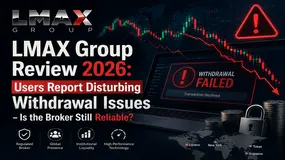
LMAX Group Review 2026: Users Report Disturbing Withdrawal Issues - Is the Broker Still Reliable?
Did LMAX Group deny you withdrawals citing frozen funds at the wallet service provider’s end? Have you been so exhausted by the endless withdrawal hassles that you have begun to stop investing in the platform? Has this UK-based liquidity provider even questioned your fund ownership status when you requested withdrawals? You are not alone! Many users have complained about these issues while sharing their LMAX Group reviews.
WikiFX Broker
Latest News
LQH MARKETS Review: Multiple Traders Report Withdrawals Blocked and Accounts Terminated
 WikiFX
Spread Cheating: The Invisible Trading Cost That Could Be Working Against You
WikiFX"They Want to See Your Face": Inside ATFX Cambodia's Rise
WikiFX57 Booked in Pune Forex Scam Probe: The Fake Trading App Checklist Every Indian Investor Needs
WikiFXAccused of a RM123 Million Crypto Scam, He Fled to Malaysia and Claimed He Was Robbed
WikiFXAfrica's 10 Strongest Currencies in July 2026: Naira Absent
WikiFXU.S. and Japan Stand Ready for Further Coordinated Yen Intervention, Treasury Warns
WikiFXMarket, Limit, and Stop Orders in Forex Explained Simply
WikiFXSri Lanka Rupee Slides 7.9% in H1 2026 as Bank Steps In
WikiFXHF Market Review – A 1.76 Score, an Unverified CYSEC Licence, and a Frozen Account
WikiFXRate Calc

