GBP vs GDP: UK Q3 growth revised lower - how long can sterling rally last?
Abstract:The gap between financial markets’ expectations for future inflation and interest rates and the OBR vary a lot. What does the pound make of the UK outlook?

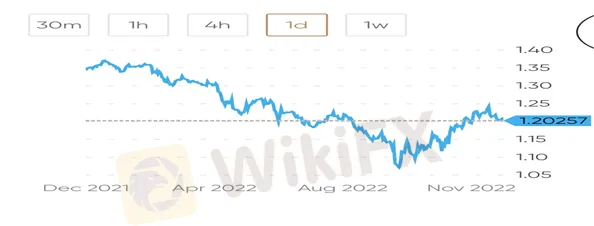
The gap between financial markets expectations for future inflation and interest rates and the OBR vary a lot. What does the pound make of the UK outlook?
The sheens off UK GDP again: output slipped 0.3% over the second and third quarter, not 0.2% as originally thought, helping knock GBP/USD to 1.2091 mid-morning from 1.2141.
The dismaying Office of National Statistics stats are even more unflattering when pinned against pre-Covid numbers. For example, UK GDP for Q3 is 0.8% below that of the last 2019 quarter. A previous estimate suggested 0.4% – some tumble.
Poundland: recession is coming but sterling is looking resilient – for now
Poorer living standards are central to GDP numbers and the UK electorate is definitely looking stretched: real disposable income slumped 0.5% between the second and third quarters as wages trailed cost of living pressures.
Living standards prepare to plunge again
While that figure might look modest the Office for Budget Responsibility reckons surging prices will see UK living standards, overall, see the biggest hit for six decades, down 7% for the two financial years 2023-2024. Check out the OBR numbers. Tellingly this is more than enough to wipe out the previous eight years growth despite over £100 billion of additional government support, admits the OBR.
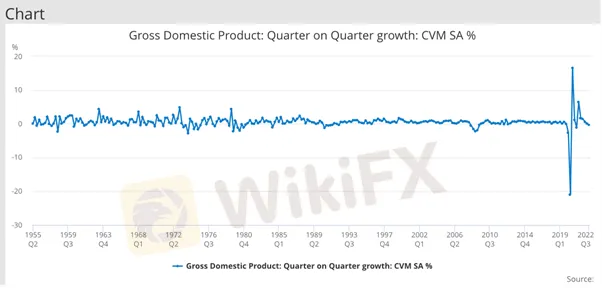
Does this mean full-on recession misery, not a milder less infectious variant? Quite possibly. Capital Economics is bearish on UK assets and warns sterlings recent rally looks date and time-stamped.
Running on reserve
While a weaker pound “may provide some support for UK equity prices, we doubt that will be enough to offset a decline in investors appetite for risk in the near-term”, says the UK economics team at Capital Economics.
The market watchers think the FTSE 100 could fall from around 7,400 currently “to a trough of around 6,800 by the middle of 2023, before rebounding as the markets see the end of the global recession approaching”.
FX strategist and finance consultant at Keirstone, Francis Fabrizi
Fabrizi
• GBP/USD has been bearish since failing to push beyond 1.2500 last week says Fabrizi. “Price is now attempting to break below the 1.2050 support level.”
• “If we see a break and hold below this level, 1.2000 will be the next target. However, we could see price rebound from 1.2050 which could push it back towards 1.2200.”
• “Looking at the weekly timeframe, I believe it is possible price will continue to gain bearish momentum and fall lower towards 1.1900 in the coming days. In my opinion, price has confirmed it will remain bearish as it remains below1.2500.”
UK recession claims are hardly news; the direction of travel has been clear for some time. What todays GDP update does is supply more texture, such as business investment, which slumped even more than thought, now a huge 8.1% below pre-Covid levels.
“Investment,” says Danni Hewson of AJ Bell, “is the fuel that helps stoke the embers of a cooling economy and with the UK now at the bottom of the table of G7 countries when it comes to growth, its clear more needs to be done.”
2023-2024 – rate cuts deeper, faster?
• While the Bank of England may hike rates from 3.50% to a peak of 4.50% – very possibly – the recent gilt yield rise looks less sustainable.
• “We think gilt yields,” says Capital Economics, “may fall from 3.60% currently to 2.75% by the end of 2023 as a weaker economy and falling inflation will likely push the Bank to cut interest rates further and faster than investors expect in 2024.” [12 months ago UK 10-year gilts were paying around 0.70%.]
• They also think sterlings recent rally is set to reverse “as the global recession will probably strengthen the US dollar and weaken the pound.”
Mid-morning DXY was 0.05% lower at 103.83 while EUR/USD was 0.16% up at 1.0630; GBP/USD was 0.33% down at 1.2050 while USD/JPY was 0.24% lower at 132.11.


Read more

Is TradingPRO Safe? FCA Warning, Indonesia Blocklist Evidence, and 7 Checks Before You Deposit
This Trading Pro broker review checks the FCA warning, Indonesia blocklist evidence, licence claims, and what South Asian users should verify before depositing.

Best White Label Trading Platform 2026
The decision to switch white label providers or migrate to a modern white label trading platform is no longer a luxury for growth-minded brokers—it's a strategic necessity for survival in 2026. The convergence of technological stagnation, regulatory evolution, and shifting client expectations has created a perfect storm.
ABET Review 2026: Users Allege Missing Funds and Trade Manipulation - Our Investigation
ABET, a Bulgaria-based brokerage firm, faces severe allegations from users for the reportedly inefficient way it handles their funds. While some alleged illegitimate account blocks by the broker, others reported fund scams and trade manipulations. These ABET reviews have raised question marks over the broker’s legitimacy.

22K Trader Review 2026: Ongoing User Allegations Raise Fresh Questions About Trust
22K Trader, a United Kingdom-based brokerage entity, is facing severe fund scam allegations from Indian users, in particular. One user reported losing as high as $26,500 on the platform. Similarly, other users have claimed different loss amounts while also criticizing the forced trade execution by the broker. In this 22K Trader review, we have examined several user allegations and provided the regulatory framework the broker operates under.
WikiFX Broker
Latest News
Alpari Review 2026: Official Warnings and High Complaint Patterns
 WikiFX
M4Markets Broker Review: Regulation, Licenses and WikiScore Analysis
WikiFXTHINK MARKETS Broker Might Not Want You To See This
WikiFXFBS Review: Is Your Deposit Safe?
WikiFXPocket Broker Review: Can You Actually Withdraw Your Money?
WikiFXThe broker test: What black swans teach about real risk control
WikiFXHow to Lock In Profits and Create a Zero-Risk Trade
WikiFXIG Review: Broker Complaints Collide With Mixed Regulation Signals
WikiFXHow to Spot Your First Trial Short on H1 After a Break
WikiFXSTARTRADER Adds SK Hynix CFD Days After $26.5B US Listing
WikiFXRate Calc

