Leverate Losses ICF Membership & CIF Authorization
Abstract:CySEC recently addressed the termination of Leverate Financial Services Ltd.'s membership in the Investors Compensation Fund (ICF), clarifying that clients remain eligible for compensation despite the loss of membership, while highlighting broader regulatory actions and enforcement measures undertaken by the commission.
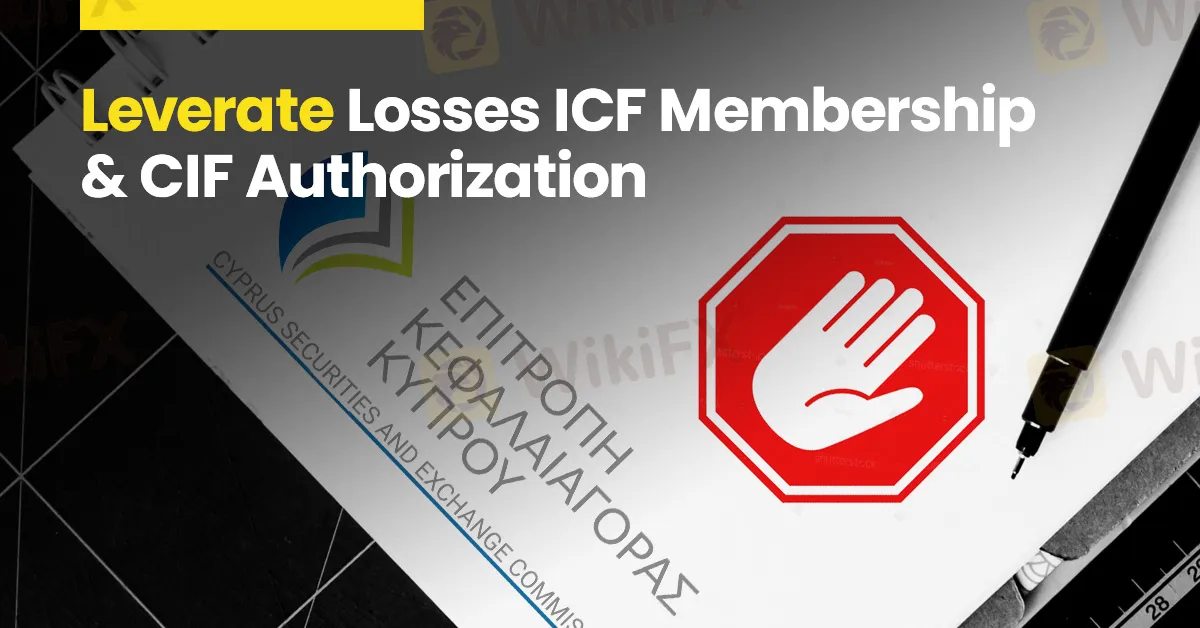
Cyprus Securities and Exchange Commission (CySEC) recently addressed the Investors Compensation Fund (ICF) and the termination of membership status for Leverate Financial Services Ltd.
According to CySEC, Leverate Financial Services Ltd.'s loss of ICF membership doesn't mean clients covered under the fund lose their right to compensation for previous investment activities. The criteria for compensation as per the Directive remain intact.
The decision to withdraw ICF membership followed CySEC's move to revoke Leverate Financial Services Ltd.'s authorization as a Cyprus Investment Firm. Leverate Financial Services Ltd. voluntarily relinquished its authorization, leading to CySEC's withdrawal of CIF authorization on December 4, 2023. This action barred the company from operating under CySEC's supervision, with no mention of a judicial review, implying finality pending legal developments.
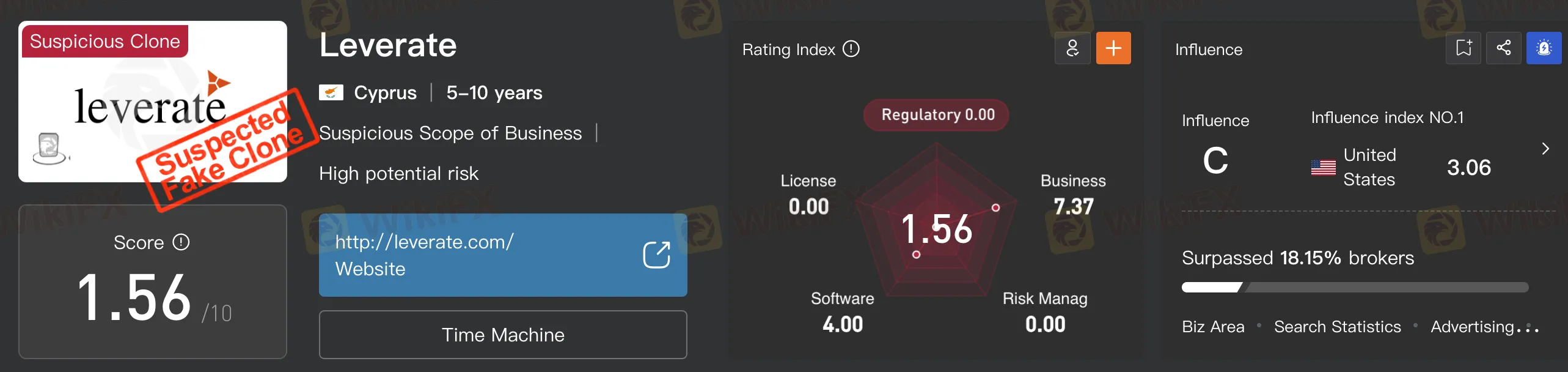
View WikiFXs evaluation on Leverate here: https://www.wikifx.com/en/dealer/9351661905.html
In 2023, CySEC conducted over 700 inspections, both on-site and remote, on supervised entities, imposing fines exceeding $2.2 million to ensure regulatory compliance and protect investors. Thematic audits focused on entities affected by Russia-Ukraine sanctions, examining their business relationships and probing forced transfers of Russian securities.
The Market Surveillance and Investigations Department completed 42 investigations, with one case referred to the Attorney General for possible criminal prosecution, while ongoing inquiries totalled 48 by year-end. CySEC imposed administrative penalties totalling approximately €2.2 million, with one investment firm facing a penalty of €1 million.
Over three years, sanctions totalling €6 million have been imposed, primarily against investment firms for regulatory breaches. In comparison, the UK's Financial Conduct Authority revoked licenses for 1,266 unauthorized firms and issued record fines of £52,802,900, while U.S. regulators collectively imposed fines exceeding $9 billion. CySEC also directed entities to rectify issues in 103 cases, with 35 entities required to comply with anti-money laundering and counter-terrorist financing laws.
Moreover, CySEC revoked or suspended licenses for 19 investment firms and two collective investment undertakings. In an exclusive interview, George Theocharides, CySEC's Chairman, emphasized cryptocurrencies and artificial intelligence as key regulatory concerns, foreseeing their transformative impact on the financial sector.


Read more
FINEX Review: A+++ Rating Does Not Remove Risks - How to Read Spread, Withdrawals & Other Aspects
FINEX review 2026 for readers comparing an Indonesia forex broker: understand what Bappebti's A+++ rating does and does not show, then check floating spreads, withdrawals, segregated accounts and the complaint route for PT Finex Bisnis Solusi Futures.
Tier 1 Liquidity Forex in 2026: What Institutional Really Means for a Broker
Choosing a tier 1 liquidity forex is not a search for the lowest displayed spread or the longest provider list. It is a broker decision about pricing integrity, depth, routing, credit, reporting, incident response, and client communication. This 2026 guide explains how an institutional liquidity provider, bank liquidity forex, or interbank liquidity provider arrangement fits into a broker’s execution chain; what to test before onboarding; why a “best tier 1 liquidity forex” claim cannot replace due diligence; and how to compare cost beyond commission. Use the execution-quality scorecard, provider questions, routing scenarios, and 90-day onboarding plan to assess whether a liquidity relationship can support your actual client mix, instruments, risk model, and jurisdiction. The goal is not to make a universal ranking. It is to build evidence that your broker can explain, supervise, reconcile, and recover its execution service when market conditions are difficult.
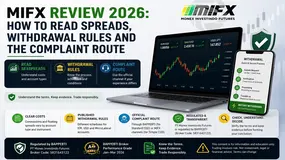
MIFX Review 2026: How to Read Spreads, Withdrawal Rules and the Complaint Route
MIFX review 2026: understand published commissions and spreads, the withdrawal process, Instant Withdrawal conditions, and the PT Monex Investindo Futures complaint route without turning community discussion into factual allegations.
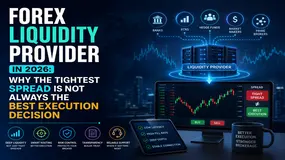
Forex Liquidity Provider in 2026: Why the Tightest Spread is Not Always the Best Execution Decision
Choosing a forex liquidity provider is not a search for the lowest displayed spread or the longest provider list. It is a broker decision about pricing integrity, depth, routing, credit, reporting, incident response, and client communication. This 2026 guide explains how a forex LP, FX liquidity provider, or liquidity provider forex arrangement fits into a broker’s execution chain; what to test before onboarding; why a “best forex liquidity provider” claim cannot replace due diligence; and how to compare cost beyond commission. Use the execution-quality scorecard, provider questions, routing scenarios, and 90-day onboarding plan to assess whether a liquidity relationship can support your actual client mix, instruments, risk model, and jurisdiction. The goal is not to make a universal ranking. It is to build evidence that your broker can explain, supervise, reconcile, and recover its execution service when market conditions are difficult.
WikiFX Broker
Latest News
Malaysian Doctor Loses RM558,000 to Forex-Crypto Scam
 WikiFX
AI Is Now Building the Scam That Steals Your Savings
WikiFXRate Calc

