Swissquote Faces Regulator Scrutiny Over Cybercrime Threats
Abstract:Swiss regulator Finma has urged Swissquote to tighten cybersecurity after a surge in fraud and impersonation attacks.
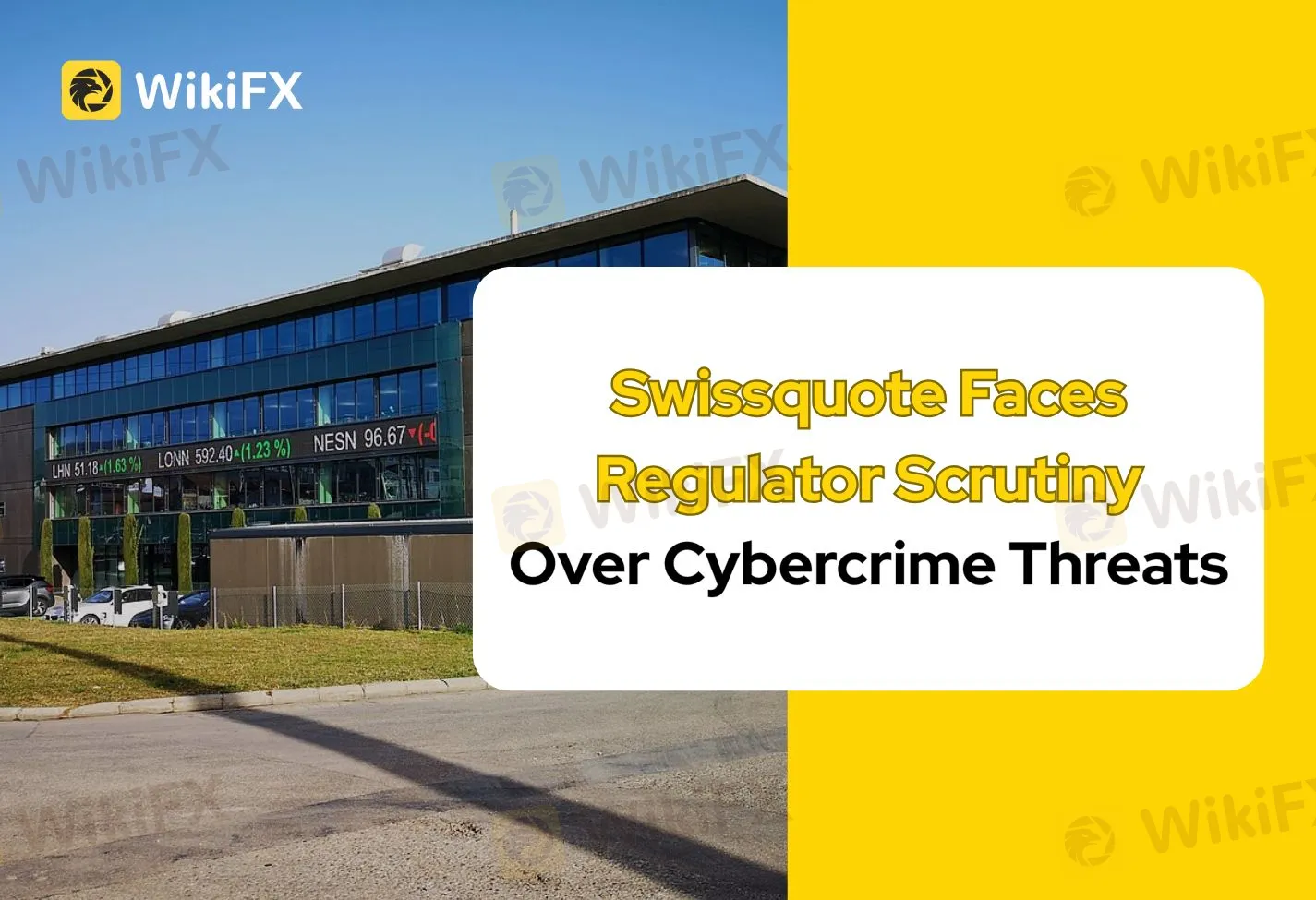
Swiss financial regulator Finma has urged Swissquote, the country‘s leading online broker, to strengthen its systems against rising cyber threats and fraudulent activity. The warning was included in the regulator’s latest oversight communication, which cited a concerning increase in impersonation scams, phishing attacks, and data breaches targeting financial platforms.
Finma Pushes for Tighter Oversight
Finma reportedly directed Swissquote to reduce the volume of cases it refers to Switzerland‘s money laundering reporting office, suggesting the platform improve internal controls and early detection mechanisms. The regulator paid special attention to the firm’s mobile banking app Yuh, jointly operated with PostFinance AG.
According to Swissquote CEO Marc Buerki, the rise of artificial intelligence tools has contributed to a surge in fraud attempts. “The amount of attacks and fraud attempts on our systems has particularly increased with the rise of AI,” Buerki told Bloomberg. “We had to take action against more than 600 websites impersonating Swissquote or using fake login pages so far in 2025.”
Many of these fraudulent sites originate from outside Switzerland, complicating enforcement efforts and requiring cross-border coordination to shut them down.
Cyber Threats on the Rise Across the Sector
Finmas concerns reflect broader risks in the Swiss financial sector. The regulator noted a 30% year-on-year increase in reported cyber incidents, including cases where attackers gained partial or full access to sensitive systems.
Recent incidents highlight the urgency. In June, over 130,000 UBS employee records were leaked online following a breach at a third-party vendor, Chain IQ. The incident underscored the growing vulnerabilities in supply chain cybersecurity and the ripple effects on regulated institutions.
Scrutiny Widens as Digital Finance Expands
Swissquotes success in recent years—driven by its crypto offerings and competitive trading fees—has elevated its market position. The company now surpasses traditional firms like Vontobel and EFG International in market capitalization. However, with success comes increased regulatory attention, especially as more financial activities shift online.
Cybersecurity concerns are not limited to Switzerland. European regulators, including the European Central Bank, have raised red flags over insufficient cyber resilience in several banking institutions. Data breaches at ABN Amro and Banco Santander, both stemming from external vendors, have further heightened awareness.
As digital platforms attract more retail and institutional investors, regulators are pressing firms to enhance their defenses. The Finma warning to Swissquote serves as a reminder that strong technology infrastructure and proactive fraud detection are no longer optional—they are foundational to maintaining trust and regulatory compliance.

Read more

Investigating BotBro - The Mastermind of Alleged INR 800 Crore Forex & Crypto Trading Scam
BotBro is a Dubai-based forex broker that has continued to grab headlines for years, with its name being involved in one scam after another. In the latest episode, its name was found in the alleged INR 800 crore forex and crypto trading scam in Goa. Top-level agencies, including the Enforcement Directorate (ED), are investigating the case. They have labeled the platform as a Ponzi scheme. The platform is disguised as an AI-powered forex trading app. In connection with this case, the Goa Police Economic Offences Cell (EOC) filed a First Information Report (FIR) against 10 individuals, including the company owner, Lavish Chaudhary Alias Nawab Ali, for fund misappropriation worth over INR 7.3 crore. Read on as we share the BotBro review in this article.

Axi Says 46% of Clients Now Hold Crypto Exposure
Axi says 46% of its clients now hold crypto exposure across spot ownership, CFDs, and perpetual contracts, as brokers continue adding more crypto access options.

Good News for Rupee Derivative Traders as RBI Lifts Curbs on Banks
In what would lift the mood of rupee derivative traders, the Reserve Bank of India (RBI) partially lifted some restrictions on rupee derivative trades imposed by the regulator on April 1, 2026. On this day, the central bank prevented banks from issuing non-deliverable forwards to clients and barred companies from reassessing forward contracts as part of its strategy to counter arbitrage trades, which caused fluctuations in the rupee’s exchange rate. The central bank further prevented banks from signing FX derivative contracts involving the rupee with their associated parties. Read on!

Exclusive Interview WikiFX April: Trader Becomes Victim of Alleged Forex Broker SixFX
Overview: A comprehensive investigation into the alleged scam case involving forex broker SixFX (Six Global Markets Ltd) in Indonesia. Explore an exclusive interview with an Indonesian victim, WikiFX’s review, and the latest user complaint evidence from 2026.
WikiFX Broker
Latest News
Blueberry Markets Review: Examining the Latest User Complaints in 2026
 WikiFX
MSquare Review 2026: Is this Forex Broker Legit or a Scam?
WikiFXThe MSquare Review: Forged Blockchain Receipts, Frozen Accounts, and Severe Anomalies Exposed
WikiFXHow Trading Volume Tells You If a Price Move is Real
WikiFXWhy Judging Trades by Profit Teaches the Wrong Lesson
WikiFXEC Markets Reports Record $5.13 Trillion Q1 Volume in 2026
WikiFXWhen Scammers Forge a Minister's Signature: Malaysia's Fake Investment Letter Exposed
WikiFXMalaysia Takes Aim at Online Scams: New Laws and a Unified Task Force on the Horizon
WikiFXAI Powered, Nearly Invisible: How Crypto Scammers Are Evolving with NEW Tactics
WikiFXROCO Regulation: Is ROCO Broker Safe for Forex Trading?
WikiFXRate Calc

