Apex Trader Funding is an Unregulated Firm | You Must Know the Risks
Abstract:Many traders focus heavily on trading brokers but forget to research proprietary trading firms with the same care. This is a mistake. Just like unreliable brokers, there are many prop firms that overpromise and fail to deliver.

When looking at trading firms, especially proprietary trading firms, traders need to focus on transparency, proper regulation, and customer protection. Apex Trader Funding, launched in 2021, promotes itself as a company that wants to change how trader payouts work. While the company claims to prioritise traders and offer better payouts, the fact that it is not regulated raises serious concerns.
According to WikiFX, a global platform that checks broker regulations, Apex Trader Funding does not have any official regulatory license. No financial authority monitors its operations, including how it handles funds or resolves disputes. This is risky for traders, as there is no safety net to ensure fair practices or guarantee that withdrawals will be processed smoothly.
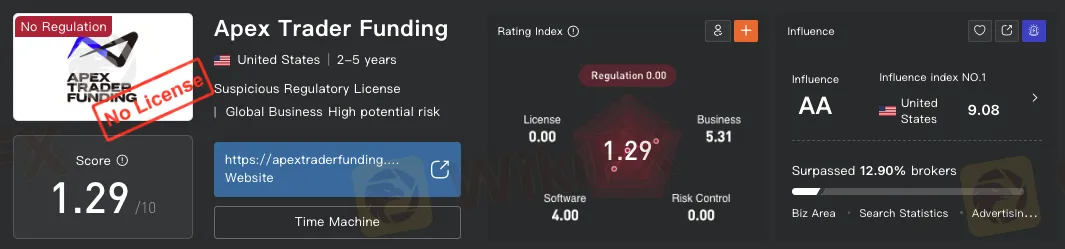
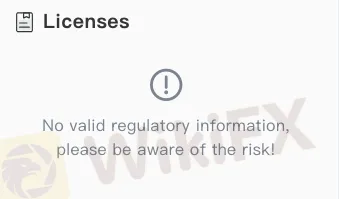
WikiFX gives Apex Trader Funding a very low score of 1.29 out of 10. This score is based on factors such as regulation, licenses, risk control, and the overall business setup. A rating this low is a major red flag and shows that traders may face significant risks with this firm.
Apex Trader Funding markets itself as a leading proprietary trading firm that “revolutionises the trader payout model.” The company states that it was established to offer superior funding options, more trader-friendly services, and higher payouts compared to other futures funding evaluation firms.
However, traders must remember that marketing claims do not equal safety or reliability. Without regulation, these promises are not backed by any independent authority. This makes it critical to approach such claims with caution.
Many traders focus heavily on trading brokers but forget to research proprietary trading firms with the same care. This is a mistake. Just like unreliable brokers, there are many prop firms that overpromise and fail to deliver. Some firms delay or even deny payouts, while others have unclear rules that hurt traders.
It is essential to choose a reputable prop firm with a track record of fair treatment and transparent policies. A bad prop firm can be just as damaging as a bad broker, if not worse, because your payouts and funding depend entirely on their trustworthiness.
The lack of regulation is one of the biggest warning signs for any trading company. Regulation ensures a company follows legal and ethical standards and gives traders options for resolving disputes. Without it, traders face greater risks, including problems with fund security and payout legitimacy.
Considering Apex Trader Fundings low score of 1.29/10, traders may want to look for safer alternatives that are regulated and trusted. It is better to prioritise safety and transparency over promises of high payouts.


Read more
Pakistan Forex Reserves Reach $22.5 Billion: Why a Stable USD/PKR Snapshot is Not Yet a Trend
Pakistan forex reserves stood at $22.506 billion on 13 August 2026, while the SBP dashboard showed a USD/PKR mark to market rate of 277.5713 on 20 August. This article separates the SBP forex reserves facts from predictions about the Pakistan rupee and the forex market Pakistan.
XM Review 2026 for India: RBI Alert, Regulation, Login and Forex Risk
The RBI Alert List, updated on 19 November 2025, names XM and www.xm.com at row 33. RBI says listed entities are not authorised to deal in forex under FEMA or operate an authorised forex ETP in India. XM also publishes overseas licence and risk information. These facts must stay separate. An overseas licence does not create RBI authorisation for an Indian resident.

eToro Review 2026 for India: RBI Alert, Regulation, Login and Forex Risk
The RBI Alert List, updated on 19 November 2025, names eToro and www.etoro.com at row 5. RBI says listed entities are not authorised to deal in forex under FEMA or operate an authorised forex ETP in India. eToro also lists regulated companies in the UK, Europe, Australia, and other markets. Those overseas licences are entity-specific. They do not create RBI authorisation.
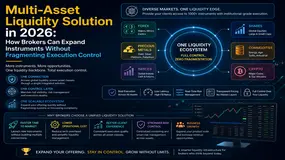
Multi-Asset Liquidity Solution in 2026: Expand Instruments Without Fragmenting Execution
A multi-asset liquidity solution can help a broker support FX, CFDs, commodities, and indices through a more unified operating model. But adding asset classes can also create fragmented symbols, pricing, routing, margin rules, records, and client messages if controls are not designed first. This 2026 guide explains how a multi asset liquidity provider, forex CFD liquidity setup, commodity liquidity provider, and indices liquidity provider fit into a broker-owned execution service. It outlines the due-diligence questions, shared-control model, cost drivers, and 90-day implementation plan that help teams expand without making the execution chain harder to explain. The aim is not to promise deeper liquidity or better trading outcomes. It is to create evidence that a broker can supervise market access, trace order events, reconcile costs, and communicate consistently to the relevant clients when conditions are difficult.
WikiFX Broker
Latest News
Three Losses in a Row? Rebuild Clear Decisions, Not Revenge
 WikiFX
FXGM Review: A KNF Warning and Withdrawal Complaints to Check Before You Deposit
WikiFXAustralia dollar on longest weekly winning streak since 2020
WikiFXExness Review 2026 for India: RBI Alert, Regulation, Login and Forex Risk
WikiFXXM Review 2026 for India: RBI Alert, Regulation, Login and Forex Risk
WikiFX18.3 Million Malaysians Participated in National Anti-Scam Campaign
WikiFXReview 2026: FBS Complaints, Regulation, and Withdrawal Risk Signals
WikiFXTraders Home Review: Is Your Deposit Safe?
WikiFXMaybank Completes Malaysia's First Tokenised Financing Deal
WikiFXA Tiny USDT Transfer Could Put Your Crypto Wallet Under Scrutiny
WikiFXRate Calc

