Mitrade Adds Apple Pay and Google Pay to Appeal to Gen Z Traders
Abstract: Mitrade has added Apple Pay and Google Pay as funding options for its Australian customers.
AI-Powered Trading Among Gen Z Crypto Traders
Younger Australians are not only changing how they pay but also how they invest. A recent report reveals that 67 % of Gen Z crypto traders activated at least one AI-powered trading bot within Q2 2025. Moreover, Gen Z users engage with AI tools an average of 11.4 days per month. This embrace of automation has tangible benefits: during periods of market stress, AI bot users logged 47 % fewer panic‑sell events compared to manual traders.
Mitrades Integration of Apple Pay and Google Pay
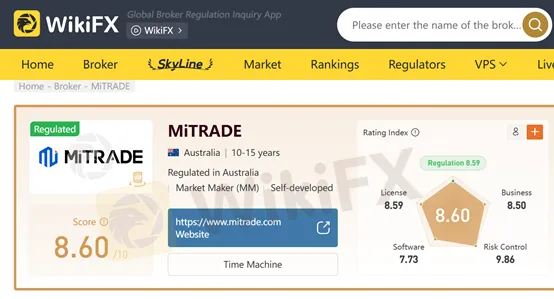
Responding to these dual trends, Mitrade has added Apple Pay and Google Pay as funding options for its Australian customers. Announced on July 24, 2025, this move aims to streamline deposits, reduce funding delays, and cater to mobile-first users seeking instant trade execution. Elven Jong, CEO of Mitrade Australia, noted that integrating biometric authentication and tokenisation enhances security—an essential safeguard as card-not-present fraud rises and younger traders demand frictionless, trustworthy platforms.
Gen Zs Shift to US Markets
Mitrades payment upgrade aligns with a broader change in trading preferences: Gen Z and younger millennial investors in Australia are increasingly funneling capital into the volatile US markets, diverging from the traditionally dominant ASX. Industry data from The Australian highlights that traders aged 18–40 are drawn to CFD opportunities on US equities and indices, attracted by geopolitical volatility and the potential for outsized short-term gains. This trend underscores the importance of seamless funding rails, ensuring that traders can swiftly capitalise on cross-border market moves.
Conclusion
Mitrades introduction of Apple Pay and Google Pay for Australian clients not only reflects these shifting preferences but also positions the platform to capture a growing segment of tech-savvy, risk-tolerant traders targeting global markets.


Read more
AuroraEx Review 2026: Reputation Hit by Fund Scam & Ponzi Scheme Allegations
AuroraEx, a United States-based multi-asset brokerage entity, is facing serious user allegations over how it handles deposited funds. Many users have accused the broker of failing to meet its payment obligations. Some have questioned the broker over possible trade-related foul play, while others have alleged that it scammed them through a Ponzi operation. This AuroraEx review examines these user-reported allegations and provides an overview of the broker’s regulatory status.
Valbury Review 2026: An A+++ Rating Is a Starting Point - Not a Reason to Skip the Money-Path Check
This Valbury review examines PT Valbury Asia Futures, Broker Code 3441997314, its Bappebti record, the Q1 2026 A+++ assessment, product-specific costs, segregated accounts, withdrawals and complaint routes for traders researching an Indonesia forex broker.

Prime of Prime Forex in 2026: The Credit and Control Questions Brokers Must Answer Before Connecting
A Prime of Prime forex arrangement can help a broker access trading relationships, credit intermediation, technology connectivity, and liquidity aggregation that may otherwise be difficult to obtain directly. But the label does not prove direct bank access, executable depth, or a particular execution outcome. This 2026 guide explains what a forex Prime of Prime, PoP liquidity provider, prime brokerage forex service, and forex prime broker proposal can mean in practice; where the credit and order-routing chain must be documented; how to test pricing, limits, rejects, records, and resilience; and which commercial terms create hidden operating cost. Use the comparison framework, red-flag list, and 90-day launch plan to assess fit for your client mix and risk model. The objective is a controllable execution dependency with traceable evidence, not a marketing claim about institutional access.
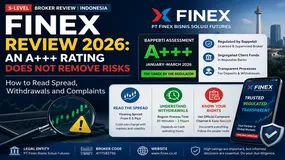
FINEX Review: A+++ Rating Does Not Remove Risks - How to Read Spread, Withdrawals & Other Aspects
FINEX review 2026 for readers comparing an Indonesia forex broker: understand what Bappebti's A+++ rating does and does not show, then check floating spreads, withdrawals, segregated accounts and the complaint route for PT Finex Bisnis Solusi Futures.
WikiFX Broker
Latest News
Malaysian Doctor Loses RM558,000 to Forex-Crypto Scam
 WikiFX
Review 2026: XORKETS FX Withdrawal Complaints and Unregulated Risk
WikiFXReview 2026: GFS Withdrawal Complaints, Regulation Gaps, and Broker Risk Signals
WikiFXVG Markets Review: A Real FSCA Licence, But Why Only a 4.47 Score?
WikiFXTriumphFX Review: Revoked Licence and TFX Token Losses Warrant Caution
WikiFXadmiral Review 2026: Clone Warnings, Withheld Profits, and Withdrawal Risks
WikiFXPlus500 Joins Bahamas Forex and CFD Industry Association
WikiFXTenTrade Review 2026: Complaints, Withdrawals, and Risk Signals
WikiFXGold Climbs Toward $4,400 as September Fed Hike Odds Tumble
WikiFXSpec Capital Group Secures ASIC Licence for Wholesale CFD Services
WikiFXRate Calc

