Does WealthFX Generate Wealth or Losses for Traders? Find Out in This Review
Abstract:The name WealthFX sounds appealing for all those wishing for a rewarding forex journey. However, behind the aspiring name are multiple complaints against the Comoros-based forex broker. These trading complaints dampen the broker’s reputation in the forex community. In this WealthFX review article, we have shared some of these complaints here. Take a look!
The name WealthFX sounds appealing for all those wishing for a rewarding forex journey. However, behind the aspiring name are multiple complaints against the Comoros-based forex broker. These trading complaints dampen the brokers reputation in the forex trading landscape. In this WealthFX review article, we have shared some of these complaints here. Take a look!
Top Forex Trading Complaints Against WealthFX
The Fund Scam Allegation in the Name of Scalping
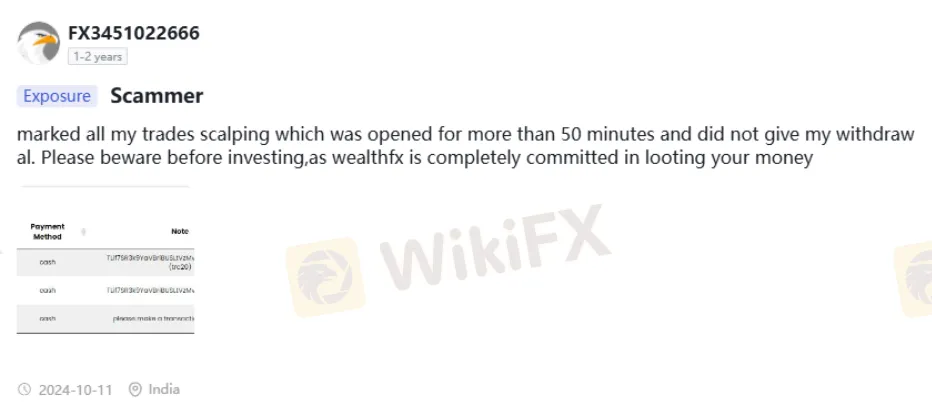
Scalping is a type of forex trading where traders execute trades in a few seconds to minutes to benefit from small currency pair price movements. However, a trader admitted that WealthFX marked all of his trades as scalping even though they were for more than 50 minutes and prevented him from accessing withdrawals. This is how the trader shared the WealthFX review.
A Tale of Failed Promises & Additional Fee Liability for Payouts
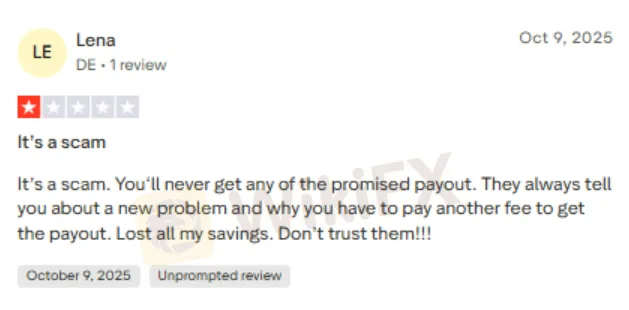
Some traders have admitted that WealthFX fails to deliver them their promised returns. To make it clear, there is nothing assured in forex investments, even though they offer tremendous potential for lucrative returns. Also, the broker asks traders to pay additional fees for payouts. Take a look at the screenshot below to understand this trade manipulation.
Funds Once Deposited Cant be Withdrawn, Says the Trader
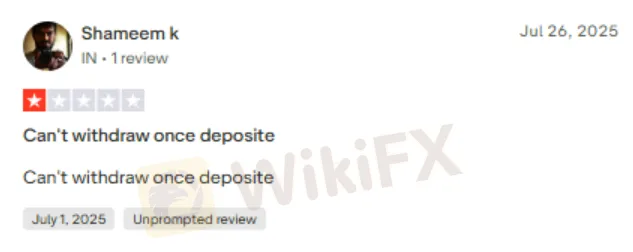
A trader claimed that the deposited funds cannot be withdrawn, allowing the broker to pile on the losses for its clients. Here is a small but strong statement made by the trader.
WealthFX Review by WikiFX: Score & Regulation Status
These forex trading complaints made the WikiFX team investigate WealthFX on several aspects, including its regulatory status. True to our suspicion, the broker was found to be an unregulated entity, answering your question - Is WealthFX real or fake? Given the prevailing investment risks, our team gave WealthFX a score of 1.93 out of 10.
For more forex updates, join any of these special chat groups (OIFSYYXKC3, 403M82PDMX or W2LRJZXB7G) by following the instructions shown below.


Read more
Is TradingPRO Safe? FCA Warning, Indonesia Blocklist Evidence, and 7 Checks Before You Deposit
This Trading Pro broker review checks the FCA warning, Indonesia blocklist evidence, licence claims, and what South Asian users should verify before depositing.
MT4 White Label Cost in 2026: What Brokers Must Budget Beyond the Platform Fee
The visible fee in an MT4 white label proposal is rarely the real cost of operating it. For an existing broker, the decision is not simply whether an MT4 white label platform is “cheap” or “expensive.” The real question is whether the commercial model remains viable after integration, support, data, client migration, compliance, and exit costs are included. That is why an MT4 white label cost review should be built as a 24- to 36-month operating case. It should compare three credible choices: 1. Keep the present MT4 setup and improve its weakest controls. 2. Replace the MT4 white label provider but retain the client proposition. 3. Migrate selected clients or products to another platform while running MT4 in parallel. This guide explains how to build that case without relying on headline prices or generic vendor claims.

The Rise of Deepfake Investment Scams: ASIC Shares Key Warning Signs
Artificial Intelligence (AI) has grown remarkably recently. However, it has also amplified the scope for financial fraud. One such is the rapid use of deepfake technology involving AI-generated videos, images and audio clips imitating real people. Fraudsters are leveraging these technologies to impersonate financial advisers, celebrities, business leaders and government officials to lure victims into fake investment schemes. Understanding the emerging implications, the Australian Securities and Investments Commission (ASIC) has cautioned investors of investment avenues promoted through convincing AI-generated content. Seemingly authentic, deepfakes are designed to manipulate trust and make people transfer funds before authenticating the investment’s legitimacy.
Best White Label Trading Platform 2026
The decision to switch white label providers or migrate to a modern white label trading platform is no longer a luxury for growth-minded brokers—it's a strategic necessity for survival in 2026. The convergence of technological stagnation, regulatory evolution, and shifting client expectations has created a perfect storm.
WikiFX Broker
Latest News
Order Execution: What Discretionary Latitude Means for Your Trades
 WikiFX
Scammed Twice: Recovery Fraud Takes Advantages of Victims Again
WikiFXOver RM102 Million Crypto Seized in Romance Scam Crackdown
WikiFXWhy Prices Rush Back to Fill Gaps: Liquidity Voids Explained
WikiFX"High Inspirations" Mastermind Disappears as $25 Billion Investment Scheme Collapses
WikiFXOROKU EDGE Review: Malaysia's SCM Has Blacklisted This Broker , Here's What Traders Are Reporting
WikiFXRupee Hits Two-Month Low as Oil Surges Past $95
WikiFXWhy RBI Sold $6.1 Billion in Forex Markets in May
WikiFXCNMV Red-Flags 9 Unauthorised Investment Platforms
WikiFXFXTF Broker: Withdrawal Complaints and Romance Scam Reports , What Traders Should Know
WikiFXRate Calc

