Crude Oil Crashes Below $60, Gold Retreats as War Premiums Evaporate

Abstract:Crude oil prices plummeted over 4% to break below $60 per barrel after President Trump signaled a de-escalation in tensions with Iran, prompting an unwinding of geopolitical risk premiums. The improved sentiment also triggered profit-taking in safe-haven assets, pulling Gold and Silver down from record highs.
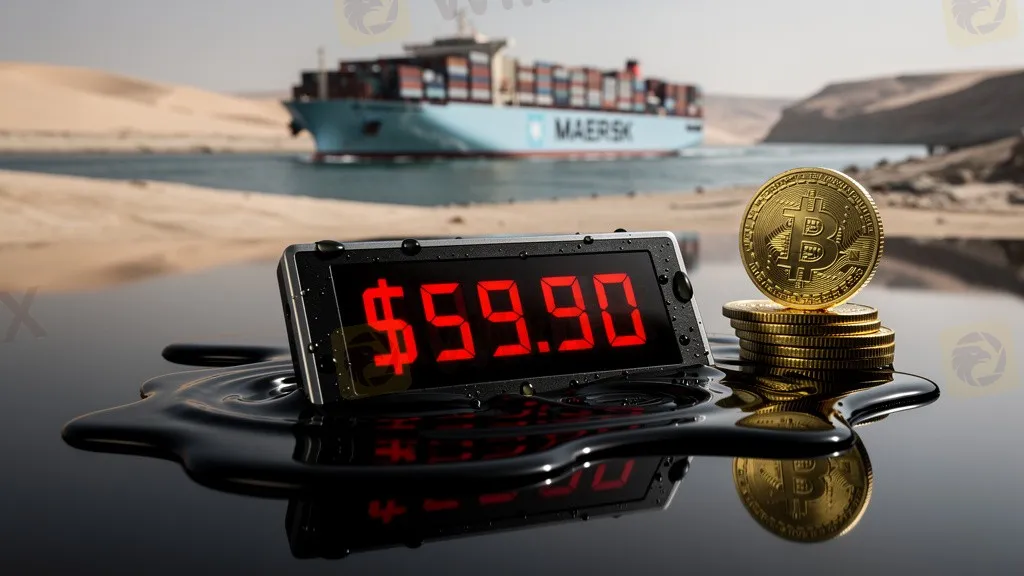
Global markets witnessed a sharp reversal in “fear trades” on Thursday, as geopolitical tensions in the Middle East showed signs of unexpected cooling. West Texas Intermediate (WTI) crude oil suffered its largest single-day drop since October, plunging more than 4% to trade below the psychological $60.00 per barrel mark.
Key Market Data
- WTI drops over 4% below $60.00.
- Gold (XAU/USD) retreats to $4,595 from highs of $4,642.97.
- Silver (XAG/USD) corrects 1.70% to $91.70.
Trump Softens Tone on Iran
The catalyst for the massive sell-off was a marked shift in rhetoric from US President Donald Trump. Addressing reporters, Trump stated he had received intelligence that “targeted killings” of protesters in Iran had ceased, and indicated that the US would hold off on immediate military action.
“The alert for military conflict has been lifted,” interpreted markets, as the President moved toward economic sanctions—targeting a shadow banking network—rather than kinetic warfare. This pivot alleviated fears of imminent supply disruptions in the Persian Gulf, forcing traders to rapidly unwind long positions built on war risk.
Supply Chain Normalization
Compounding the bearish pressure on oil, shipping giant Maersk announced plans to resume standard transit routes through the Suez Canal later this month. The decision signals a perceived reduction in maritime security risks in the Red Sea, forcing further risk premiums out of energy prices.
Precious Metals & Technicals
The wave of relief sentiment rippled through the precious metals complex. Gold (XAU/USD), which had surged to an all-time high of $4,642.97 on Wednesday, pulled back to trade around $4,595. While the long-term uptrend remains intact, supported by central bank buying, the immediate removal of the “war trade” prompted profit-taking.
Notably, Silver (XAG/USD) saw a steeper correction after briefly tagging a record near $94. Analysts note that while geopolitical heat has subsided, the floor for commodities remains supported by the broader macro environment.
WikiFX Broker
Latest News
If you haven't noticed yet, the crypto market is in free fall, but why?
WikiFXEmerging Markets: Nigeria's Debt Market Valuation Hits N99.3 Trillion
WikiFXJPY In Focus: Takaichi Wins Snap Election to Become Japan's First Female Leader
WikiFXAmaraa Capital Scam Alert: Forex Fraud Exposure
WikiFXVebson Scam Exposure: Forex Withdrawal Failures & Fake Regulation Warning
WikiFXEGM Securities Review: Investigating Multiple Withdrawal-related Complaints
WikiFXGalileo FX Exposure: Allegations of Fund Losses Due to Trading Bot-related Issues
WikiFXFed Balance Sheet Mechanics: The Silent Risk to Liquidity
WikiFXGold Eclipses $5,070 as China Treasury Shift Hammers the Dollar
WikiFXSkyLine Guide 2026 Thailand — Official Launch of the Judge Panel Formation!
WikiFXRate Calc
