Fed Independence in Doubt? How the Probe Threatens the US Financial System
Abstract:Fed Independence in Doubt? How the Probe Threatens the US Financial SystemIn January 2026, the US Department of Justice (DOJ) launched a rare criminal investigation into Federal Reserve Chair Jerome P
Fed Independence in Doubt? How the Probe Threatens the US Financial System
In January 2026, the US Department of Justice (DOJ) launched a rare criminal investigation into Federal Reserve Chair Jerome Powell. The official reason? Alleged budget overruns and irregularities in the renovation of the Feds headquarters.
However, Powell fired back, calling the probe a political "pretext." He argues the investigation isn't about marble floors or elevators, but about monetary policy. The Fed has refused to cut interest rates as quickly as the government wants in its fight against inflation.
"Investigated for not cutting rates?" This political standoff touches on the bedrock of the modern financial system: Central Bank Independence.
1. What is the Federal Reserve?
Many beginners think the Fed is just a "big bank." In reality, it is the Central Bank of the United States—the "Bank for Banks." Unlike many other central banks, the Fed was designed with a unique structure to prevent power from being too concentrated:
· The Board of Governors: Located in Washington D.C., this is a government agency. Its 7 members (including Chair Powell) are appointed by the President and confirmed by the Senate. They represent the "Public Interest."
· 12 Regional Reserve Banks: Located in cities like New York and Chicago, these operate more like private corporations owned by member commercial banks. They represent "Private and Regional Interests."
· The Federal Open Market Committee (FOMC): This is the body traders watch most closely. It combines members from the Board and the Regional Banks to vote on interest rates.
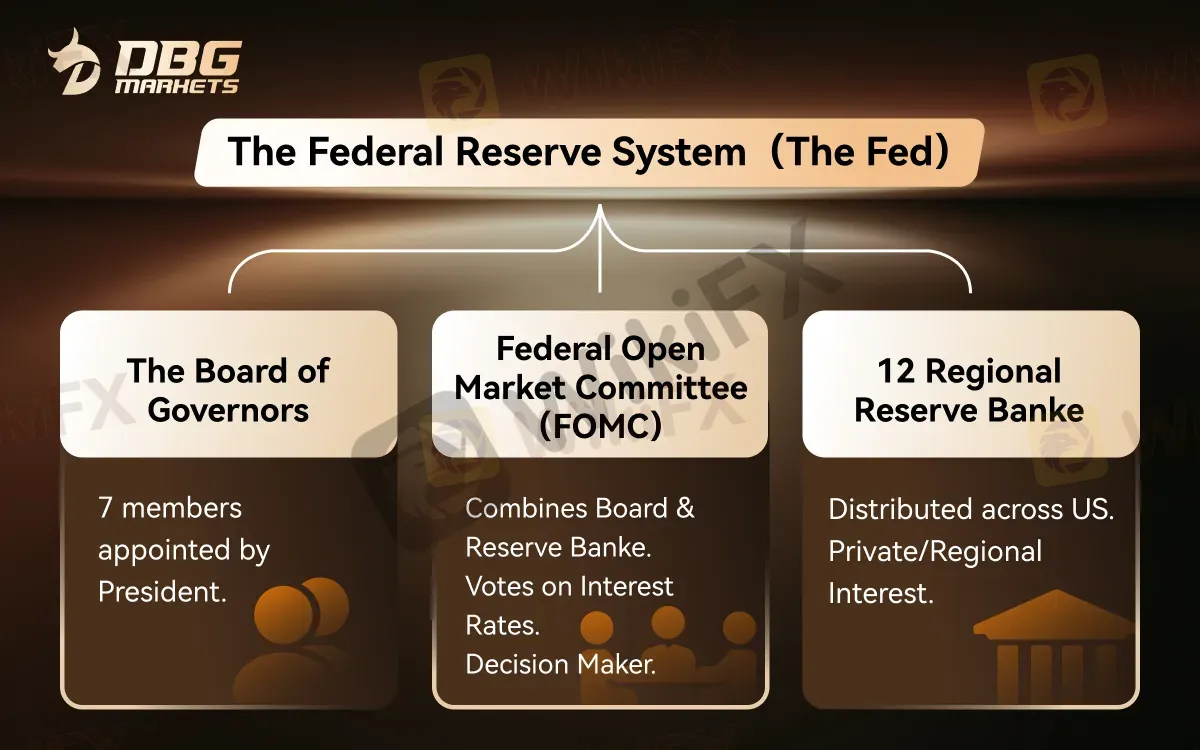
This complex structure ensures that no single President or politician can fully control the US money supply.
2. The Dual Mandate & The Conflict
US Congress gave the Fed two core goals, but they often contradict each other:
1. Maximum Employment: Everyone who wants a job can get one.
2. Stable Prices: Keeping inflation low (usually around 2%).
The Economic Logic: Normally, when employment is high, people spend more money. This drives inflation up. To stop inflation from exceeding 2%, the Fed raises interest rates. High rates make borrowing expensive, which slows down business activity and cools the labor market.
The Political Problem: To fight inflation, the Fed must keep rates high. However, high rates hurt economic growth and displease politicians seeking votes. Furthermore, high interest rates increase the cost of government borrowing. When rates are high, the US Treasury must pay more interest on its bonds.
This explains the pressure from the Trump Administration. The current probe is widely seen as a tactic to pressure the Fed into lowering rates to reduce the government's debt burden.
3. Core Concept: Fed Independence
If the Fed is the engine of the economy, "Independence" is the safety valve. It means the Central Bank sets policy based only on economic data (like CPI and NFP), not political pressure.
There is a famous saying in finance: "The Fed's job is to take away the punch bowl just as the party gets going."
· The Politician's View: They want the "party" (low rates, high stocks, happy voters) to continue forever.
· The Fed's View: If the party gets too wild (low rates for too long), it leads to hyperinflation and destroys the currency.
If the Fed loses its independence and prints money to please the White House, the result is often catastrophic currency devaluation (like in Turkey or Argentina).
4. Why Does This "Probe" Scare the Market?
The market isn't worried about renovation costs; it is worried about a shift in policy logic.
· The Chilling Effect: If a Fed Chair faces criminal investigation for keeping rates high, will the next Chair be too afraid to do the right thing? Will they cut rates just to stay safe?
· Credibility Collapse: The US Dollar's dominance is built on the belief that the Fed will professionally control inflation. If that trust breaks, global capital may flee US assets.
5. Implications for Traders: Risk and Opportunity
For Forex and CFD traders, this battle for "Independence" creates volatility. Here is what to watch:
· US Dollar (USD): If the market believes the Fed will stand its ground, the USD remains strong (supported by high yields). If the market thinks Powell will capitulate and cut rates early to avoid trouble, the USD could crash.
· Gold (XAU/USD): Gold is the biggest winner in a credibility crisis. If investors suspect the Central Bank is losing control to politicians, they sell fiat currency and buy Gold as a safe haven.
· Indices (Nasdaq/US30): A forced rate cut might boost stocks in the short term (cheaper money). But in the long term, if independence is lost and inflation runs wild, it poses a severe risk of economic collapse.
Conclusion
For now, the immediate market impact is limited, as the investigation is ongoing and Powell has firmly defended the Fed's stance. The institution's credibility remains intact.

WikiFX Broker
Latest News
Crypto Platform YEPBIT Got Shutdown by Australian Regulators
 WikiFX
Why Elections Make Currencies Swing Harder Than You Expect
WikiFXVestrado Review: A 4.84 Score, an Offshore Base and an FSCA Status Worth Verifying
WikiFXIslami Bank suspends officer who filed ACC loan-fraud case
WikiFXOcta Review 2026: Severe Withdrawal Complaints and High Risk Signals
WikiFXFizmo Fx Markets Review 2026: Unregulated Status and Withdrawal Complaints
WikiFXReview 2026: RoboMarkets Regulation, Platform Access, and Trader Feedback
WikiFXWhy Importers Panic When Dollars Dry Up, and Why You Should Care
WikiFXTier 1 Liquidity Forex in 2026: What Institutional Really Means for a Broker
WikiFXSingapore Nabs 270 Suspects in RM17 Million Scam Bust
WikiFXRate Calc

