Fed Holds Rates Amidst Political Siege; Dollar Sinks to Four-Year Lows

Abstract:The Federal Reserve maintains rates at 3.50%-3.75% amidst an escalating political battle over central bank independence, pushing the US Dollar to four-year lows. While Chair Powell signals a neutral policy stance, the looming threat of US government shutdown and DOJ investigations into the Fed leadership are eroding greenback sentiment.
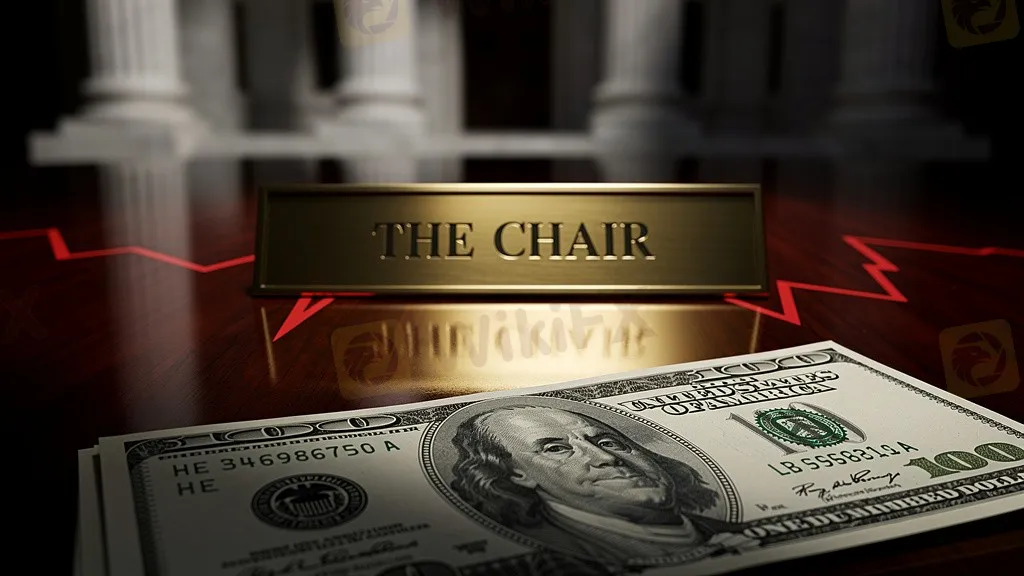
The Federal Reserve voted to maintain the federal funds rate target range at 3.50%-3.75% on Wednesday, a move widely anticipated by markets but overshadowed by an intensifying battle over the central bank's independence. While Chair Jerome Powell characterized the current policy as “well-positioned,” the US Dollar Index (DXY) has crumbled to the 96.00 handle—a four-year low—driven by a potent mix of falling yield expectations and fiscal instability in Washington.
The “Neutral” Pause
In its policy statement, the FOMC noted that the economy continues to expand at a “solid pace,” though inflation remains somewhat elevated. The decision to pause comes as a strategic “wait-and-see” approach, with Powell suggesting that the central bank is taking a meeting-by-meeting stance.
Changes in the statement language were subtle but significant: references to “increasing employment risks” were removed, implying labor market stabilization (Unemployment at 4.4%). However, the pause was not unanimous; Governors Millan and Waller dissented, voting for an immediate 25 basis point cut, signaling a growing dovish fracture within the committee.
Powell vs. The White House
The press conference was dominated not by economics, but by the existential threat to the Fed's autonomy. Chair Powell faced repeated questions regarding his tenure and ongoing DOJ investigations initiated by the Trump administration.
While Powell refused to comment on his resignation plans after his term ends in May, analysts view his silence as a strategic “last card” to prevent a complete political takeover of the monetary authority. The uncertainty surrounding the Fed's leadership—coupled with threats of a government shutdown over Department of Homeland Security funding—has severely damaged the Greenback's appeal.
Market Reaction
- USD: The DXY is trading heavily around 96.00, pressured by the political risk premium.
- Rate Path: Markets are now pricing in a potential rate cut window opening in June 2026, assuming inflammation data permits.
- GBP/USD: Exploiting dollar weakness, the Pound has rebounded toward 1.3830, eyeing a breakout of its recent consolidation patterns.
WikiFX Broker
Latest News
WikiFX Invitation Rewards Program
WikiFXMentari Mulia Review : Is This BAPPEBTI-Regulated Indonesian Forex Broker Right for You?
WikiFXEnergy Crisis Deepens: Hormuz Blockade Risks Physical Supply Shock
WikiFXECB Watch: Energy Shock Won't Derail Policy Path, Says Nomura
WikiFXOil War Shock: Diesel Futures Surge 34% as White House Pledges Military Escort for Tankers
WikiFXMiddle East conflict poses fresh test to central banks as oil shock fuels inflation
WikiFXAUD & NZD Slip as Mixed China PMI Data Clouds Recovery Signal
WikiFXNigeria: Tinubu Overhauls Fiscal Team Amid Fuel Price Hike and Inflationary Pressures
WikiFXGlobal Divergence: Eurozone Inflation Fears vs. China's "Value" Play
WikiFXGeopolitical Shock: Reports of Iranian Drone Strike on U.S. Embassy in Riyadh
WikiFXRate Calc
