War Clouds Over Persian Gulf: US Carrier Deployment Spikes Oil Volatility Risks

Abstract:The deployment of the USS Abraham Lincoln carrier strike group to the Middle East signals a critical escalation in US-Iran tensions. Markets are pricing in potential conflict scenarios ranging from limited strikes to sustained campaigns, keeping oil supply risks elevated.
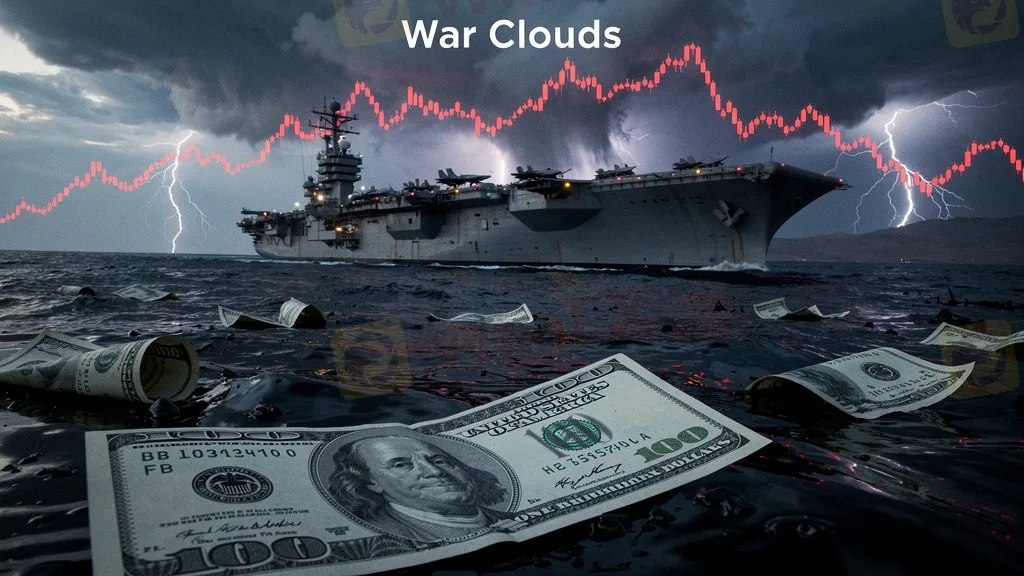
The geopolitical risk premium in energy markets is set to climb as the US military intensifies its presence in the Middle East. With the deployment of the nuclear-powered aircraft carrier USS Abraham Lincoln and thousands of additional troops, the probability of direct confrontation between Washington and Tehran has risen sharply. For Forex and commodity traders, this signals extreme vigilance regarding Crude Oil (WTI/Brent) supply lines and safe-haven flows.
The Military Buildup
According to US Central Command, the mobilization is ostensibly to “promote regional security,” but the hardware suggests readiness for major combat operations. The strike group features the 9th Carrier Air Wing, equipped with roughly 65 aircraft including F/A-18E Super Hornets, supported by Arleigh Burke-class destroyers capable of launching Tomahawk missiles. This adds to the existing footprint of approximately 40,000 US troops already stationed across the region.
Three Scenarios for Conflict
Market analysts are weighing three distinct engagement strategies being considered by the Trump administration, each with varying implications for market volatility:
Market Implications
With Brent Crude and WTI highly sensitive to Persian Gulf logistics, any kinetic action could trigger an immediate supply shock. Conversely, if these maneuvers remain a “maximum pressure” tactic, the risk premium may fade. However, with Iranian ballistic missiles covering regional US bases, the margin for error is razor-thin.
Key Data Snapshot
- Asset Deployment: USS Abraham Lincoln & 9th Carrier Air Wing
- Regional Troop Count: 40,000 US troops
- Firepower: 65 aircraft (incl. F/A-18E) and Tomahawk missiles
- Critical Markets: WTI, Brent Crude
WikiFX Broker
Latest News
Precious Metals Capitulation: Gold Plunges 12% to Break $5,000 Support
WikiFXEZINVEST Review: The Financial Abattoir Behind the CySEC Mask
WikiFXSARB Pauses Rate Cycle at 6.75% Amid Lingering Uncertainty
WikiFXEurozone Resilience: Economy Defies Gloom as Germany Rebounds
WikiFXLured by a deepfake video, retiree lost over $4,000 in an investment scheme
WikiFXGeopolitical Risk: Iran Accuses West of Inciting Domestic Unrest
WikiFXOil Markets Tighten: OPEC+ leans towards extending output pause into March
WikiFXCentral Bank 'Super Week': ECB, BoE, and RBA to Test FX Volatility
WikiFXMiddle East Tensions: Aircraft Carriers vs. Diplomacy
WikiFXWarsh Nomination Signals High-Stakes 'Regime Change' at Federal Reserve
WikiFXRate Calc
