Pinnacle Pips Forex Fraud Exposed
Abstract:Scam alert on Pinnacle Pips: Unregulated, denies $20K withdrawal via pinnaclepips.com fraud. South Korea victims speaking out—avoid this forex scam now!
Introduction: Why Pinnacle Pips Is Under Fire
Pinnacle Pips has come under serious scrutiny after a victim reported being unable to withdraw 20,000 USD in profits from their trading account. The complaint states that all transactions were conducted on the site pinnaclepips.com and were later alleged to be fraudulent, with similar victims continuing to come forward from South Korea and other regions.
This exposure article examines how this broker operates, highlights the red flags on its WikiFX profile, and explains why traders should treat Pinnacle Pips as a high‑risk forex trading scam. The goal is to help readers recognize the warning signs before depositing funds and to use tools like the WikiFX App to verify brokers in advance.
Brief Overview of Pinnacle Pips
On its WikiFX page, Pinnacle Pips is listed as a forex broker connected to PINNACLE PIPS INC., with a founder named Kabri Irving and a registered address in Georgia, United States. The profile links to the trading website pinnaclepips.live and lets users click “Open Account” or check the brokers historical data using the time‑machine tool.
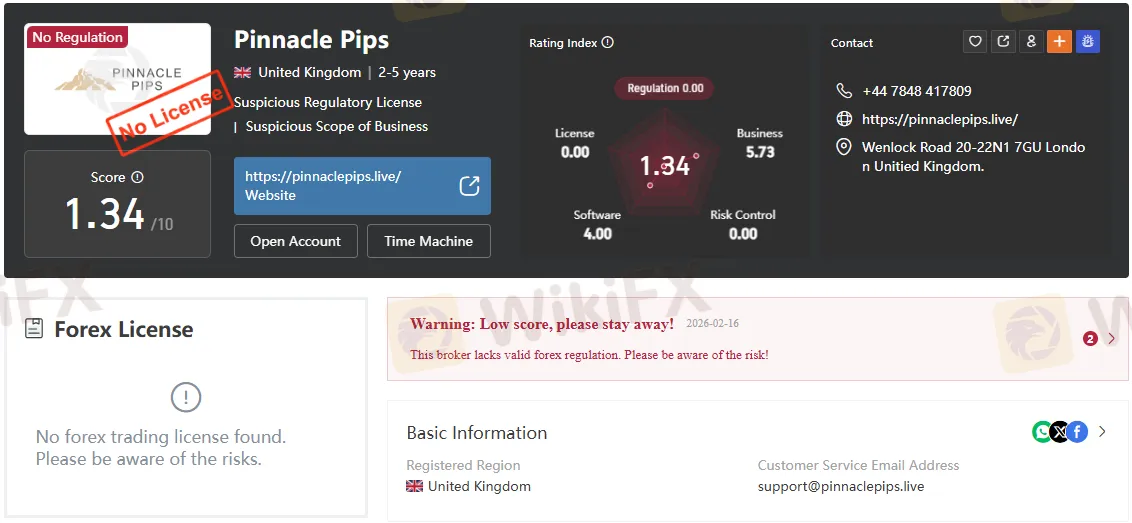
Crucially, the same page displays a warning that no forex trading license has been found for Pinnacle Pips, urging users to be aware of the risks of trading on an unregulated platform. This lack of regulatory oversight already places the broker in a dangerous category for retail traders who rely on clear rules and investor protections.
Unregulated Status and High‑Risk Warning
One of the strongest red flags around Pinnacle Pips is its explicitly stated regulatory status: “No forex trading license found. Please be aware of the risks.” When a broker operates without authorization from any recognized financial regulator, clients have no formal avenue to challenge unfair practices, frozen accounts, or withheld withdrawals.
Unregulated forex brokers can change terms at will, delay payouts, or invent vague “compliance issues” to justify blocking client funds. In the case of Pinnacle Pips, this unregulated status complements allegations of a forex investment scam, in which profits appear on-screen but never reach the traders bank account.
Victim Case: $20,000 Profit But No Withdrawal
The most striking exposure involves a trader who reportedly generated a 20,000 USD profit through Pinnacle Pips but was later blocked from withdrawing the money. The complaint explains that all trading and settlement activities were channelled through pinnaclepips.com, which the victim now describes as a fraudulent exchange that traps deposits.
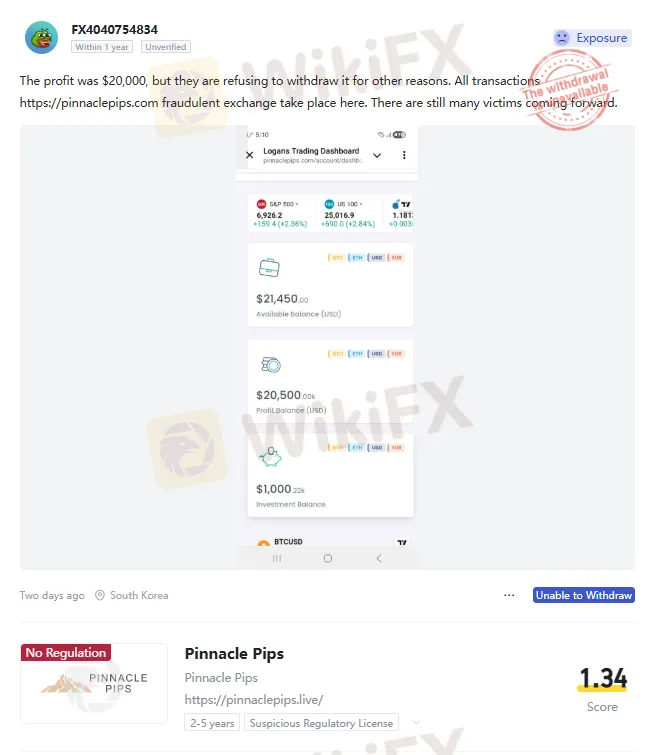
Instead of processing the payout, Pinnacle Pips allegedly cited unspecified reasons to refuse the withdrawal request, a classic pattern in many forex scams. The case is linked to South Korea under code 2‑14‑1016, and the report emphasizes that more victims are still coming forward, suggesting this is not an isolated incident but an ongoing exposure to a forex trading scam.
How the WikiFX App Flags Pinnacle Pips
The WikiFX page for Pinnacle Pips includes a broker score indicating serious risk, along with a prominent notice about the missing forex license and related exposure records from users. This type of data in the WikiFX App helps traders quickly see whether a broker is legitimate or associated with forex scams before they hand over their money.
By aggregating user complaints, regulatory checks, and background details such as corporate addresses and key personnel, the WikiFX App builds a more complete picture than a brokers marketing website alone. In the case of Pinnacle Pips, the combination of an unregulated label, user exposure from South Korea, and a low overall score paints a clear picture of a potential forex scam.
Key Red Flags Traders Should Notice
The first red flag is the absence of any valid forex trading license for Pinnacle Pips, which removes standard investor protections and dispute mechanisms. The second red flag is user exposure: a supposedly successful trading account with a 20,000 USD profit suddenly became inaccessible for withdrawals, with the broker giving vague reasons.
A third red flag is the reliance on external transactional channels like pinnaclepips.com, which the exposure labels as a fraudulent exchange where all deposits and trades occur. Taken together, these elements strongly resemble known patterns in forex investment scams: fake profits, blocked withdrawals, and a lack of regulatory oversight.
Why Unregulated Brokers Are Dangerous
Unregulated brokers like Pinnacle Pips are not subject to strict capital requirements, regular audits, or conduct rules that protect investor funds. If such a broker decides to cancel profits or refuse withdrawals, clients usually have no recourse other than public exposure and private legal action, which can be expensive and uncertain.
These entities may also change leverage rules, fees, or bonus conditions at any time to fabricate “violations” that justify seizing balances. For many victims, the first clear sign of trouble is when they try to withdraw profits and are met with stalling tactics, extra deposits demanded, or outright silence—warning signs that the operation is closer to a forex trading scam than a true broker.
How the WikiFX App Helps You Avoid Similar Forex Scams
Checking any broker in the WikiFX App before opening an account gives traders immediate visibility into its regulatory status and user feedback. For Pinnacle Pips, this quick check would have shown the lack of a forex license, the low score, and the South Korean exposure related to the blocked 20,000 USD withdrawal.
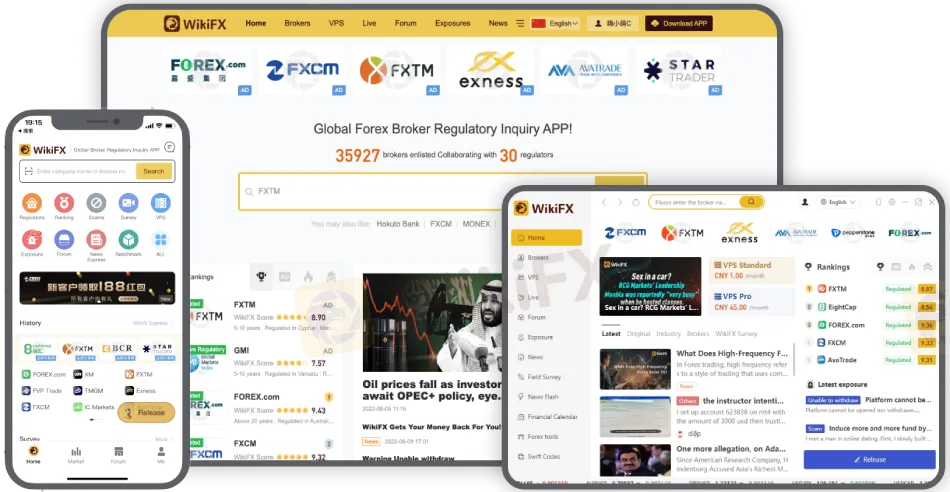
By relying on a specialized regulatory inquiry tool, users can differentiate between licensed institutions and high‑risk platforms marketed through flashy websites. This extra step is particularly important for avoiding offshore entities that offer high leverage and big bonuses but operate as forex scams targeting inexperienced traders.
Practical Tips to Protect Yourself From Pinnacle Pips‑Style Scams
Always verify a brokers regulatory status through independent resources like the WikiFX website or the WikiFX App before depositing money. Make sure the license actually belongs to the same legal entity and that the regulator is recognized in your jurisdiction.Be suspicious of brokers that block withdrawals, insist on extra deposits before releasing funds, or move all activity to little‑known domains like pinnaclepips.com. When you see multiple user complaints matching these patterns, treat the broker as a likely forex scam and stop sending any additional funds immediately.
Final Warning on Pinnacle Pips
Given its unregulated status, the refusal of the 20,000 USD withdrawal, and its exposure linked to South Korea, Pinnacle Pips presents multiple characteristics of a high‑risk forex trading scam. Traders using this platform face a significant risk of losing both their initial capital and any apparent profits in their trading account.
Anyone considering opening an account with Pinnacle Pips should reconsider and instead choose a properly regulated broker with a transparent track record. Before investing in any forex platform, take a moment to check its profile on the WikiFX website or inside the WikiFX App so you can avoid becoming the next victim of a forex investment scam.


Read more
TRANS X MARKETS Review 2026: I Lost as Much as $40K. One of Many Verified User Allegations
This allegation representing fund loss worth $40,000 came from a verified Indian user on a trusted platform such as WikiFX. However, this is not the only allegation from users across India and other regions. Many verified users have complained about the loss of access to withdraw profits from the TRANS X MARKETS platform. At the same time, we came across complaints about the withdrawal issue from the free software provided by the brokerage firm. In this TRANS X MARKETS review, we have examined these allegations while also giving you the company’s regulatory background.
5 Warning Signs Your Forex Account is Heading Toward a Margin Call
New to forex trading? Surprised by the margin call from your forex broker? In one moment, you seem to have manageable trades. The next moment, you receive a warning from your broker about inadequate equity to support your open positions. So, if the market movement continues to be on the opposite side of your positions, some or all of your trades may see an unfortunate automatic closure through a stop-out process. However, margin calls do not usually happen without warning. Recognizing the early signs can help traders take corrective measures and avoid a potentially significant loss in their trading accounts. But what are those signs that indicate that a margin call is all but near? Let’s discuss the same here.
exfor Review 2026: I’m Unable to Receive My Profits. We Investigated This Common User Allegation.
User complaints regarding profit withdrawals have become an increasingly discussed issue among some Exfor traders, including those in South Asia. Trading profits never come easy; they come by spending hours understanding the fundamental and technical factors and their impact on different markets such as forex. However, what matters is whether you are able to receive them. For exfor clients, according to their complaints, this problem is worse! While they claim profits on the dashboard, the same do not reach their trading accounts, resulting in many negative exfor reviews. In this article, we have examined user allegations concerning several issues, including this common profit withdrawal problem.
Seacrest Markets Review 2026: Are Claims of Account Terminations and Fund Scams True? Let’s Find Out
While searching for user reviews for Seacrest Markets, a South Africa-based brokerage entity, we came across some repeated complaint patterns about the alleged account disablement and the funds that were trapped in it. At the same time, users have complained that the broker unnecessarily extended the fund withdrawal review process to deny them their hard-earned funds. While they may be user allegations and not established facts yet, the emergence of many complaints against the brokerage firm calls for an in-depth investigation in this Seacrest Markets review.
WikiFX Broker
Latest News
TRANS X MARKETS Review 2026: Unregulated Status and Serious Withdrawal Complaints
 WikiFX
RyvoTrade Review 2026: Unregulated Status and Withdrawal Complaints
WikiFXPhillip Nova Review 2026: Should You Trade with This Broker?
WikiFXGFS Review 2026: Withdrawal Complaints, Weak Regulation Data, and Account Access Risks
WikiFXYen Firms While Dollar Pauses
WikiFXStoneX Review 2026: Should You Trade with This Broker?
WikiFXThinking About KATOPRIME? What Every Trader Should Know Before Depositing Funds
WikiFXYour Backtesting Results Mean Nothing If You Ignore This One Live Trading Reality
WikiFXHow Pig Butchering Scams Drain Beginner Trading Accounts
WikiFXWeltrade Review 2026: Is This Forex Broker Safe?
WikiFXRate Calc

