Equity Markets Fracture: Pakistan Melts Down as Geopolitics Rattles Asia

Abstract:Asian and emerging markets bore the brunt of the geopolitical shock, with Pakistan's stock exchange triggering a circuit breaker and Japanese banks tumbling. While US futures have shown resilience, concerns over private credit vulnerabilities are rising.
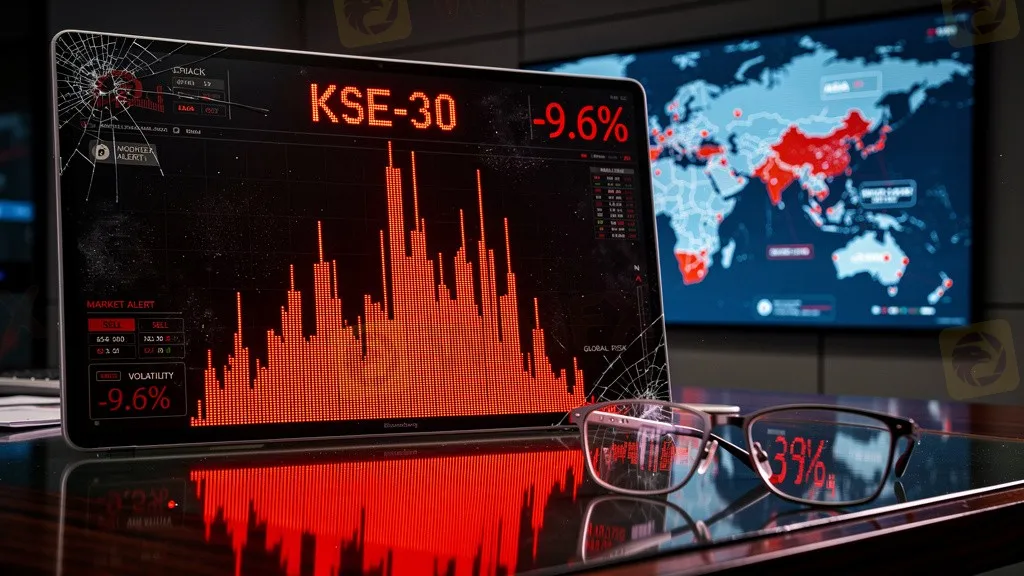
Global equity markets began the week in a sea of red as the escalation in the Middle East exposed the fragility of risk assets. While US futures have managed to pare extreme losses, Asian and Emerging Markets witnessed severe panic selling.
Regional Fallout
- Pakistan: The KSE-30 Index collapsed 9.6% in early trading, triggering a market-wide circuit breaker. Brokers reported forced liquidations of leveraged retail accounts.
- Japan: The Nikkei 225 fell 1.5%. The Topix Bank Index plunged 6.3%, its worst day since April, driven by collapsing yields and credit fears.
- Europe: Futures for the Euro Stoxx 50 and Germany's DAX are down over 2%, signaling a rough open for the continent.
The “Cockroach Effect” in Credit
The sell-off has highlighted cracks in the private credit market. Analysts fear a “cockroach effect”—where one visible problem signals infestation—is spreading through private credit sectors that fund technology firms. SLC Management indicates that markets were already sensitive to credit stress; the sudden geopolitical shock forces a rapid contraction.
Wall Street Resilience?
Despite the chaos abroad, US market reaction has been relatively tempered. S&P 500 futures are trading down 0.78%, recovering from steeper lows. However, Barclays Global Research Chair Ajay Rajadhyaksha advises against “buying the dip” prematurely.
“The risk-reward is not attractive,” Rajadhyaksha warned. “Unless the S&P 500 corrects by more than 10%, it is not yet time to step in.”
The market is currently pricing in a 64% probability of a ceasefire before April. However, if the conflict expands into a durable stalemate involving US ground troops, the current valuation support for global equities could evaporate quickly.
WikiFX Broker
Latest News
Warning: Is FIBOGROUP Broker Safe? The Dark Reality of Withheld Funds
WikiFX"Let Trust Be Seen" WikiFX Industry Initiative Recap, Driving the forex industry toward a more trust
WikiFXYou Must Know How These Psychological Traps Destroy Financial Judgment
WikiFXAllied Top Review 2026: Is this Forex Broker Legit or a Scam?
WikiFX"Let Trust Be Seen" WikiFX Industry Initiative Recap, Driving the forex industry toward a more trust
WikiFXDeriv Review 2026: Is this Forex Broker Legit or a Scam?
WikiFXDubai Warning Issued After Fraudsters Impersonate a Legitimate DIFC Financial Firm
WikiFXItaly Blocks 32 More Unauthorized Financial Websites
WikiFXNew Traders Keep Losing — And It's Not Because of Their Strategy
WikiFXFXTM Moves to Deepen UAE Presence with Planned Licence Upgrade
WikiFXRate Calc
