IUX Review 2026: Comprehensive Safety Assessment
Abstract:IUX holds valid regulations from ASIC and FSCA, offering competitive spreads and substantial leverage options up to 1:3000. However, despite a moderate safety score of 6.09, our assessment highlights significant operational risks due to a high volume of unresolved withdrawal complaints and account access issues.
Executive Summary
In this in-depth IUX review, we analyze the key metrics defining this financial service provider's performance and reliability. The broker was established in 2019, positioning itself as a multi-regulated entity aiming to serve a global clientele. Our review process evaluates the company's regulatory standing, trading conditions, and the actual experiences of its user base.
As a broker entity operating since 2019, IUX has managed to secure licenses from reputable authorities, contributing to its WikiFX score of 6.09. While this score indicates a “Good” regulatory framework, the operational reality for clients appears more complex. The broker offers high leverage and supposedly low execution costs, but a surge in complaints suggests potential friction in fund management. This report dissects whether the regulatory safety nets are sufficient to counter the operational risks observed in recent years.
1. Regulation & Safety Protocols
The most critical aspect of our audit is the regulation operates under. IUX maintains a dual-regulatory structure which provides a mixed layer of protection depending on the client's jurisdiction.
- Australia (ASIC): IUX MARKETS AU PTY LTD is regulated by the Australian Securities and Investments Commission (ASIC), a top-tier regulator known for strict compliance and capital requirements.
- South Africa (FSCA): IUX MARKETS ZA (PTY) LTD is regulated by the Financial Sector Conduct Authority. While respected, the FSCA is generally considered a tier-2 regulator compared to ASIC.
Strict regulation helps ensure that client funds are segregated from company funds. However, the presence of an offshore headquarters in Mauritius suggests that some international clients might be onboarded under less stringent rules than those mandated by ASIC. Traders must verify which specific entity holds their account to understand their true protection level.
2. Forex Trading Conditions
For traders focusing on Forex instruments, IUX presents an aggressive trading environment. The broker offers distinct account types—Standard, Raw, and Professional—designed to cater to different trading styles.
- Leverage: One of the most notable features is the leverage ratio, which reaches up to 1:3000. While this allows for significant market exposure, it also dangerously amplifies the risk of liquidation.
- Spreads and Costs: The “Raw” account boasts spreads as low as 0.0 pips, while the “Standard” account starts around 0.2 pips.
Does Forex pricing compete with top-tier providers? On paper, yes. The cost structure is highly competitive. However, these conditions must be weighed against execution stability. High leverage combined with the volatility of the Forex market requires a platform that executes orders without slippage or delay—areas where user feedback has raised concerns.
3. User Feedback & Complaints
A crucial part of our assessment involves analyzing the casesText regarding user experiences. In the lead-up to 2026, the broker has accumulated a worrying number of complaints, particularly from Southeast Asian regions like Vietnam, Indonesia, and Thailand.
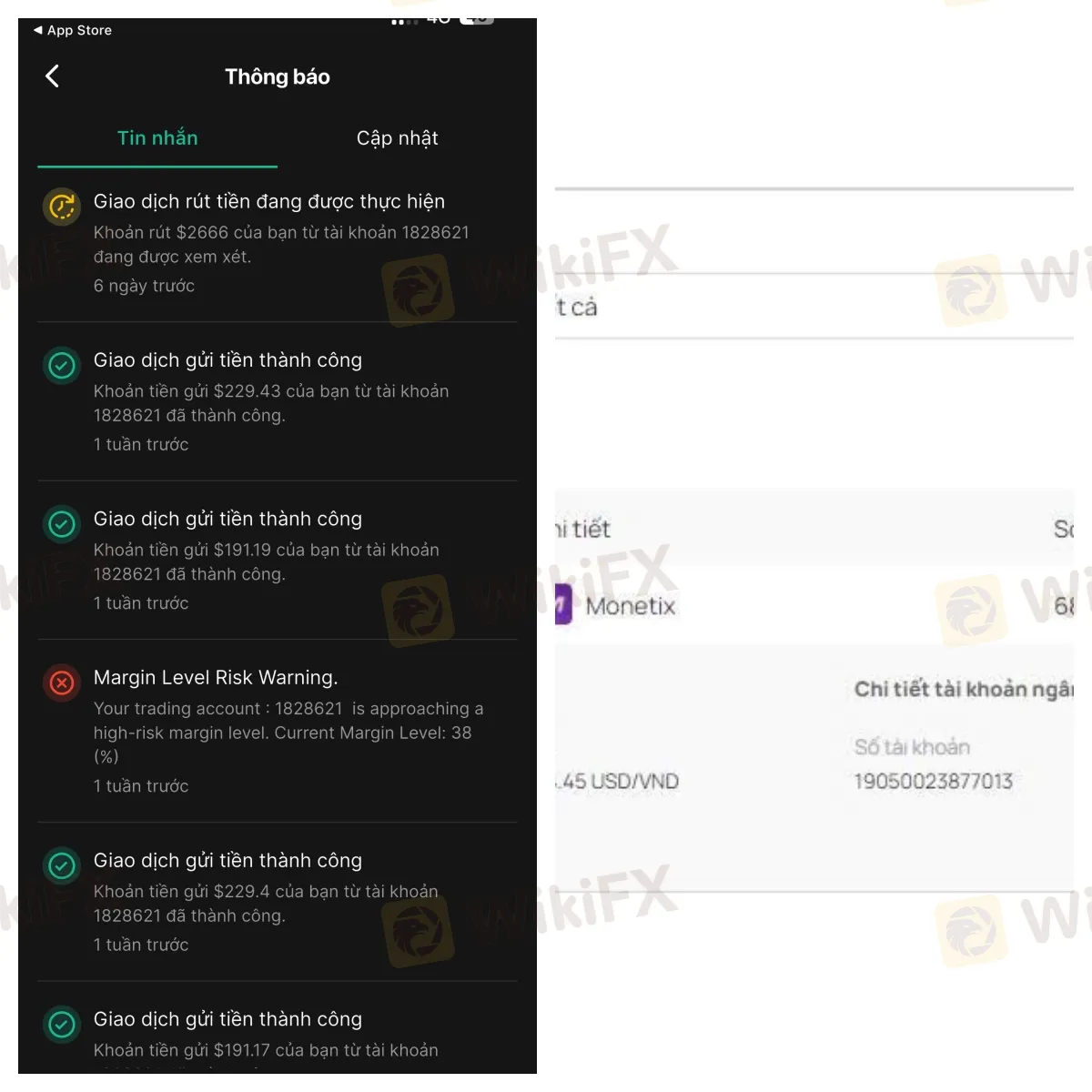
- Withdrawal Failures: The vast majority of complaints (e.g., Cases 1, 2, 4, 13, 14, 15) cite prolonged delays in withdrawals. Users report that requests remain “pending” for days or weeks, exceeding the promised 24-hour processing time.
- Access Issues: Case 20 highlights a scenario where an account was locked without clear justification. Consequently, valid users have reported difficulties with their login stability, preventing them from managing active trades or accessing funds.
- Support Unresponsiveness: Multiple users noted that support staff provide generic “wait” responses without resolving the underlying liquidity transfer issues.
4. Software & Access
IUX utilizes the MetaTrader 5 (MT5) platform alongside a proprietary trading app. The software information provided indicates that the platform includes good search functionality and clear fee reporting. However, regarding security, the audit notes that the system lacks two-step verification and biometric authentication.
To access the platform, traders must complete the login security steps. Given the complaints about account locks, the reliability of the login process is paramount. While MT5 is an industry standard known for stability, the proprietary limitations regarding Multi-Factor Authentication (MFA) are a drawback in an era where digital security is a priority. The absence of biometric security on the trading software is a missed opportunity for enhancing client protection.
Final Verdict
IUX presents a conflicting profile. On one side, it is an ASIC-regulated broker offering ultra-competitive spreads and high leverage, which appeals to aggressive traders. On the other, the significant volume of complaints regarding withdrawal delays and account locking raises serious red flags about operational solvency or administrative efficiency.
While the regulation status provides a degree of legitimacy, the recurring issues with fund releases cannot be ignored. Traders are advised to proceed with caution. For real-time updates on regulation status or to verify the official login page, consult the WikiFX App.

WikiFX Broker
Latest News
Vex Group Review 2025: Is This Forex Broker Safe?
 WikiFX
RM890,000 Lost in Days: Two Penang Directors Fell Prey to Sophisticated Scams
WikiFXUnderstanding Evest Deposit and Withdrawal: Essential Information Before You Start Trading
WikiFXFX Futures Positioning Update: Dollar Firms, Euro Longs Fade, Yen Bias Turns Weaker
WikiFXIs Your Money Safe with PURPLE TRADING? Review, Regulation & WikiFX Alerts
WikiFXUbitMarkets Review: Is This Broker a Scam? See 2025 Cases!
WikiFXQUOTEX Review: Recent Withdrawal Cases and Scam Alerts
WikiFXCTBC Securities Review: Is This Taiwan Broker Safe for Forex?
WikiFXDFSA Issues Warning Against Fraudulent Scams Using Fake Regulatory Information
WikiFXMtxotu Review 2026: Is this Forex Broker Legit or a Scam?
WikiFXRate Calc

