【WikiEXPO Global Expert Interview】Penetrating Asset Narratives to Understand Trading Risks

Abstract:On July 23–24, renowned economist Fu Peng will attend WikiEXPO Hong Kong in Hong Kong, joining global industry leaders, regulatory representatives, and fintech experts to discuss the evolving challenges of trading safety amid macroeconomic transformation. Against the backdrop of accelerating restructuring in global financial markets, the trading environment is facing unprecedented uncertainty. To explore this critical theme, WikiEXPO conducted an exclusive interview with Mr. Fu Peng. This interview series will be released in multiple episodes, each focusing on a key question and presenting his in-depth insights into the global trading risk landscape. Following the first episode, which examined macro structural shifts, this third episode turns to one of the most pressing topics for investors today:About asset allocation in an uncertain world, how should investors interpret the concept of “hard currency”? And which asset classes offer greater transparency and more controllable risks?
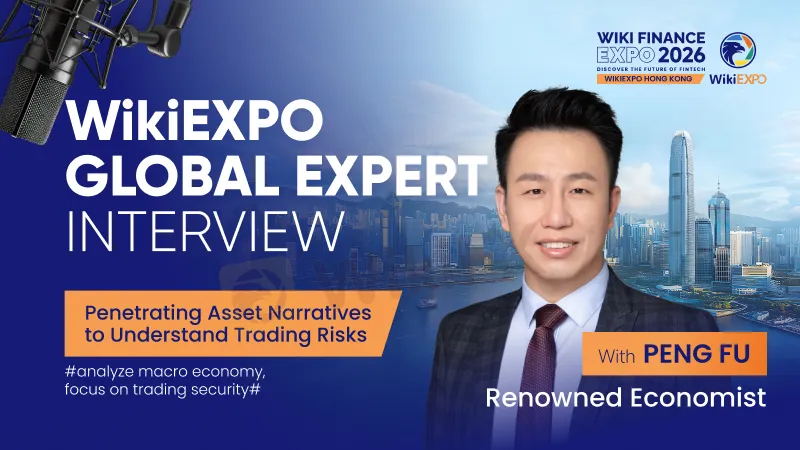
On July 23–24, renowned economist Fu Peng will attend WikiEXPO Hong Kong in Hong Kong, joining global industry leaders, regulatory representatives, and fintech experts to discuss the evolving challenges of trading safety amid macroeconomic transformation.
Against the backdrop of accelerating restructuring in global financial markets, the trading environment is facing unprecedented uncertainty. To explore this critical theme, WikiEXPO conducted an exclusive interview with Mr. Fu Peng. This interview series will be released in multiple episodes, each focusing on a key question and presenting his in-depth insights into the global trading risk landscape.
Following the first episode, which examined macro structural shifts, this third episode turns to one of the most pressing topics for investors today:About asset allocation in an uncertain world,How should investors interpret the concept of “hard currency”? And which asset classes offer greater transparency and more controllable risks?
There Is No “Natural Hard Currency” — Asset Value Is Cyclical
When asked which asset—gold, Bitcoin, commodities, or forex—is most likely to become a “hard currency” in the coming years, Fu Peng offered a clear perspective:
No asset class can inherently serve as a long-term “hard currency.”
In his view, all assets are essentially vehicles whose prices fluctuate around underlying macroeconomic logic. Their performance is determined by economic cycles and institutional environments, rather than by labels.
Take gold as an example. During periods of global order reshaping or systemic transformation, governments often absorb and redistribute large-scale debt, reinforcing golds safe-haven appeal and pushing prices higher. However, when productivity and economic structures stabilize, gold may also experience prolonged periods of stagnation.
This highlights a key principle:
The essence of investing is not identifying a “safe” asset, but understanding its underlying drivers and cyclical position.
Transparency and Risk: Traditional Assets Are More Mature, Not Risk-Free
When comparing investment environments, Fu Peng noted that from a product perspective, traditional financial markets hold structural advantages.
Markets represented by FICC (fixed income, currencies, and commodities) benefit from long development histories and well-established regulatory frameworks:
- More mature disclosure mechanisms
- More stable pricing systems
- Clearer risk identification pathways
As a result, these assets generally offer higher transparency and relatively more controllable risks.
However, he emphasized that “controllable” does not mean “risk-free.” Once complex derivatives or excessive leverage are introduced, risks can escalate rapidly—regardless of the asset class.
Crypto Assets: From Opaque Risk to Gradual Normalization
Regarding crypto assets, Fu Peng pointed out a structural transition in progress.
In their early stages, crypto markets were characterized by:
- Lack of regulation
- Low transparency
- Highly concentrated risks
Today, as mainstream markets gradually bring crypto assets under regulatory oversight—and as institutional capital begins to participate—the landscape is evolving:
- Transparency is improving
- Risks are increasingly being priced
- The overall environment is becoming more structured
Hong Kong, July: Shaping the Future of Trading Safety
As a leading global fintech and trading industry event, WikiEXPO is committed to bringing together industry insights, fostering open dialogue, and driving the continuous evolution of the financial ecosystem.
At the upcoming WikiEXPO Hong Kong, Fu Peng will share further in-depth perspectives. We look forward to connecting with global participants in person to explore a more resilient, efficient, and transparent future for fintech.
July 23–24 · Hong Kong
Engage with Fu Peng live.
In an age of uncertainty, seek answers grounded in clarity.
WikiEXPO Hong Kong — we look forward to welcoming you.
Download the new WikiFX app for updated broker rankings and regulatory statuses by scanning this QR code.

Read more
CMC MARKETS Analysis Report
CMC MARKETS presents a mixed picture for forex traders, earning a moderate overall rating of 6.4 out of 10 based on 228 reviews and a "Use with Caution" designation. The broker demonstrates notable strengths that have resonated with the majority of its client base, particularly its user-friendly interface that simplifies the trading experience, responsive customer support that addresses initial inquiries effectively, and a solid reputation for safety that provides some reassurance to traders. These positive attributes are reflected in the sentiment distribution, where 150 reviews were positive compared to just 47 negative ones, suggesting that many traders have had satisfactory experiences with the platform. However, the 20.6% negative rate cannot be ignored, as it highlights recurring concerns that potential clients should carefully consider.
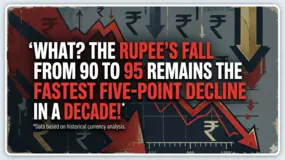
What? The Rupee’s Fall from 90 to 95 Remains the Fastest Five-Point Decline in a Decade!
No, we are not kidding! The rupee has indeed hit this low, from 90 to 95 against the US dollar, the fastest in nearly a decade, highlighting the slump due to rising crude oil prices and global uncertainty from the series of adverse events related to the geopolitical conflict in the Middle East. It just took five months for the rupee to weaken from 90 to 95, the sharpest five-point depreciation since the 2013 taper tantrum. During this period, the rupee declined from 60 to 65 within a month amid concerns over India’s current account deficit and large capital outflows.
Top Trends in India’s Forex, Gold and Stock Markets Today
While it was a flat day for India’s benchmark stock indices (Sensex & Nifty), there was a sort of recovery for the rupee in the foreign exchange market on May 21, 2026. Giving investors more reasons to enjoy was another bull run for gold, which is touching the 16K threshold for 10 grams. Taking three markets combined, the overall sentiment remains mixed for investors. Here is how the day panned out for investors across these markets.
Mazi Finance Analysis Report
Mazi Finance presents a concerning mixed picture with an overall rating of 5.2 out of 10 and a "Use with Caution" designation that should give traders pause before committing funds. Based on 41 total reviews, the broker shows a troubling 43.9% negative rate, with sentiment nearly evenly split between positive experiences (21 reviews) and negative ones (18 reviews), alongside just 2 neutral assessments. Check this extensive analysis report.
WikiFX Broker
Latest News
Peace Talks Subdue Dollar and Oil
WikiFXUS Dollar Holds Flat as Crude Oil Prices Slip
WikiFXDollar Peaks As Asian Currencies Slide
WikiFXWhy Malaysian Traders Are Rapidly Shifting Towards Multi-Asset Trading Strategies and MT5
WikiFXIs AAA TRADING Safe? A Complete 2026 Broker Review
WikiFXOcta Review: Withdrawal Delays, Regulation Warnings, and Broker Risk Exposed
WikiFXDollar Holds as Crude Oil Plunges
WikiFXOcta Review: Withdrawal Delays, Regulation Warnings, and Broker Risk Exposed
WikiFXNvidia\s record results fail to impress investors
WikiFXReview 2026: LOYAL PRIMUS Regulation, Complaints, and Platform Access
WikiFXRate Calc

