Admirals Shifts EU Client Business to Cyprus After Estonia Licence Exit
Abstract:Admirals has shifted EU client servicing to Cyprus after its Estonian investment firm licence was revoked at the company’s request, while broader group streamlining continues in other regions.

Admirals has completed a major change to its European structure after its long-standing Estonian subsidiary, Admiral Markets AS, gave up its local investment firm licence and transferred EU client servicing to a Cyprus entity. Estonias Financial Supervision and Resolution Authority said the licence revocation took effect on 28 April 2026 following a voluntary application submitted earlier this year.
Under the new setup, EU clients will be served by Admirals Europe Ltd, the group‘s Cyprus-based investment firm, which is now set to become the main entry point for the group’s investment services within the European Union. Admirals said the change does not affect other group entities operating under licences in jurisdictions including the UK, Cyprus, Jordan, Kenya, and Seychelles.
Estonia remains in the group structure
Although the Estonian licence is gone, the group is not leaving the country entirely. Admirals said its headquarters will remain in Tallinn, with around 60 employees continuing to support the wider business from there.
The shift had been signaled earlier. In March, the company disclosed planned structural changes under which Admiral Markets AS would relinquish its Estonian licence as part of a broader reorganisation.
Part of a wider streamlining move
The Estonia change mirrors other recent steps across the group. Admirals previously confirmed that its UAE subsidiary, Admirals MENA Limited, applied to cancel its Financial Services Permission with the FSRA, with the cancellation taking effect on 4 November 2025.
Separately, Admirals also agreed to sell its wholly owned Australian subsidiary, Admirals AU PTY Ltd, to a non-related party as part of what the group described as an effort to optimise its geographic focus.
Taken together, the recent moves point to a narrower operating structure, with Cyprus taking on a larger role for EU client business while other licences and entities are being reduced or divested.
About WikiFX
WikiFX is a global broker information platform that provides broker profiles, licence records, risk alerts, and regulatory updates across multiple jurisdictions. It helps traders review a brokers background before opening an account or depositing funds.


Read more

Succedo Markets Review 2026: The First Withdrawal Worked—What Happened Next?
Most traders who have opened accounts with Succedo Markets, a Saint Lucia-based brokerage entity, have reported withdrawal request denials after a pleasant first experience. Traders globally, including those from India, have made these complaints. Meanwhile, some traders have reportedly taken legal recourse to recover their stuck funds. The critical nature of these complaints made us share this in-depth Succedo Markets review. This review does not only examine user allegations but also shed light on its regulatory framework.

Tattvam Review 2026: Investigating Complaints Concerning Trade Executions
Did you encounter trade-related concerns with Tattvam, a Mauritius-based brokerage entity? Several users have reportedly accused the broker of cancelling profitable trades, allegedly citing scalping as the reason. At the same time, traders have reportedly expressed concerns over the lack of understanding among the broker officials about critical trading aspects such as copy trading. In this Tattvam review, we have carefully examined user-reported allegations. Additionally, we have given a regulatory overview of the broker.

suxxessfx Review 2026: Funds Worth $5K-$42K Reportedly Lost. Check Our Investigation!
suxxessfx, a Seychelles-based brokerage entity, grabbed massive ire from traders on broker review platforms such as WikiFX, a globally recognized forex broker regulation inquiry app. Exposure reports have revealed fund losses worth over $5K-$42K on the broker’s trading platform. This suxxessfx review examines serious user allegations and its regulatory status. Read on!
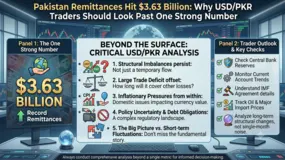
Pakistan Remittances Hit $3.63 Billion: Why USD/PKR Traders Should Look Past One Strong Number
Pakistan remittances reached $3.631 billion in July 2026, up 13% year on year and 4.5% from June, according to the latest State Bank of Pakistan data release. The SBP remittances update is a useful external-sector input, but it is not a currency forecast. This guide explains what the inflow can mean for the Pakistan forex market and USD PKR, and what it cannot prove about the next Pakistan rupee move.
WikiFX Broker
Latest News
Dow Jones Industrial Average round-trips a Fed that promised nothing
 WikiFX
Poland: Growth supported by investment rebound – ING
WikiFXSilver Price Forecast: False breakout and hawkish Fed sink XAG
WikiFXSouth Korean Won: BoK tightening supports KRW against US Dollar – Commerzbank
WikiFXFXDD Malta Licence Ends: What Traders Need to Know
WikiFXEC Markets Marketing Director Nick Xydas Steps Down
WikiFXJapanese Yen dips further despite hotter inflation, upbeat employment data
WikiFXOEXN Broker Review: Regulated but is it Safe for Traders?
WikiFXMexican Peso tumbles as Warsh embarks on inflation fight
WikiFXBreaking: Nonfarm Payrolls benchmark revision to lower US employment by 79,000 through March 2026
WikiFXRate Calc

