BUX Acquires Cyprus License, Hires Jean-Raphael Nahas as MD
Abstract:BUX, a Dutch online broker, announced on Wednesday the completion of its acquisition of a Cyprus Investment Firm (CIF), thus gaining a regulatory green light to offer financial services from Cyprus.

Nahas will oversee BUXs CFDs business in Europe.
The company has migrated EU CFDs clients to the new entity.
BUX previously offered contracts for differences (CFDs) products only under its FCA-regulated UK unit. The acquisition of the Cypriot license came after Brexit as the company is focused on continuing its services to European Union clients. It has completed the migration of its European Union CFDs clients from the UK subsidiary to the European entity.
The broker even has expansion plans in the CFDs trading services within Europe.
New MD Onboard
To gear up the Cyprus business, BUX hired Jean-Raphael Nahas as the new Managing Director of its Cyprus CFD operations. He will oversee all of BUXs European CFDs businesses.
“BUX is a well-established and respected brand in Europe,” Nahas said. “BUX continues to differentiate itself within the CFD space, and with its strong growth plans, I look forward to working with the talented team and bringing BUX to the next level.”
Nahas himself comes with a strong financial industry background. In his decade-long professional career, he worked with several big names in the industry.
Before joining BUX, he was the Chief Operating Officer at Finteractive for a couple of years. Additionally, he led IMS Markets as an Executive Director and CEO for a short stint.
Based in Cyprus, he started working in the financial industry at Blackwell Global Investments as the Head of Business Development. Moreover, he had a short stint at the Cypriot financial services firm, FX88.
“BUX is looking forward to bringing on board someone with Jean-Raphaels track record of driving growth, business development opportunities and heading operational management,” said BUX's CFD CEO, Salim Sebbata who joined the company last July.
“BUXs CFD business is in a pivotal moment of development as we continue to build on the strong momentum of interest in the world of online trading.”


Read more

Is TradingPRO Safe? FCA Warning, Indonesia Blocklist Evidence, and 7 Checks Before You Deposit
This Trading Pro broker review checks the FCA warning, Indonesia blocklist evidence, licence claims, and what South Asian users should verify before depositing.
MT4 White Label Cost in 2026: What Brokers Must Budget Beyond the Platform Fee
The visible fee in an MT4 white label proposal is rarely the real cost of operating it. For an existing broker, the decision is not simply whether an MT4 white label platform is “cheap” or “expensive.” The real question is whether the commercial model remains viable after integration, support, data, client migration, compliance, and exit costs are included. That is why an MT4 white label cost review should be built as a 24- to 36-month operating case. It should compare three credible choices: 1. Keep the present MT4 setup and improve its weakest controls. 2. Replace the MT4 white label provider but retain the client proposition. 3. Migrate selected clients or products to another platform while running MT4 in parallel. This guide explains how to build that case without relying on headline prices or generic vendor claims.

The Rise of Deepfake Investment Scams: ASIC Shares Key Warning Signs
Artificial Intelligence (AI) has grown remarkably recently. However, it has also amplified the scope for financial fraud. One such is the rapid use of deepfake technology involving AI-generated videos, images and audio clips imitating real people. Fraudsters are leveraging these technologies to impersonate financial advisers, celebrities, business leaders and government officials to lure victims into fake investment schemes. Understanding the emerging implications, the Australian Securities and Investments Commission (ASIC) has cautioned investors of investment avenues promoted through convincing AI-generated content. Seemingly authentic, deepfakes are designed to manipulate trust and make people transfer funds before authenticating the investment’s legitimacy.
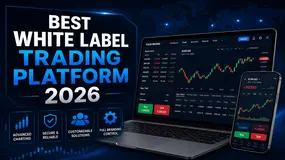
Best White Label Trading Platform 2026
The decision to switch white label providers or migrate to a modern white label trading platform is no longer a luxury for growth-minded brokers—it's a strategic necessity for survival in 2026. The convergence of technological stagnation, regulatory evolution, and shifting client expectations has created a perfect storm.
WikiFX Broker
Latest News
Singapore tightens monetary policy in surprise move as rising oil prices rekindle inflation risk
 WikiFX
SPREDIX MARKETS Review: What Traders Should Know Before Depositing
WikiFXBXB Review – Zero Regulation, Dead Website: What Traders Need to Know
WikiFXHFM Review: No Regulatory Licences and a 1.83 Score , Is Your Deposit Safe?
WikiFXIs Your Withdrawal Plan Killing Your Compounding Gains?
WikiFXHFMARKETS TRADE Review: Zero Regulation and a Central Bank Warning
WikiFXWinvest Review: What Traders Should Know Before Depositing
WikiFXTrade Nation Review: What Traders Should Know Before Depositing
WikiFXWhy Good News Can Push Prices Down: The Expectation Trap
WikiFXFBS Review: What Traders Should Know Before Depositing
WikiFXRate Calc

