US Open: Wall Street struggles for direction after Jerome Powell's speech
Abstract:The opening half of today's trading session on Wall Street has been influenced by varying market sentiments, stemming from Fed Chair Jerome Powell's address at the Jackson Hole Symposium in Wyoming.

Highlight
• Jerome Powell spoke at the Jackson Hole Symposium
• Data from the University of Michigan
• Higher recommendations for Netflix (NFLX.US), better results for GAP (GPS.US)
The opening half of today's trading session on Wall Street has been influenced by varying market sentiments, stemming from Fed Chair Jerome Powell's address at the Jackson Hole Symposium in Wyoming. Notably, major US indices commenced with a marginal upswing, with further gains observed following the commencement of the Fed Chair's discourse at 16:05. Despite this promising start, a shift towards a more hawkish stance became evident during the speech, resulting in sudden declines in indices and an uptick in the strength of the dollar. Currently, there is a continuation of subdued market sentiments, but with less volatility as compared to the post-speech period. At present, US100 is trading below by 0.20%, while US500 maintains performance close to the opening levels.
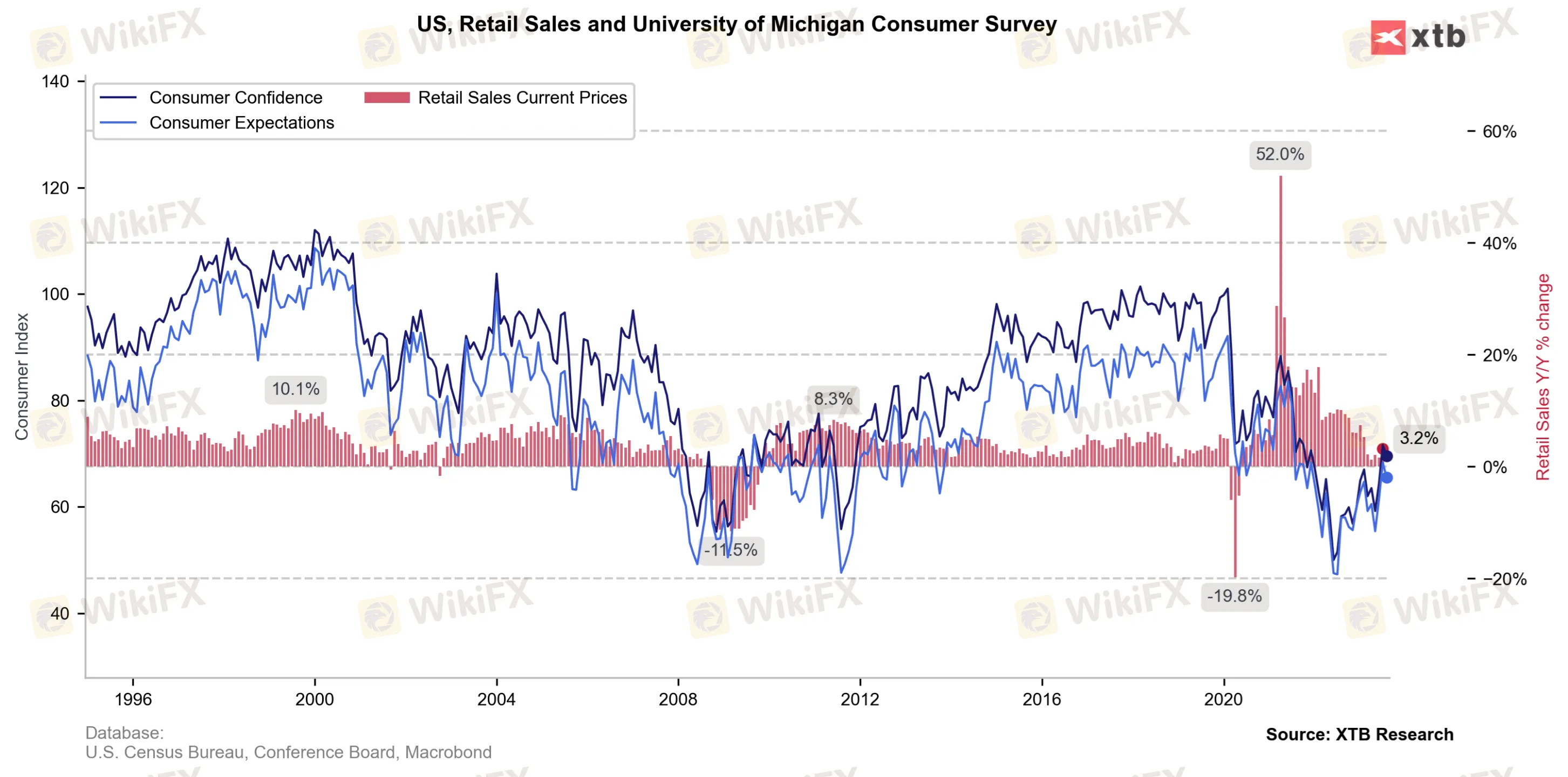
Meanwhile, data from the University of Michigan regarding consumer sentiment and expected inflation was also released. The data didn't bring significant surprises. Inflation expectations increased slightly, with a year-ahead expectation of 3.5% and a 5-year expectation of 3.05%. Consumer sentiment fared somewhat worse, falling short of expectations at 69.5 compared to an expected 71.2. Further deterioration in consumer sentiment could imply a continued decline in retail sales, which had been performing exceptionally well thus far.


Read more
Best White Label Trading Platform 2026
The decision to switch white label providers or migrate to a modern white label trading platform is no longer a luxury for growth-minded brokers—it's a strategic necessity for survival in 2026. The convergence of technological stagnation, regulatory evolution, and shifting client expectations has created a perfect storm.
One Lot Size Mistake Can Cost You Thousands—Here's Where the 1% Rule Helps
Switched from one trading strategy to another but could not avert heavy losses? Wondering what went wrong despite your market analysis being spot on? It may not be a strategic issue then. It may just be that you chose the wrong lot size. Yes, a single oversized position can get your account exposed to far greater risks than you may imagine. You may be moved by the impressive profits with increasing lot sizes. But by doing so, you also invite a proportionate rise in losses. This is where you need to apply the essential 1% risk management principle. This rule helps you assess how much you can afford to lose if a trade does not go as planned.
Your Backtesting Results Mean Nothing If You Ignore This One Live Trading Reality
Backtesting remains one of the primary skills forex traders learn. By implementing a trading strategy based on historical currency pair price information, traders can view their past performance. The strategy leading to consistent profits during backtesting can raise confidence and lay a structured approach to the forex market. However, the path is not as simple as it may sound. Several traders tend to meet a harsh reality when transitioning to live trading. The strategy that seemed almost flawless on historical charts suddenly fails to deliver the results it did before. The sudden difference may not necessarily be because of a poor strategy. Rather, it indicates limitations concerning backtesting and several factors that play their part in a live market where conditions change frequently. It is thus important to understand these differences so that you can set realistic expectations and work on to achieve consistent success.
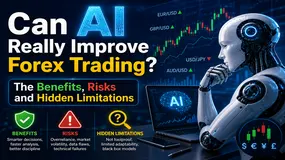
Can AI Really Improve Forex Trading? The Benefits, Risks and Hidden Limitations
We are living in the age of artificial intelligence, where everything including financial matters such as forex are rapidly influenced by this phenomenon. AI-powered tools are here to identify numerous trading opportunities and analyze thousands of data, all in seconds, becoming the preferred option for both retail and institutional traders. Regardless of its immense benefits, traders often question - Whether the AI can truly transform their forex trading experience or is it just like another technology offering scope for unrealistic expectations? While the AI can ensure faster trading and more informed decisions, it is never a sure shot way to profits. As a trader, you need to understand both the strengths and limitations of AI when it comes to generating real wealth.
WikiFX Broker
Latest News
BROKSTOCK Review: What Traders Should Know Before Depositing
 WikiFX
Darwinex Review: Regulated but Office Not Found with Trader Complaints?
WikiFXRBI Ends Deposit Rate Discrimination Between Branches
WikiFXWhy Do Forex Brokers Show Different USD/MYR Quotes?
WikiFXOROKU EDGE Review: Blacklisted by SCM Malaysia and Users Report Frozen Funds
WikiFXStill Trusting Telegram Signals? This Is Why You Are Still Not a Profitable Trader
WikiFXAs Warsh‘s Fed faces pressure to act on inflation, these indicators show it’s at its lowest in years
WikiFXVAULT MARKETS Review: Is Your Deposit Safe?
WikiFXFONDEX Review 2026: Things FONDEX Broker Might Not Want You To See
WikiFXChasing Price: The Psychology That Sinks New Forex Traders
WikiFXRate Calc

