The Person Behind Ivision Market Controversy: Exposed
Abstract:Ivision Markets under scrutiny: Inside the allegations of fraud and investor deception. Learn the facts and figures behind the controversy.

There is a concerning narrative developing in the secretive corners of the financial industry, involving Ivision Markets and their involvement in questionable practices that target unsuspecting individuals. The focus of this controversy is an individual whose behavior has cast doubt on the credibility of the broker in question. The purpose of this essay is to bring attention to the shady operations of Ivision Markets and the person responsible for their problematic activities, to alert and advise potential investors.
Ivision Markets is located at 71-75 Shelton Street, Covent Garden, London, United Kingdom, WC2H 9JQ, while 528 Tamani Arts can be found in Dubai's bustling Business Bay. These establishments present themselves as reputable brokerage firms, attracting individuals with the allure of lucrative investment opportunities.


Multiple accounts have found that there may be a hidden agenda behind the seemingly legal operation. Investors are enticed to deposit money with the promise of significant returns, only to find that their funds vanish without any chance of retrieval. The company has faced allegations of fraudulent behavior, painting a grim picture of its business practices.
Related News:

A closer look at Ivision Markets' regulatory claims finds even more inconsistencies. The company claims to be FinCen-registered and a member of the National Futures Association. However, a verification check on the NFA's official website discloses that no such membership exists, throwing doubt on the broker's regulatory compliance and credibility.
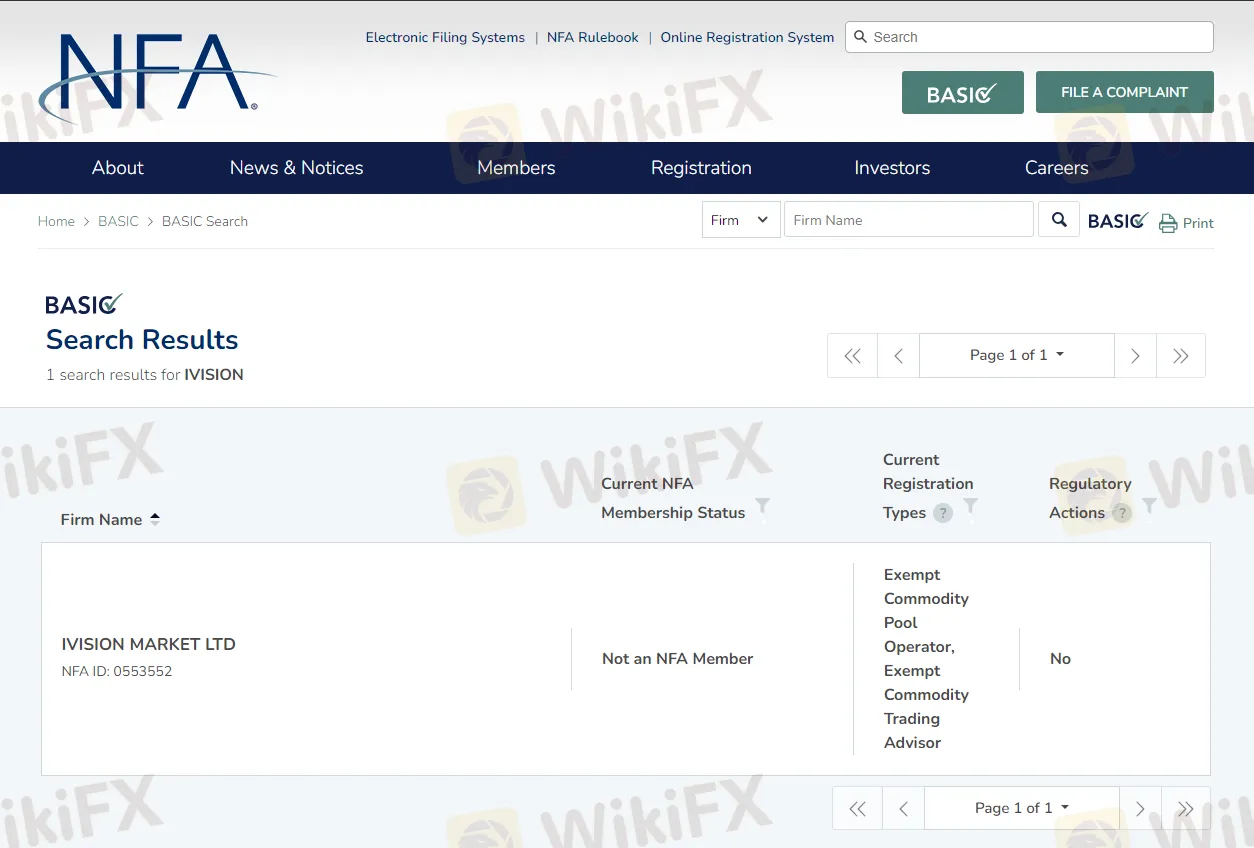
The center of this discussion revolves around an individual who goes by different names, such as Sameer Khan and VAKEEL AHMED, but his actual name is Vakil Ahmed. Ahmed, who serves as the CEO of Ivision Markets, is believed to be the mastermind behind the company's troublesome activities and uses multiple aliases. Ahmed's financial dealings led to an account at Emirates NBD on Shaikh Zayed Road in Dubai, adding another layer to the story of financial fraud.

The contact information for Ahmed and Ivision Markets suggests that they operate on a multinational scale, with phone lines connected to Oman and Dubai. This adds complexity to the questionable operations of the firm. Additionally, doubts have been raised about the validity of Ivision Markets' claim to be a “Private Limited Company” due to inconsistencies between the presented certificate and their actual business practices. These discrepancies cast doubt on the legality of their activities.
The email addresses associated with various departments in Ivision Markets, such as accounting, HR, IB, IT, Sales, and Administration, suggest an attempt to establish a solid corporate structure and enhance credibility. However, the frequent changes in the identities of key individuals like Mohammed Nadeem, the Dubai Team Leader, and the expansion into other regions like Myanmar without specific location information only serve to raise suspicions.


Email addresses owned by Ivision Market LTD
Account Department: account@ivisionmarket.com
HR Department: hr@ivisionmarket.com
IB Department: ib@ivisionmarket.com
IT Department: it@ivisionmarket.com
Sales Department: support@ivisionmarket.com
Admin Department: admin@ivisionmarket.com
There are claims that customers from Dubai and India have been barred, suggesting a pattern of targeting and then dumping investment groups before moving on to other targets, such as naive Myanmar residents.
Ivision Markets is a clear example of the risks involved in the investing industry. They take advantage of people's aspirations and financial goals without their knowledge. This highlights the importance of conducting thorough research, verifying regulations, and adopting a cautious investment approach, particularly when dealing with companies that exhibit similar warning signs as Ivision Markets.
It is important for prospective investors to stay vigilant and informed, especially when encountering offers that appear too good to be true. The scandal involving Ivision Markets and Vakil Ahmed should serve as a reminder for regulatory agencies and investors to closely scrutinize and restrict the activities of businesses with questionable motives in order to safeguard the financial security of the unsuspecting.


Read more
iFOREX Europe Review 2026: Fund Withdrawal Complaints Keep Pouring Year After Year
As we look to sum up iFOREX Europe and check user comments, they all read virtually the same issue, year after year - fund withdrawal issues. While some users never received withdrawal access from the broker, others received it for some time before the trading enterprise suspended their trading account, leaving their funds allegedly trapped on the platform. In this iFOREX EUROPE review, we take a close look at reported fund scam allegations against the brokerage first. Additionally, we will elaborate on the broker’s product & services and its regulatory framework.
Rupee Climbs to a Six-week High Today - Is the Bad Time for the Currency OVER?
The rupee, which has been falling against major global currencies, including the US dollar, is finally back on the path to recovery. As per the initial trade, the rupee touched a six-week high of 94.43 against the USD on June 17, 2026, tracking a plunge in crude oil prices following the interim peace deal agreed upon between the United States of America and Iran. Brent crude oil price slipped to around $78 per barrel, which has not been the case for three straight months following the war. The surging crude oil prices further caused pressure on the rupee, which was already falling apart.
ALFX Review 2026: Fast Withdrawals, Easy Deposits—Reality or Hype?
ALFX, a new-age brokerage firm with around two years of service track record, seemed to have recorded around 30 reviews by users worldwide, including those in India. While some question the deposit & withdrawal process based on their poor experience, some appreciate its smooth payment services and impressive spreads. This ALFX review article takes both positive and negative user feedback for the broker. This will allow you to make an informed financial decision.

Crude Oil Drops to $80, Yet Petrol & Diesel Prices in India Stay High—What's Going On?
The prospect of a US-Iran peace agreement and the reopening of the Strait of Hormuz have pushed crude oil prices sharply lower, with WTI falling to around $80 per barrel and Brent crude to about $83.82. The easing of geopolitical tensions has raised hopes of lower fuel costs, especially for India, which relies heavily on oil imports through the Strait. However, despite crude prices retreating from their recent highs, petrol and diesel prices in India remain elevated. Oil Marketing Companies (OMCs) are using the benefit of lower crude prices to recover earlier losses rather than immediately cutting retail fuel prices. As a result, consumers may have to wait longer before seeing any relief at the pump.
WikiFX Broker
Latest News
Spotting Trend Reversals: How to Read Hammer and Engulfing Candlesticks
 WikiFX
Stockity Review 2026: Offshore Regulation, Complaints, and Withdrawal Risk Signals
WikiFXTrading the 24-Hour Currency Market on a 9-to-5 Schedule
WikiFXDollar Slips After Ceasefire Agreement
WikiFXForexDana Review 2026: Is This Forex Broker Safe?
WikiFXKraken Becomes FIFA World Cup 2026's Official Crypto Exchange | What It Means for Investors
WikiFXASIC Hammers Three Collapsed CFD Brokers with Record AU$300 Million Penalty
WikiFXXtreme Markets Review 2026: Unregulated Status, Warnings, and Withdrawal Complaints
WikiFXFunding Pips Review 2026: Payout Concerns and Unregulated Status
WikiFXDollar Slips as Oil Plummets on Ceasefire Agreement
WikiFXRate Calc

