Baazex Forex Scam Exposed: Trader Loses $6K
Abstract:Baazex, an offshore-regulated forex broker, is a confirmed scam. A trader deposited funds, earned profits, but had $5940.69 + $75.88 stolen under a fake policy violation. Stay safe: check WikiFX exposure before trading. Avoid Baazex today!
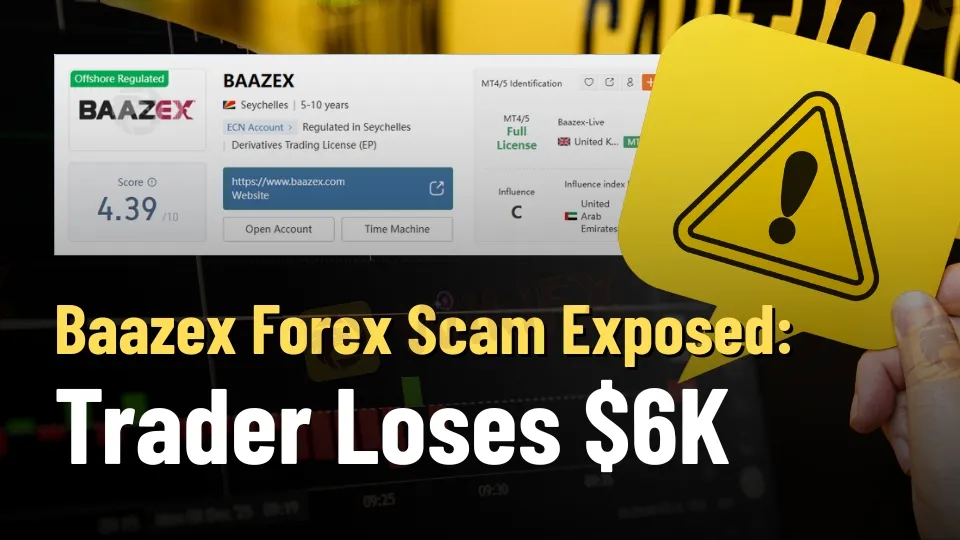
Baazex is presenting itself as a global forex and CFD broker, but serious red flags around forex scams and withdrawals now surround this brand. A recent exposure involving a Vietnamese victim shows how quickly profits can be erased and accusations of “policy violations” used as a weapon to seize client funds.
Baazex Case: Trader From Vietnam Loses Over $6,000
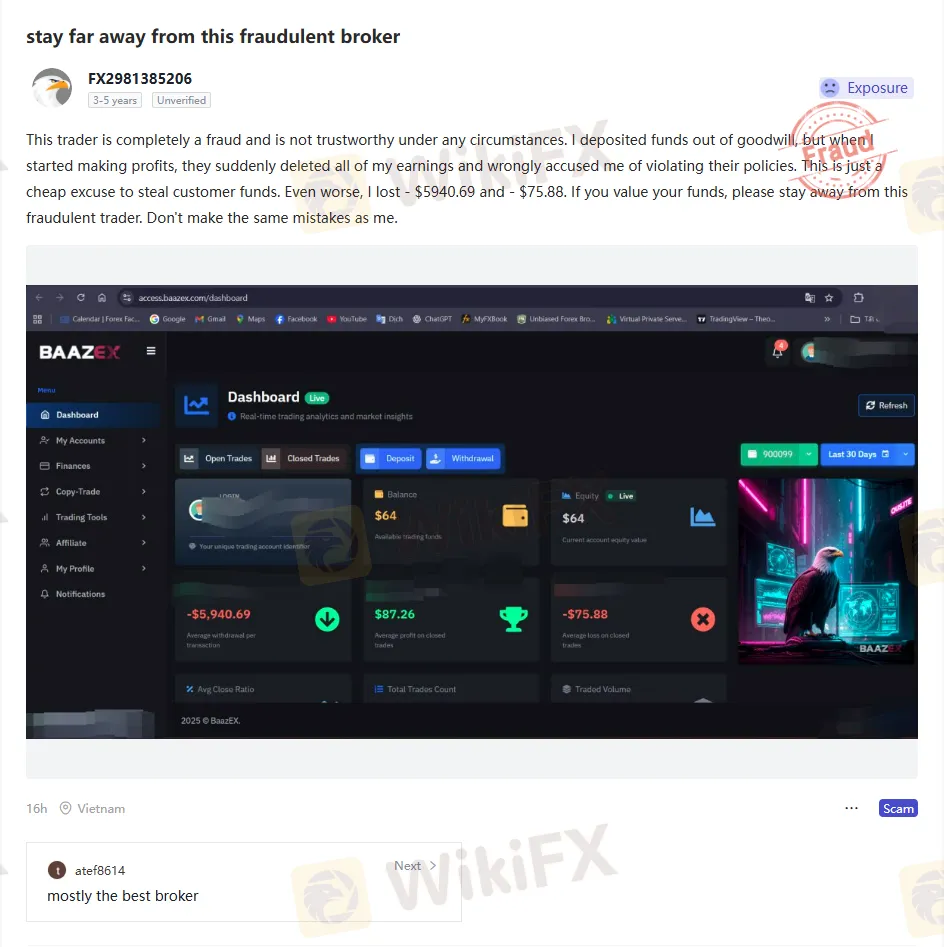
According to a public exposure on WikiFX, a trader reports that Baazex is “completely a fraud and not trustworthy under any circumstances.” The victim explains that they deposited funds in good faith, traded, and began earning profits before the nightmare began.
Once profits grew, Baazex suddenly deleted all earnings in the account. The broker then accused the trader of violating internal policies, without transparent evidence or an honest investigation. In total, the victim states they lost -$5,940.69 and -$75.88, describing the allegation as a cheap excuse to steal customer funds and warning others: “If you value your funds, please stay away from this fraudulent trader. Dont make the same mistakes as me.”
Offshore Regulated: Why Baazex Is High-Risk
Baazex operates under BAZ Capital Markets Ltd, a company registered in Seychelles and “regulated” by the Seychelles Financial Services Authority (FSA) under Securities Dealers License SD134. Offshore regulation of this type is not equivalent to top-tier oversight by authorities such as the FCA, ASIC, or CySEC and generally provides weaker investor protection and softer enforcement.
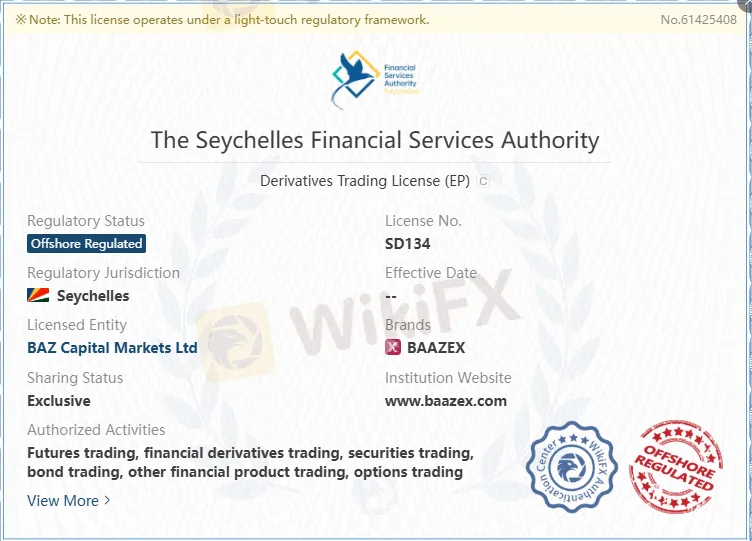
While Baazexs own website promotes this FSA authorization as proof of safety, offshore regimes often lack strict rules on fund segregation, compensation schemes, and transparent dispute resolution. This environment makes it far easier for a broker to engage in a forex trading or investment scam, and much harder for victims to recover lost money when problems arise.
How Baazex Markets Itself vs. How It Behaves
On its official pages, Baazex highlights tight spreads from 0.1 pips, leverage up to 1:400, more than 1,500 trading instruments, and fast execution with no commission. The broker advertises access to forex, indices, shares, futures, commodities, and cryptocurrencies via MetaTrader 5 (MT5), positioning itself as a modern multi-asset broker.
WikiFXs broker profile notes that Baazex has several years of operating history and targets both novice and experienced traders by promoting low spreads, high leverage, and a user‑friendly platform. However, exposures and user feedback reveal a very different picture, in which alleged profit cancellations, blocked withdrawals, and vague “policy violations” undermine any claim of transparency or fairness.
Key Facts About Baazex (At a Glance)
| Aspect | Baazex Claim / Fact | Risk for Traders |
| Brand & Entity | Baazex, operated by BAZ Capital Markets Ltd (Seychelles) | Offshore structure makes enforcement and legal recourse more difficult. |
| Regulation Status | Seychelles FSA, license SD134 (offshore regulated) | Offshore regulated, weaker investor protection vs. major onshore regulators. |
| Products Offered | Forex, indices, commodities, shares, futures, crypto | Wide product range used to attract both beginners and high‑risk seekers. |
| Leverage & Spreads | Up to 1:400 leverage, tight spreads from 0.1 pips | High leverage plus offshore rules increase loss and manipulation risk. |
| Platform | MT5 and web-based trading | Platform branding can create a false sense of safety for new traders. |
| User Exposure (Vietnam) | Profits deleted, accused of policy breach, loss >$6,000 | Clear forex scam alert: earnings wiped and funds effectively confiscated. |
This gap between marketing promises and reported behavior is typical of many forex scams and should immediately trigger caution for any potential client.
Why This Pattern Looks Like a Forex Trading Scam
Several elements in the Vietnam case match common tactics used in forex scams. First, the trader was allowed to trade and generate profits, which built trust and encouraged continued activity before any issue was raised. Second, only after the account became profitable did Baazex allegedly erase all earnings and invoke an unspecified policy violation, without clear documentation, an independent audit, or a fair appeal process.
Third, instead of resolving the dispute or providing transparent transaction logs, the brokers actions resulted in complete losses of -$5,940.69 and -$75.88, effectively converting trading profits and the balance into broker revenue via confiscation. This type of behavior—profits being removed retroactively, withdrawals blocked, and vague “terms” used as justification—is a classic sign of a forex investment scam, especially when combined with offshore regulation.
Using the WikiFX App to Check Baazex Before Depositing
The Baazex exposure from Vietnam is published on WikiFX, a broker information and rating platform that collects regulatory data, user reviews, and scam alerts. By searching for “Baazex” in the WikiFX App, traders can quickly see its offshore regulatory status, historical reviews, and any public complaints or exposures associated with this broker.
WikiFX‘s database allows users to confirm whether a license actually exists, which regulator issued it, and whether that regulator is offshore or top‑tier, which is critical for avoiding a forex scam. Before sending money to any broker—especially one like Baazex—traders worldwide, including in Vietnam, should install the WikiFX App, review exposures, and compare safety scores rather than relying on the broker’s marketing claims.
Brief Broker Review: Is Baazex Worth the Risk?
From a purely product perspective, Baazex offers multiple account types, high leverage, and a wide range of instruments across forex, indices, commodities, and shares. On paper, these features might attract traders seeking flexibility and low-cost trading conditions.
However, when you factor in its offshore-regulated status, the lack of stronger onshore oversight, and public reports of deleted profits and alleged fund seizures, the overall risk profile becomes extremely high. No attractive spread, leverage level, or platform feature can compensate for the possibility that your profitable trades may later be canceled and your balance wiped out via obscure “policy” explanations.
How Traders in Vietnam Can Protect Themselves
Traders in Vietnam should treat any offshore-regulated broker, including Baazex, with extreme caution and assume a higher baseline risk of scams, manipulation, or withdrawal issues. Whenever you see marketing that emphasizes high leverage, ultra-tight spreads, and quick profits, but gives little or no emphasis to regulation and investor protection, consider it a potential scam alert rather than a true opportunity.
Before opening an account or funding a wallet, verify the broker inside the WikiFX App, check the regulatory license, and read exposure reports like the one describing the -$5,940.69 and -$75.88 loss. If you already have funds with Baazex and experience similar treatment—deleted profits, blocked withdrawals, or sudden accusations—you should document every detail, capture screenshots, and file a complaint through WikiFX exposure and your local authorities as quickly as possible.
Final Warning: Avoid Baazex to Stay Safe
The Vietnam case shows that Baazex is willing to delete client profits and hide behind vague policy claims, behavior consistent with a serious forex trading scam. Combined with its offshore regulated status in Seychelles and growing negative feedback, Baazex is not a broker that safety‑conscious traders should trust with their savings.
Use the WikiFX App as your first line of defense whenever you evaluate a broker, particularly in the high‑risk world of forex and CFD trading. If you value your funds and peace of mind, avoid Baazex, share this exposure with other traders in Vietnam, and always perform deep due diligence before depositing into any platform that could turn out to be the next forex scam.

Read more
CMC MARKETS Analysis Report
CMC MARKETS presents a mixed picture for forex traders, earning a moderate overall rating of 6.4 out of 10 based on 228 reviews and a "Use with Caution" designation. The broker demonstrates notable strengths that have resonated with the majority of its client base, particularly its user-friendly interface that simplifies the trading experience, responsive customer support that addresses initial inquiries effectively, and a solid reputation for safety that provides some reassurance to traders. These positive attributes are reflected in the sentiment distribution, where 150 reviews were positive compared to just 47 negative ones, suggesting that many traders have had satisfactory experiences with the platform. However, the 20.6% negative rate cannot be ignored, as it highlights recurring concerns that potential clients should carefully consider.

Top Trends in India’s Forex, Gold and Stock Markets Today
While it was a flat day for India’s benchmark stock indices (Sensex & Nifty), there was a sort of recovery for the rupee in the foreign exchange market on May 21, 2026. Giving investors more reasons to enjoy was another bull run for gold, which is touching the 16K threshold for 10 grams. Taking three markets combined, the overall sentiment remains mixed for investors. Here is how the day panned out for investors across these markets.
Mazi Finance Analysis Report
Mazi Finance presents a concerning mixed picture with an overall rating of 5.2 out of 10 and a "Use with Caution" designation that should give traders pause before committing funds. Based on 41 total reviews, the broker shows a troubling 43.9% negative rate, with sentiment nearly evenly split between positive experiences (21 reviews) and negative ones (18 reviews), alongside just 2 neutral assessments. Check this extensive analysis report.
Best Lowest Spread Forex Brokers in Indonesia 2026
Indonesia's retail forex market has matured into one of Southeast Asia's most active. With more than 800,000 Indonesians now trading currencies online and demand for tighter pricing rising every year, the spread — the gap between a broker's bid and ask quote — has become the single most decisive cost factor for active traders. A difference of even half a pip on EUR/USD can add up to thousands of US dollars annually for a trader running 50+ standard lots a month. This guide breaks down the brokers offering the lowest spreads to Indonesian traders in 2026, explains exactly how spread mathematics impacts your bottom line through real trader scenarios, and walks through the regulatory framework you should understand before depositing.
WikiFX Broker
Latest News
Peace Talks Subdue Dollar and Oil
 WikiFX
Dollar Peaks As Asian Currencies Slide
WikiFXReview 2026: LOYAL PRIMUS Regulation, Complaints, and Platform Access
WikiFXReview 2026: Withdrawal Complaints, No Regulation, and High Leverage Risk
WikiFXPepperstone/激石 Review: A Regulated Broker Facing Deposit, Withdrawal and Login Complaints
WikiFXCMC MARKETS Analysis Report
WikiFXRBI in Action: The Master Plan in Place to Halt the Rupee Fall
WikiFXWhat Actually Moves Currency Prices: Trade Surpluses, The Trilemma, and Economic Data
WikiFXMalaysian Traders: These Are The Time Sessions To Trade
WikiFXWikiEXPO Hong Kong 2026 Set to Open: Global Fintech Forces Converge to Explore the Future of Finance
WikiFXRate Calc

