InvesaCapital Regulation: Is This Forex Broker Legit?
Abstract:Understand the InvesaCapital regulation status. Our review covers licenses, safety risks, and user feedback to determine if this broker is a safe choice.
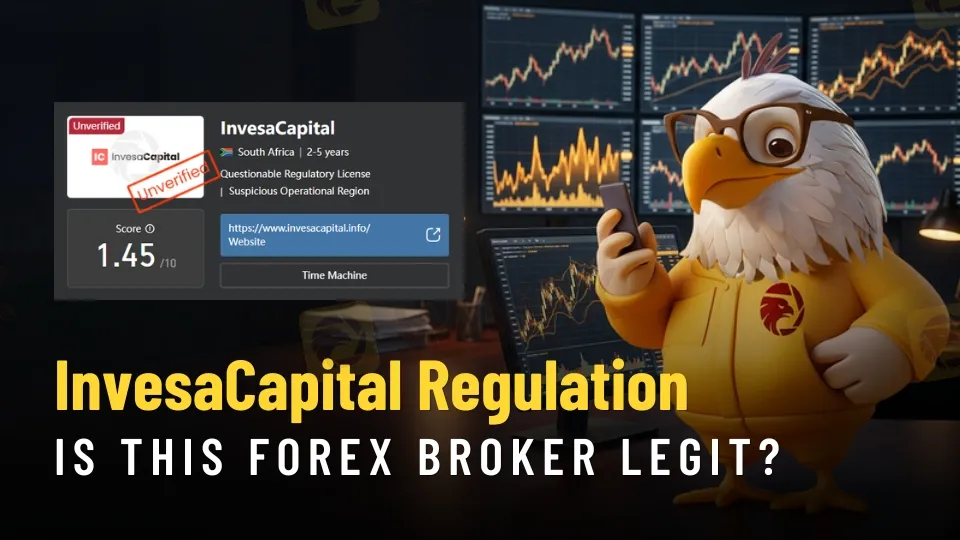
InvesaCapital Regulation and Safety: A Comprehensive Broker Analysis
Navigating the world of online trading requires a clear understanding of the entities handling your capital. One name that has surfaced frequently is the InvesaCapital broker, a firm that presents itself as an innovative solution for those interested in various financial markets. However, before engaging with InvesaCapital Forex services, it is imperative to dissect the regulatory framework and operational transparency of the company.
Operated under the corporate name Imermarket (PTY) LTD and registered in South Africa, this entity has been active for a period of two to five years. While longevity in the market can sometimes signal stability, the technical data associated with this broker suggests a different narrative. Assessing the safety of a platform involves looking at its internal indices, including license validity, business scope, and risk management protocols.
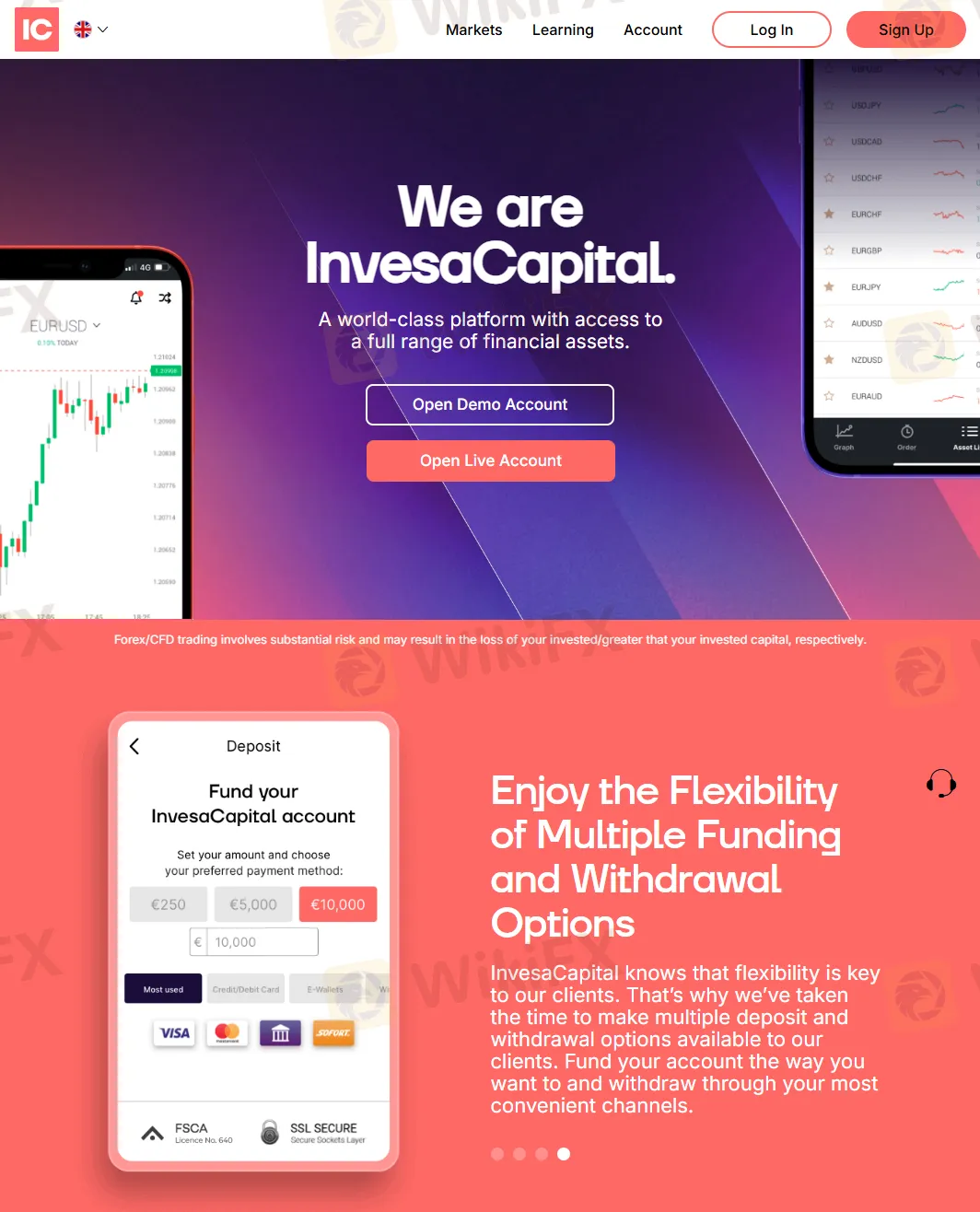
Is InvesaCapital A Regulated Broker?
The most critical factor in choosing a trading partner is its oversight. When investigating the status of InvesaCapital regulation, the findings are deeply concerning. Although the broker claims associations with major regulatory bodies, official data indicates that these are “suspicious clones.” Specifically, the broker cites a license from the Cyprus Securities and Exchange Commission (CYSEC) under number 217/13 and the Financial Sector Conduct Authority (FSCA) in South Africa under license number 640.
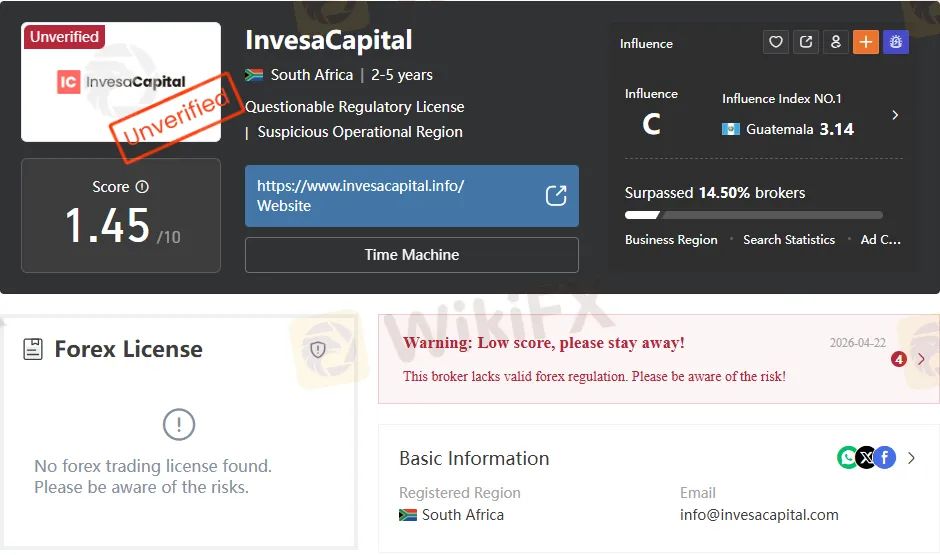
However, verification processes reveal that these claims do not align with authorized records. A “suspicious clone” status means the entity may be using the credentials of a legitimate, regulated firm to mislead potential investors. Consequently, the regulation InvesaCapital relies on stands at an index of 0.00 out of 10. Without valid oversight, there is no legal recourse or protection for client funds, which typically stay segregated and insured under genuine regulatory frameworks.
What Are The Risks Of Trading With InvesaCapital Forex?
When evaluating Forex InvesaCapital, the platforms technical infrastructure and fee schedule present several red flags. Unlike industry-standard platforms such as MetaTrader 4 or 5, this broker restricts users to a proprietary WebTrader. While proprietary software is not inherently negative, the lack of third-party platform support often limits transparency in execution speeds and price feed accuracy.
Furthermore, the risk management index for this broker InvesaCapital is currently at 0.00. This low score is compounded by a high potential risk warning issued to investors. The business scope is also marked as suspicious, suggesting that the firm may be operating outside of its legal permissions. Traders should be particularly wary of the leverage offered, which reaches up to 1:400. While high leverage can amplify gains, in an unregulated environment, it significantly increases the likelihood of total capital loss.
What Is The Current InvesaCapital WikiFX Score?
The overall rating for InvesaCapital is a critical 1.45 out of 10. This score is a weighted average of several performance indicators:
- Regulatory Index (0.00): Reflects the lack of valid, verifiable licensing.
- Business Index (6.55): A moderate score based on their operational history and service offerings, though overshadowed by other failures.
- Risk Management Index (0.00): Indicates a lack of internal controls to protect traders from market volatility or platform errors.
- License Index (0.00): Confirms that no recognized financial authority currently supervises their activities.
These numbers serve as a warning to the global trading community. A score this low typically suggests that the broker lacks the necessary credentials to be considered a safe or reliable financial institution.
What Do Latest User Experiences Reveal About InvesaCapital?
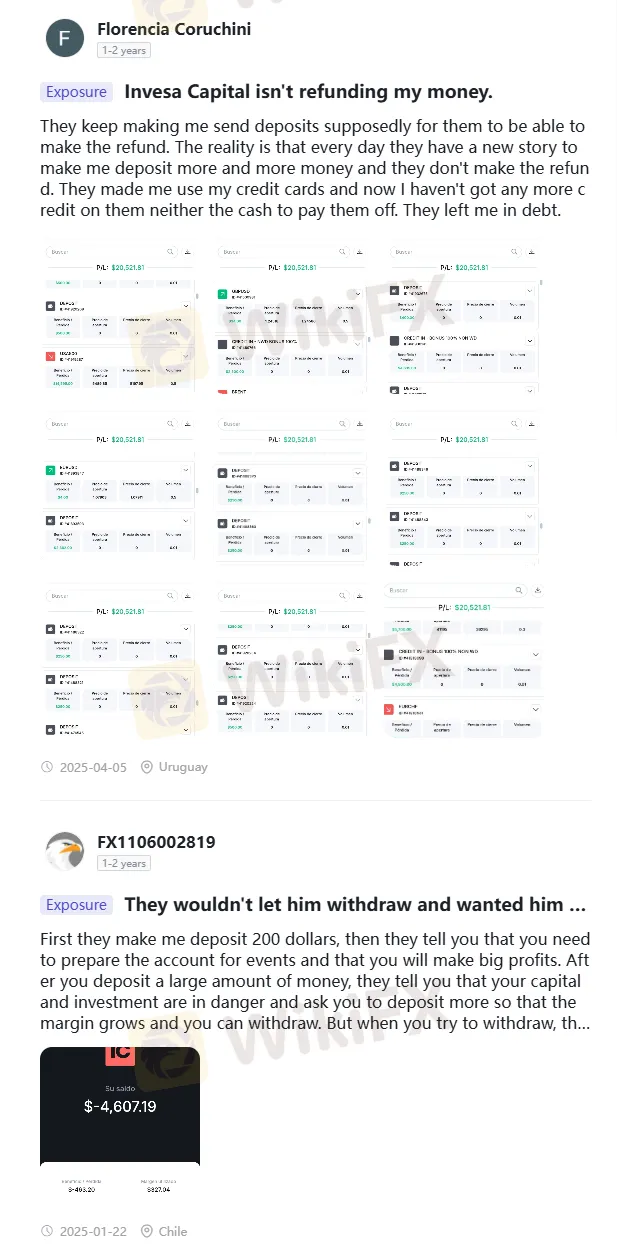
User feedback is a vital metric for understanding the real-world behavior of a firm. Below are the three most recent verified accounts from individuals who have engaged with the platform:
- Florencia Coruchini (2025-04-05): “They keep making me send deposits supposedly for them to be able to make the refund. The reality is that every day they have a new story to make me deposit more and more money and they don‘t make the refund. They made me use my credit cards and now I haven’t got any more credit… they left me in debt.”
- FX1106002819 (2025-01-21): “First they make me deposit 200 dollars, then they tell you that you need to prepare the account for events… After you deposit a large amount of money, they tell you that your capital and investment are in danger and ask you to deposit more… when I try to withdraw, they say no. I lost 11,000 dollars.”
- Isamar Garcia (2023-09-14): “InvesaCapital scammed me out of $1,386.60. My assigned manager convinced me to make a deposit… I lost all my money. Now they are asking me to deposit more money… he doesnt even answer me. I have been left owing the platform $386.”
These reports highlight a recurring pattern of withdrawal difficulties and aggressive pressure to deposit additional funds under the guise of “recovering” losses.
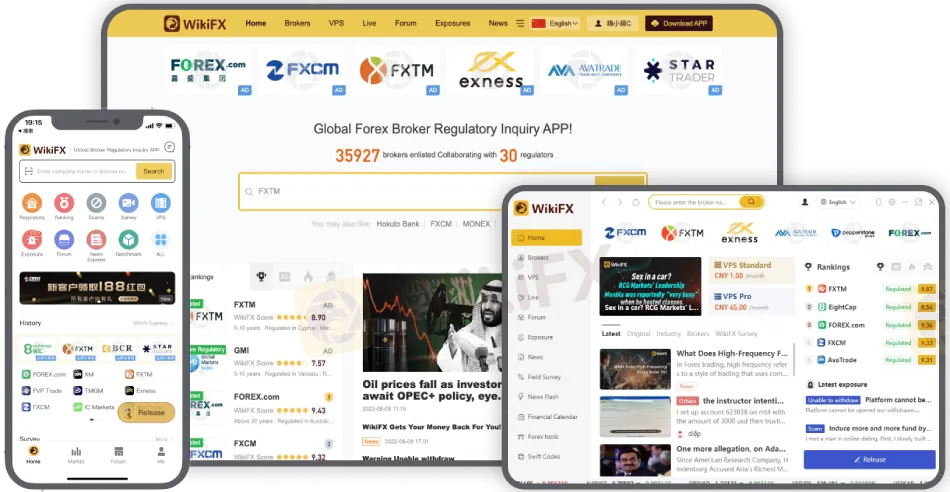
How Does The WikiFX App Enhance Trader Security?
In an era where “suspicious clones” are increasingly common, the WikiFX App serves as a specialized tool to prevent financial loss. The app relates to the events described above by providing real-time verification that can distinguish a legitimate broker from a fraudulent copycat.
Key features include:
- Global Regulatory Inquiry: Users can instantly check the license status of over 50,000 brokers across more than 30 regulators worldwide.
- Scam Exposure Board: The app features a dedicated section where traders post evidence of fraud, helping others avoid similar pitfalls before depositing capital.
- Field Surveys: WikiFX staff physically visit broker offices to verify their existence, ensuring that a firm is not just a “shell” company.
- Score System: By providing a multi-dimensional score, the app simplifies complex regulatory data into an easy-to-understand safety rating.
Conclusion
The evidence regarding InvesaCapital regulation points to a high-risk environment characterized by unverified licenses and alarming user reports. With a total score of 1.45/10 and multiple “suspicious clone” warnings, the platform does not meet the standards of a secure financial provider. Traders are encouraged to utilize professional verification tools and prioritize brokers with confirmed, transparent regulatory standing to safeguard their investments.

Read more
Pepperstone Review 2026: Massive Deposit & Withdrawal Complaints Against This Regulated Broker
Have you experienced issues with Pepperstone deposit & withdrawal processing? From your experience, do you feel that the Australia-based forex broker causes losses to its clients? Did the brokerage entity freeze your account and give you a margin call? All these trading allegations have been rampant on broker review platforms such as WikiFX. This Pepperstone review article takes a close look at the user complaints, especially in 2026. Additionally, we have given an overview of the regulatory framework under which the brokerage entity operates.

Wundersys vs tradgrip: Two Offshore Newcomers Go Head to Head — and Neither Brings Home a Trophy
Some broker comparisons end with a confident "go with this one." This is not one of them — and that honesty is exactly what makes it worth reading. Wundersys and tradgrip are two young, offshore-registered brokers that keep popping up in front of beginner traders, often through aggressive online marketing. Both promise the usual buffet: tight spreads, generous leverage, multiple account tiers. And both, according to WikiFX, sit near the very bottom of the safety scale. So instead of crowning a champion, this comparison is really about something more useful: learning to read the warning signs, understanding the small differences that still matter, and knowing why "the better of two risky options" is still a conversation about risk.
The 6 Lowest-Commission Forex Brokers South Asian Traders Are Flocking To in 2026
If you trade forex from India, Pakistan, Bangladesh, Sri Lanka, or Nepal, you already know the quiet truth that eats into every trader's results: it is not just the market that decides whether you profit — it is the cost of getting in and out of each trade. Shave a couple of dollars off your commission on every lot, multiply it across hundreds of trades a year, and you are looking at the difference between a strategy that works and one that bleeds out slowly. South Asian traders are some of the most cost-conscious in the world, and rightly so. So we pulled the data on the brokers most often recommended for the region, cross-checked every name on WikiFX, and ranked them by the one number that matters most here: what they actually charge you to trade. Before the list, one quick lesson that will make this whole ranking click.

XPO Fund Wants $10,000 Before You Trade a Single Real Dollar — Read This Stunning Revelation
If you have spent even a week inside trading communities lately, you already know the pitch by heart. Pass a quick "challenge," get handed a funded account worth tens of thousands of dollars, and keep up to 80% of everything you make. No risking your own savings, no slow grind of building capital from scratch — just skill, a small fee, and a fast track to the big leagues. It is the exact dream every new trader is secretly chasing, and an entire industry has sprung up to sell it. XPO Fund is one of the louder voices selling that story right now. Its website is slick, its plans sound generous, and its marketing leans hard on words like "industry's lowest fee" and "fast payouts." But before you reach for your card, there is one number sitting quietly on this firm's profile — a number it would rather you scroll past — that every experienced trader would beg you to look at first. And no, it is not the profit split. Let's pull XPO Fund apart piece by piece: what it actually is, who is real
WikiFX Broker
Latest News
The Market's Ledger: Why Price Returns to Fill Liquidity Voids
 WikiFX
Keeping Your Forex Profits Safe With Trailing Stop Losses
WikiFXReview 2026: Japan FSA Regulation, Platform Access, and Complaint Signals
WikiFXHEADWAY Review: Broker Complaints Point to Withdrawals, Zeroed Balances, and Login Blocks
WikiFXIndian Stocks Take a Beating, Sensex Falls by Over 600 Points Today: Check Out Why
WikiFXDollar Hits Two-Month High Amid Surging Yields
WikiFXGetting Started in Forex: Understanding Currency Pairs, Central Banks, and Legal Risks
WikiFXIndia Left Reeling as Net FDI Crashes from $28 Billion to Just $1 Billion in Two Years
WikiFXAssetsFX Review 2026: Unregulated Status, Withdrawal Complaints, and Extreme Risk Signals
WikiFXNews Update: LTCG on Government Securities Slashed to Zero
WikiFXRate Calc

