WikiFX report: Court finally terminates CFTC case against JAFX
Abstract:The Commodity Futures Trading Commission (CFTC) filed a case against unlicensed Forex broker JAFX, which was finally dismissed by the Utah District Court.

The Utah District Court has finally closed a case brought by the Commodity Futures Trading Commission (CFTC) against unregistered Forex broker JAFX.
Lets recall that the case was launched in July 2018. The CFTC Complaint alleged that, from at least September 2016 and continuing to the summer of 2018, JAFX operated as a retail foreign exchange (forex) dealer, without being registered with the CFTC, as required, and that it failed to provide customers with the required Risk Disclosure Statement.
Specifically, the CFTC‘s Complaint alleged that JAFX has been the counterparty to leveraged, retail forex transactions for customers located in the United States, who are not Eligible Contract Participants (ECPs). JAFX allegedly solicits orders from U.S. customers who are not ECPs to open leveraged, retail forex trading accounts through JAFX’s website, as well as videos on YouTube, where JAFX is, or offers to be, the counterparty to each leveraged retail forex transaction. Customers were directed to open trading accounts by submitting an online account application through JAFXs website, and JAFX encouraged customers to access and trade their accounts via a mobile application, according to the Complaint.
U.S. customers could allegedly open an account with JAFX for as little as $100.
In June 2020, a supplemental consent order was entered among the parties so that the case would be resolved. That order provided that JAFX will have to pay a civil monetary penalty of $600,000. The proposed Supplemental Consent Order was said to have resolved all issues in the case.
However, the proceedings remained ongoing for unknown reason. On September 29, 2021, the Court finally issued an order closing the case. The lawsuit was terminated as per the supplemental consent order.
The Utah District Court has not been involved in Forex cases often. Apart from JAFX, another case that proceeded there was the CFTC lawsuit brought against Tallinex.

Read more
Spreadex Review: Wider Spread & Unexplained Account Closure Allegations for This 2-Decade-Old Broker
Did you incur trading losses on the Spreadex platform due to wider spreads? Have you experienced delays in trade processing by the United Kingdom-based forex broker? Has your Spreadex trading account been closed without any explanation? You are not alone! Many traders have expressed concerns on online broker review platforms. In this Spreadex review 2026, we have covered user allegations and provided a regulatory framework the broker operates under.
cTrader White Label Platform: A Practical Guide for Broker Evaluation and Multi-Asset Expansion in 2
A broker can launch a white-label platform quickly and still fail the first serious operating test. The failure often begins quietly: an assets expansion has been approved, the client app is branded, and a new account journey looks complete. Then a client asks why a trade-related status, funding hand-off, or account restriction looks different across channels. Support cannot see the same reference trail as operations. The product owns the screen, but no one owns the explanation. The issue is not a missing feature. It is an untested operating model. That is why a cTrader white label platform should be evaluated as a route to a multi-asset service - not as a shortcut to a more attractive terminal. The central question is whether the broker can add instruments, client channels, integrations, and service capacity without making its controls harder to operate or explain.
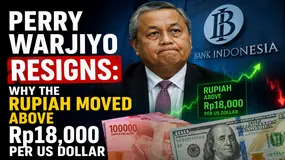
Perry Warjiyo Resigns: Why the Rupiah Moved Above Rp18,000 per US Dollar
Perry Warjiyo resigned as Bank Indonesia governor, Destry Damayanti became acting governor, and the rupiah traded above Rp18,000. Here is what forex traders should monitor next.
Is TradingPRO Safe? FCA Warning, Indonesia Blocklist Evidence, and 7 Checks Before You Deposit
This Trading Pro broker review checks the FCA warning, Indonesia blocklist evidence, licence claims, and what South Asian users should verify before depositing.
WikiFX Broker
Latest News
OtetMarkets Review: Traders Report Frozen Funds and Withdrawal Blocks , Score Sits at 2.00
 WikiFX
Is Octa Safe for Malaysian Traders? Deep Dive into Octa's Regulatory Status
WikiFXPocket Broker Review: Is Your Deposit Safe?
WikiFXReview 2026: Dollars Markets Regulation, Withdrawal Complaints, and Platform Risks
WikiFXCapital Guard Liquidated: $17.4m Raised, Most Funds Gone
WikiFXSingapore Dollar Holds Tight Range as FOMC Looms
WikiFXHow a 'Legitimate' Investment Became a RM67.5 Million Ponzi Scheme That Scammed 206 Investors
WikiFXRupee Hits Two-Week High as RBI Defends 97 Mark
WikiFXForexMart Review: Profit Canceled, Principal Withheld, and a Broker Warning Traders Cannot Ignore
WikiFXTitan Capital Markets Review 2026: Complaints, Withdrawals, and Severe Risk Signals
WikiFXRate Calc

