WTI holds above four-month low touched on Thursday, seems vulnerable to slide further
Abstract:West Texas Intermediate (WTI) Crude Oil prices oscillate in a narrow trading band during the Asian session on Friday and consolidate the overnight slump to over a four-month low. The commodity currently trades just above the $73.00/barrel mark and remains on track to register losses for the fourth straight week.

• WTI is seen consolidating the overnight sharp downfall to its lowest level since July 10.
• Worries about global demand turn out to be a key factor undermining the commodity.
• Dovish Fed expectations continue to weigh on the USD, albeit do little to lend support.
West Texas Intermediate (WTI) Crude Oil prices oscillate in a narrow trading band during the Asian session on Friday and consolidate the overnight slump to over a four-month low. The commodity currently trades just above the $73.00/barrel mark and remains on track to register losses for the fourth straight week.
The incoming softer US macro adds to worries about a deeper global economic downturn, which is expected to dent fuel demand and continue to undermine Crude Oil prices. The US monthly Retail Sales fell for the first time in seven months in October and pointed to slowing demand at the start of the fourth quarter. Adding to this, the number of Americans who filed for unemployment insurance for the first time rose to 231K during the week to November 11 from the 218K previous (revised from 217K).
This comes on top of persistent worries about a slowdown in China – the world's top oil importer – and easing fears of a supply disruption from the Middle East, validating the negative outlook for the black liquid. Meanwhile, bets that the Federal Reserve (Fed) is done with its policy-tightening campaign and might start cutting rates in the first half of 2024 keep the US Dollar (USD) bulls on the defensive. A subdued USD price action, however, does little to impress bullish traders or lend any support to Oil prices.
The commodity's inability to attract any buyers or register any meaningful recovery suggests that the bearish trend might still be far from being over. That said, technical indicators on the daily chart have moved on the verge of breaking into oversold territory, making it prudent to wait for some near-term consolidation or a modest bounce before the next leg up. Nevertheless, Oil prices seem poised to register losses of over 5% for the week.


Read more
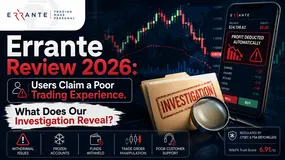
Errante Review 2026: Users Claim a Poor Trading Experience. What Does Our Investigation Reveal?
Errante, a Seychelles-based brokerage entity, is facing serious trading allegations from users globally. Users claim to have earned profits legitimately using their strategies. However, on the Errante login dashboard, many users reported an automatic deduction of earned profits. At the same time, withdrawal issues allegedly haunt many traders here. While investigating, we also found complaints concerning trade order manipulations by the broker. In this Errante review, we have examined these allegations and given an overview of its regulatory status.
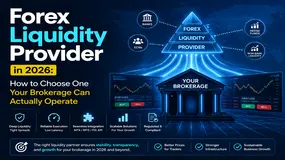
Forex Liquidity Provider in 2026: How to Choose One Your Brokerage Can Actually Operate
A forex liquidity provider decision now shapes the broker's spreads, fills, slippage, hedging cost, regulatory exposure, and exit options long after the platform is chosen. This 2026 guide explains what a forex LP actually delivers versus what the marketing claim says, how tier-1 banks, prime of prime, and multi-LP aggregators differ in practice, and how execution models (DMA, ECN, STP) change the broker's daily operating reality. It also walks through due diligence on credit, technology, reporting, governance, and exit, and shows how a 2026 broker can combine a primary LP with secondary routing without losing control of the client experience. Use the decision matrix, integration timeline, and operational tests to compare an fx liquidity provider before contract signature, not after a market event.
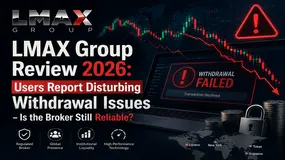
LMAX Group Review 2026: Users Report Disturbing Withdrawal Issues - Is the Broker Still Reliable?
Did LMAX Group deny you withdrawals citing frozen funds at the wallet service provider’s end? Have you been so exhausted by the endless withdrawal hassles that you have begun to stop investing in the platform? Has this UK-based liquidity provider even questioned your fund ownership status when you requested withdrawals? You are not alone! Many users have complained about these issues while sharing their LMAX Group reviews.

TickTrader White Label in 2026: Can You Add Liquidity Depth Without Adding Operational Blind Spots?
A TickTrader white label can look like the fastest route to a modern branded trading environment, but a fast launch is not the same as a controlled launch. This 2026 broker guide explains what the TickTrader platform is, where a Soft-FX broker solution can sit in a wider operating stack, and how to evaluate the difference between a white label, a server licence, and a connected CRM or Client Office setup. It also unpacks TickTrader cost beyond the monthly headline, including implementation, integration, support, data, governance, migration, and exit assumptions. Use the practical questions, workflow tests, comparison table, and launch checklist to assess a Soft-FX TickTrader provider without mistaking a feature demo for evidence that your brokerage can run the service safely at scale.
WikiFX Broker
Latest News
Why You Can’t Generalise Forex Regulation Across Africa
 WikiFX
XM Opens Gold Trading Through the Weekend with GOLD24-7
WikiFXShe Loses RM622,320 After Falling for a Fake Online Stock Investment Scheme
WikiFXATFX Broker Review 2026: Regulated but Is It Really Safe for Traders?
WikiFXForex CRM Software in 2026: How to Choose the Operational Backbone Your Brokerage Can Actually Run o
WikiFXG4Trade Review 2026: Unverified Regulation and Withdrawal Concerns
WikiFXIs Gold Still a Safe Haven in 2026?
WikiFXRinggit Gains vs Majors, Slips vs Dollar in Recurring Trend
WikiFXCourt Ends 28-Year Sh185.5m Battle Against CBK
WikiFXSTMARKET Review: A Cambodia SERC License and a $3,250 Withdrawal That Went Missing
WikiFXRate Calc

