NinjaTrader Fined $250,000 for Anti-Money Laundering Lapses
Abstract:NinjaTrader fined $250K by NFA for AML failures, missing suspicious trades and high-risk accounts. Learn about the brokerages compliance issues and regulatory history.
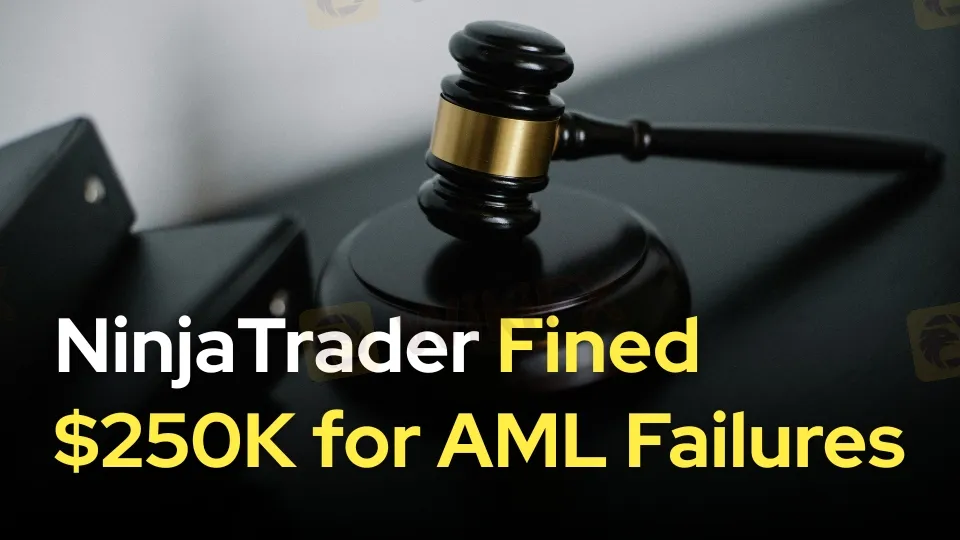
The National Futures Association (NFA) has fined NinjaTrader $250,000 following an in-depth investigation that revealed critical lapses in the brokerage firm's anti-money laundering (AML) program. The fine, issued in May, highlights a pattern of missed red flags, poor internal communication, and a failure to adequately screen suspicious customer activity.
The Chicago-based broker, now owned by cryptocurrency exchange Kraken, was found to have allowed dozens of questionable accounts to operate without proper scrutiny. According to the NFA, NinjaTrader failed to track key warning signs such as unusual wire transfers, accounts tied to high-risk jurisdictions, and evidence suggesting some users were operating on behalf of others — a serious regulatory violation if left unapproved.
The NFA‘s review found that NinjaTrader’s compliance systems often failed to detect obvious patterns. In one particularly troubling case, a customer claiming to be a 20-year-old beneficiary of inheritance funds was in fact a front for his father — a convicted money launderer — who was managing the trades behind the scenes.

Another case involved a 70-year-old trader who made a staggering 11,000 trades in a single month, up from just a handful the previous period. The individual contacted the company multiple times daily but was nonetheless allowed to continue trading until the NFA intervened.
Investigators also discovered that nearly 500 accounts from countries on NinjaTraders internal “blocked list” remained active, despite known compliance risks. The firm claimed it redefined its “risk profile” after a 2020 change in ownership, but failed to update its written AML procedures accordingly.
Compounding the issue, NinjaTrader had not screened tens of thousands of client accounts against key anti-money laundering and anti-terrorism databases maintained by the Financial Crimes Enforcement Network (FinCEN). This oversight was blamed on internal miscommunication within the compliance team, yet the NFA viewed it as a significant vulnerability that could have exposed the firm to greater legal and reputational risks.
NinjaTrader settled the matter without admitting or denying the allegations, though it has reportedly begun overhauling its AML systems. Still, the NFA cautioned that the firm's fragmented internal structure and weak cross-departmental coordination created an environment where risk was routinely downplayed or overlooked altogether.
This is not NinjaTraders first clash with regulators. Its predecessor, York, was fined in 2012 by the Commodity Futures Trading Commission (CFTC) and again in 2020 by the NFA for similar compliance failings. Regulators noted that despite the rebranding and change in ownership, many of the same patterns have persisted.
The 2023 review also drew criticism of NinjaTrader President Michael Cavanaugh, who approved the firms AML program but failed to ensure it was actually enforced. Under his leadership, the company continued to accept high-risk accounts without aligning its policies or protocols with compliance best practices.
The NFA‘s actions send a clear signal to other brokerage firms in the industry: a robust and consistently implemented AML framework is not optional — it’s a regulatory requirement. In NinjaTraders case, failing to connect the dots internally came at a significant cost, both financially and reputationally.
Stay updated on financial regulations! Subscribe to our newsletter for the latest NinjaTrader and brokerage industry insights.


Read more
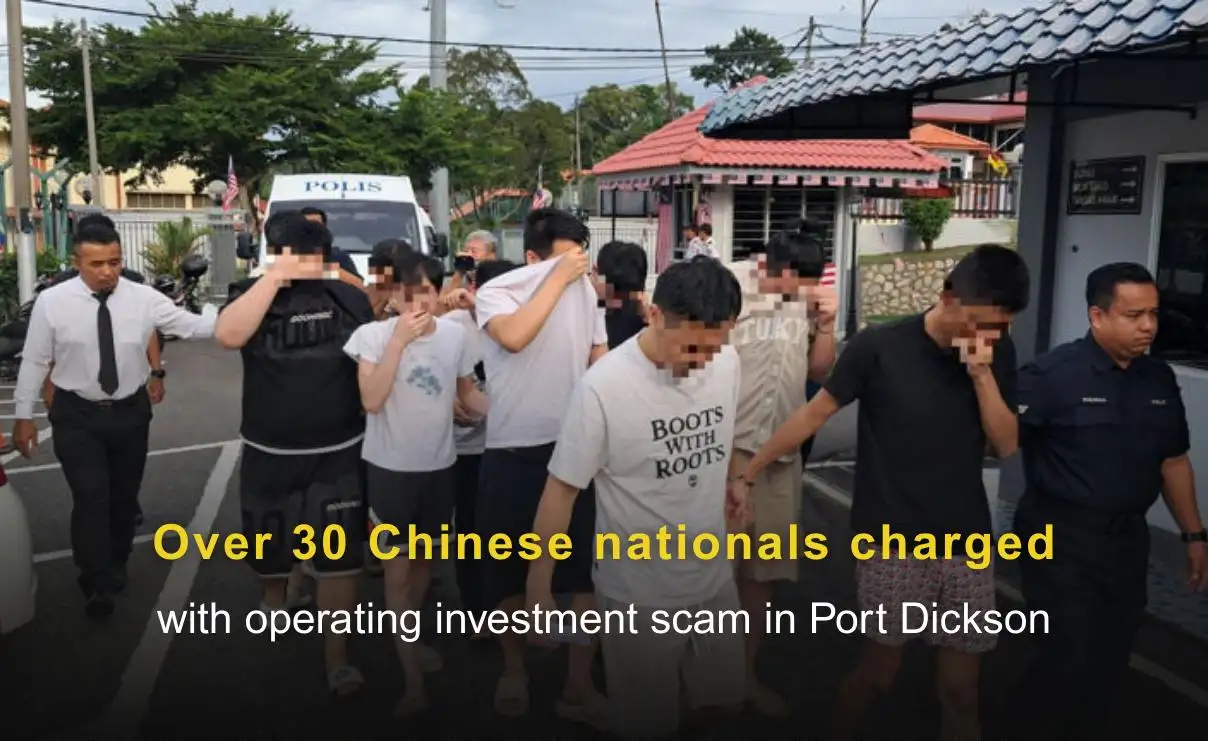
Over 30 Chinese nationals charged with operating investment scam in Port Dickson
Thirty-six Chinese nationals were charged in a Malaysian court for allegedly running an online call centre that scammed victims into non-existent investment schemes, with bail denied due to flight risk and ongoing investigations.
4T Review: Traders Report Deposit Pressure, Fund Scams & Withdrawal Issues
Did the 4T broker deny you withdrawals after you made profits following a spell of losses? Were your funds suspiciously deleted from the broker’s trading platform? Does the forex broker tell you to deposit more once you lose capital? Have you witnessed fund misappropriation by the 4T officials? You are not alone! Many traders have expressed these concerns online. We have investigated some of the complaints in this 4T review article. Have a look!
ROCK-WEST User Reputation: Looking at Real User Feedback and Common Complaints to Check Trust
When dealing with online trading, checking things carefully isn't just a good idea - it's necessary to protect your capital. This leads us to an important question that many potential traders are asking: Is ROCK-WEST safe or scam? The answer isn't simply yes or no. To make a smart decision, you need to look beyond marketing claims and examine real facts and actual user experiences. This article provides a thorough, fact-based look into ROCK-WEST's business profile and reputation. Our goal is to help you, the trader, make a good decision. We will carefully examine the broker's regulatory status, its official rating, and most importantly, the user reviews and serious complaints sent to the financial broker checking platform, WikiFX. By looking at the positive feedback, the serious accusations and the company's official responses, we will build a complete and balanced view of the risks and benefits of trading with ROCK-WEST.
ROCK-WEST Regulation: Understanding Its License and Company Information
For any trader, the most important question about a broker is whether it is properly regulated. When it comes to ROCK-WEST, the answer is complicated and needs careful study. At first glance, ROCK-WEST is a broker regulated offshore, with a license from the Seychelles Financial Services Authority (FSA). However, this basic fact comes with serious risks that potential clients need to understand. The broker has a low trust score and many user complaints on global checking websites. These are not small problems; they show major issues with keeping funds safe and running the business properly. This article will break down the details of ROCK-WEST's license, company structure, and user reviews to give a clear, fact-based picture of what trading with this company really means. Based on information from the global broker checking platform WikiFX, ROCK-WEST's profile brings up several questions that traders need to think about. This shows how important it is to use checking tools before inves
WikiFX Broker
Latest News
Macro Strategy: Hard Assets Favored Over Consumption in Inflationary Environments
 WikiFX
Central Bank 'Super Week': ECB, BoE, and RBA to Test FX Volatility
WikiFXPrecious Metals Capitulation: Gold Plunges 12% to Break $5,000 Support
WikiFXEZINVEST Review: The Financial Abattoir Behind the CySEC Mask
WikiFXSARB Pauses Rate Cycle at 6.75% Amid Lingering Uncertainty
WikiFXEurozone Resilience: Economy Defies Gloom as Germany Rebounds
WikiFXLured by a deepfake video, retiree lost over $4,000 in an investment scheme
WikiFXGeopolitical Risk: Iran Accuses West of Inciting Domestic Unrest
WikiFXOil Markets Tighten: OPEC+ leans towards extending output pause into March
WikiFXGeopolitical Risk: US Carrier Deploys as Iran Eyes Hormuz
WikiFXRate Calc

