China Delivers 5% Growth Target, Yet December Data Reveals Deepening Consumption and Property Cracks

Abstract:China met its 5% annual growth target for 2025, but a sharp deceleration in December retail sales and a deepening property crisis suggest significant headwinds for the yuan and commodity currencies.
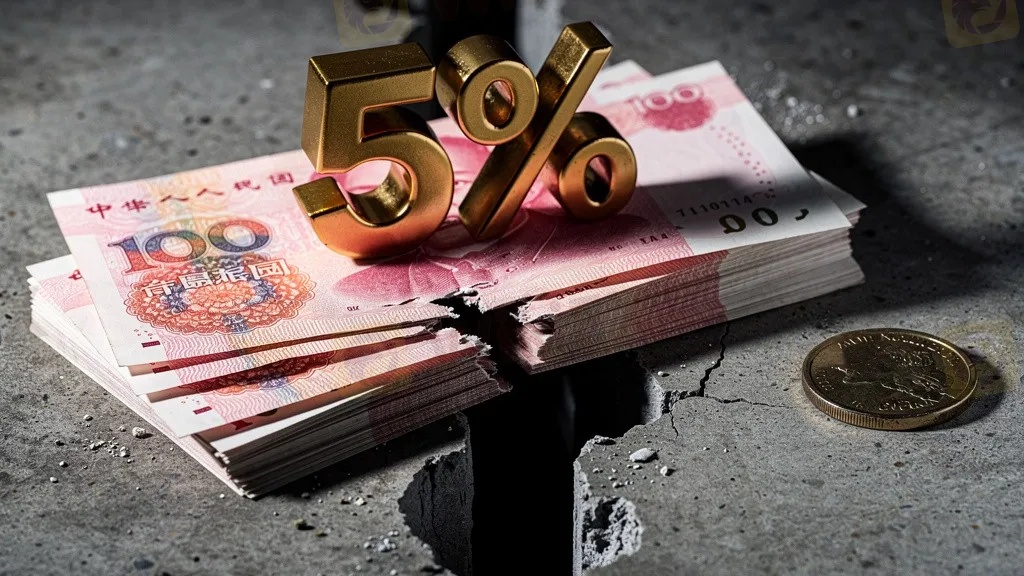
China successfully achieved its annual growth target of 5.0% for 2025, according to data released by the National Bureau of Statistics on Monday. However, the surface-level stability masks a deteriorating economic picture in the fourth quarter, highlighted by a collapse in consumption momentum and an intensifying real estate bust.
Underlying Weakness in Q4
While the full-year figure met Beijing's psychological benchmark, the fourth-quarter GDP growth slowed to 4.5%, signaling a loss of steam heading into 2026. The most alarming signal came from December's activity data:
- Retail Sales: Plummeted to a mere 0.9% year-on-year growth (down from the annual average of 3.7%), indicating that consumer confidence has evaporated despite government stimulus efforts.
- Property Sector: Real estate development investment contracted by a staggering 17.2% for the year. New home sales by value plunged 12.6%, creating a massive drag on the broader economy.
Housing Deflation Persists
The property market, once the engine of Chinese growth, continues to act as a deadweight. In December, home prices across 70 major cities accelerated their decline.
- Tier-1 Cities: Even economic hubs like Beijing and Shanghai are not immune, with secondary market prices falling 8.5% and 6.1% year-on-year, respectively.
- Broad Decline: New home prices in lower-tier cities dropped between 2.5% and 3.7%, confirming that the deflationary pressure is systemic rather than localized.
Market Implications: AUD and CNY
The disconnect between the headline GDP beat and the dismal monthly data has created a complex trading environment. The Chinese Yuan (CNY) remains under pressure as the weak consumer data fuels expectations for aggressive monetary easing by the PBOC in Q1 2026.
For proxy currencies, particularly the Australian Dollar (AUD) and New Zealand Dollar (NZD), the data presents a bearish signal. While the NZD saw a brief knee-jerk jump on the headline GDP print, the lack of consumer demand in China—Australias largest export market—suggests capped upside for commodities. Traders should anticipate volatility in the AUD/USD pair as the market digests the reality of China's “hard landing” in the property sector.
WikiFX Broker
Latest News
RM668K Gone Overnight: Factory Supervisor Trapped in Fake Investment Scam
WikiFXChina Delivers 5% Growth Target, Yet December Data Reveals Deepening Consumption and Property Cracks
WikiFXItaly’s Consob Blocks Five Unauthorized Investment Websites in New Enforcement Action
WikiFXGold Tears Through $4,700 Barrier as Risk Premiums Spike
WikiFXLondon Holds Firm as Global FX Hub, Handling 38% of Worldwide Trading
WikiFXIVY MARKETS Exposure: Traders Allege Illegitimate Fees, Blocked Withdrawal Orders & No Refunds
WikiFXGold Hits Record Highs as Geopolitical Risks Mount: Iran Tensions and US-Europe 'Greenland' Spat Rattle Markets
WikiFXTech War Intensifies: US Targets Nvidia China Exports with Tariffs Amid Global AI Chip Scarcity
WikiFXOil Markets: Geopolitics Clash with Supply Realities
WikiFXYear of the Horse(2026): Which Zodiac Signs Will Excel Financially?
WikiFXRate Calc

