WIKIFX REPORT: Alpha FX Group reports 68% jump in revenue for 2021
Abstract:Alpha FX Group plc (LON:AFX), a high-tech, high-touch provider of FX risk management, accounts and payments solutions to corporates and institutions internationally, today reported its audited Full Year Results for the financial year ended 31 December 2021.

Alpha FX Group plc (LON:AFX), a high-tech, high-touch provider of FX risk management, accounts and payments solutions to corporates and institutions internationally, today reported its audited Full Year Results for the financial year ended 31 December 2021.
In the year ended 31 December 2021 revenue increased by 68% over the prior year to £77.5 million with strong growth across all divisions.
The FX Risk Management division focuses on supporting corporates and institutions that trade currency for commercial purposes through the Groups sales teams located in London, Toronto and Amsterdam. Revenue grew by 43% over the prior year to £57.0 million with strong growth across all regions.
Alternative Banking Solutions revenue grew substantially from £6.4 million in the prior year to £20.4 million in 2021. The revenue includes £1.1 million (2020: £nil) relating to the recharge of bank fees incurred by the Group on Euro E-money wallet balances which attract a negative interest rate, with the cost being directly passed to the client.
As account fees are a growing revenue stream within the Group, management has reassessed revenue recognition relating to account fees. As a result, in 2021, revenue from annual account fees is recognised on a straight-line basis over the 12 months from the date the account was opened. At 31 December 2021 there was £2.2 million of deferred revenue that will be recognised in the Statement of Comprehensive Income for 2022.
Total revenue from hedging products (forwards and options) has increased against the prior year from £27.5 million to £40.7 million. The revenue from forward transactions represents the difference between the rate charged to clients and the rate paid to banking counterparties. There were no structural changes in forward commission rates in the year in comparison to the prior year.
Spot revenue increased from £14.7 million to £26.1 million due to the growth of Alpha Pay, a branch of Alpha FX Limited (formerly Alpha Platform Solutions), together with increased spot flow from the Institutional business, where underlying activities mean that spot transactions are more common.
The underlying profit excludes the impact of share-based payments, and on this basis, the underlying profit before tax in the year increased by 91% to £33.4m. Statutory profit before tax increased by 94% to £33.2m.
The year ended 31 December 2021 was another year of significant investment. Overall headcount increased in the year from 147 to 214 at 31 December 2021 to support future long-term growth. Despite this investment and the impact of the recharge in bank charges of £1.1m being included in revenue, the underlying profit before tax margin increased to 43% (2020 – 38%). This was in line with the statutory profit before tax margin of 43% (2020 – 37%).

Read more

Pakistan Forex Reserves Reach $22.5 Billion: Why a Stable USD/PKR Snapshot is Not Yet a Trend
Pakistan forex reserves stood at $22.506 billion on 13 August 2026, while the SBP dashboard showed a USD/PKR mark to market rate of 277.5713 on 20 August. This article separates the SBP forex reserves facts from predictions about the Pakistan rupee and the forex market Pakistan.

XM Review 2026 for India: RBI Alert, Regulation, Login and Forex Risk
The RBI Alert List, updated on 19 November 2025, names XM and www.xm.com at row 33. RBI says listed entities are not authorised to deal in forex under FEMA or operate an authorised forex ETP in India. XM also publishes overseas licence and risk information. These facts must stay separate. An overseas licence does not create RBI authorisation for an Indian resident.

eToro Review 2026 for India: RBI Alert, Regulation, Login and Forex Risk
The RBI Alert List, updated on 19 November 2025, names eToro and www.etoro.com at row 5. RBI says listed entities are not authorised to deal in forex under FEMA or operate an authorised forex ETP in India. eToro also lists regulated companies in the UK, Europe, Australia, and other markets. Those overseas licences are entity-specific. They do not create RBI authorisation.
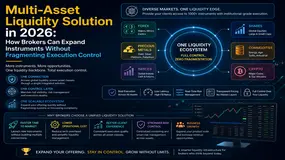
Multi-Asset Liquidity Solution in 2026: Expand Instruments Without Fragmenting Execution
A multi-asset liquidity solution can help a broker support FX, CFDs, commodities, and indices through a more unified operating model. But adding asset classes can also create fragmented symbols, pricing, routing, margin rules, records, and client messages if controls are not designed first. This 2026 guide explains how a multi asset liquidity provider, forex CFD liquidity setup, commodity liquidity provider, and indices liquidity provider fit into a broker-owned execution service. It outlines the due-diligence questions, shared-control model, cost drivers, and 90-day implementation plan that help teams expand without making the execution chain harder to explain. The aim is not to promise deeper liquidity or better trading outcomes. It is to create evidence that a broker can supervise market access, trace order events, reconcile costs, and communicate consistently to the relevant clients when conditions are difficult.
WikiFX Broker
Latest News
Exness Review 2026 for India: RBI Alert, Regulation, Login and Forex Risk
 WikiFX
Traders Home Review: Is Your Deposit Safe?
WikiFXXM Review 2026 for India: RBI Alert, Regulation, Login and Forex Risk
WikiFXRoboForex Review: Regulation Alarms Hit a Broker Facing Profit-Wipe Complaints
WikiFXMaybank Completes Malaysia's First Tokenised Financing Deal
WikiFXFXGM Review: A KNF Warning and Withdrawal Complaints to Check Before You Deposit
WikiFXAustralia dollar on longest weekly winning streak since 2020
WikiFXA Tiny USDT Transfer Could Put Your Crypto Wallet Under Scrutiny
WikiFXThree Losses in a Row? Rebuild Clear Decisions, Not Revenge
WikiFXReview 2026: FBS Complaints, Regulation, and Withdrawal Risk Signals
WikiFXRate Calc

