Jefferies Financial Group Completes Acquisition of Stratos, Former FXCM
Abstract:Jefferies Financial Group acquires Stratos Group International, enhancing its market stance with strategic prowess and creative financial engineering, marking a significant industry consolidation.

Jefferies Financial Group has completed the purchase of Stratos Group International, formerly known as FXCM Group, LLC (“FXCM”), which is a noteworthy milestone in the financial industry. This action strengthens Jefferies' position in the international financial market and is the pinnacle of a strategic drive that started in the fourth quarter of 2023.
With a rich history and development from FXCM, Stratos is now a fully integrated part of the Jefferies family, representing the latter's 100% ownership position. After certain Global Brokerage Inc. (“GLBR”) noteholders filed for involuntary bankruptcy against GLBR and its subsidiary, Global Brokerage Holdings LLC (“Holdings”), a sequence of deliberate actions resulted in this transaction. With a 50.1% voting equity stake in Stratos, Holdings positioned the company as a key player in the developing legal and financial drama.
Related news:

The company intervened to complete a foreclosure on GLBR's collateral with a 49.9% voting stake in Stratos that Jefferies had previously held. On September 14, 2023, GLBR effectively transferred 100% ownership of Stratos to Jefferies via this collateral. This action demonstrated Jefferies' strategic acumen as well as its dedication to safeguarding and stabilizing Stratos' future.
A $39.2 million senior secured term loan to Stratos was repaid as part of the complex financial processes associated with the deal, giving Jefferies a $5.6 million profit. The purchase did not, however, come without a price. After re-evaluating its 49.9% stake in Stratos, which it had previously owned, Jefferies recorded a $4.7 million loss. The disparity between the fair value at the time of purchase and the carrying value of the original investment was cited as the cause of this loss, underscoring the erratic nature of financial sector pricing.

The valuation technique was an important part of the buying process since it depended heavily on expected future cash flows. With projected revenues, expenses, and a risk-adjusted discount rate of 24.5%, this approach emphasizes the numerous aspects that must be considered in high-stakes financial transactions.
Surprisingly, apart from the non-monetary transaction linked with the senior secured term loan, the acquisition did not entail any monetary remuneration. This tactic highlights the creative financial engineering used in the transaction, which allowed Jefferies to acquire complete control of Stratos without incurring further costs.
Jefferies used purchase accounting rules to assess Stratos' total enterprise fair value. As a result of this procedure, Jefferies' balance sheet showed the inclusion of $5.5 million in goodwill and the realization of a $0.9 million gain, demonstrating the acquisition's tangible and intangible advantages.
This purchase is more than just a financial deal; it's a strategic consolidation in the financial services sector that will improve Jefferies' products and services. By incorporating Stratos into Jefferies' operations, the company hopes to improve its competitiveness in the market and spur innovation by using its combined resources and experience.
Jefferies' ability to effectively manage the complex legal and financial circumstances required to purchase a big company demonstrates its resilience and strategic expertise. As businesses adjust to shifting market circumstances and possibilities, it portends a sustained pattern of consolidation and realignment for the larger financial sector.
With the support of a major financial institution to help it negotiate the potential and difficulties of the global financial environment, Stratos' future under the Jefferies umbrella is now more promising. The industry is closely observing how this combination plays out and shapes the direction of financial services as the dust settles on this purchase.


Read more
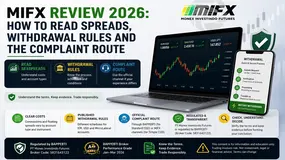
MIFX Review 2026: How to Read Spreads, Withdrawal Rules and the Complaint Route
MIFX review 2026: understand published commissions and spreads, the withdrawal process, Instant Withdrawal conditions, and the PT Monex Investindo Futures complaint route without turning community discussion into factual allegations.
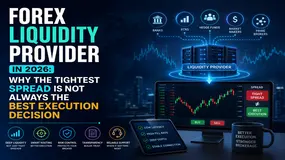
Forex Liquidity Provider in 2026: Why the Tightest Spread is Not Always the Best Execution Decision
Choosing a forex liquidity provider is not a search for the lowest displayed spread or the longest provider list. It is a broker decision about pricing integrity, depth, routing, credit, reporting, incident response, and client communication. This 2026 guide explains how a forex LP, FX liquidity provider, or liquidity provider forex arrangement fits into a broker’s execution chain; what to test before onboarding; why a “best forex liquidity provider” claim cannot replace due diligence; and how to compare cost beyond commission. Use the execution-quality scorecard, provider questions, routing scenarios, and 90-day onboarding plan to assess whether a liquidity relationship can support your actual client mix, instruments, risk model, and jurisdiction. The goal is not to make a universal ranking. It is to build evidence that your broker can explain, supervise, reconcile, and recover its execution service when market conditions are difficult.
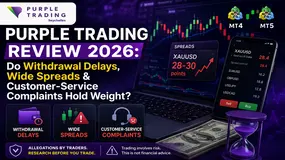
PURPLE TRADING Review: Do Withdrawal Delays, Wide Spreads & Customer-Service Complaints Hold Weight?
PURPLE TRADING, a Seychelles-based forex brokerage entity, is constantly criticized by numerous traders on review platforms such as WikiFX. While withdrawal delays or denials are reportedly a common issue here, there are also complaints about wide spreads and poor customer services. This PURPLE TRADING review examines user-reported allegations against the trading enterprise. Additionally, the article takes a close look at the broker’s regulatory status.
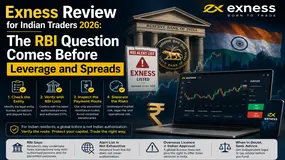
Exness Review for Indian Traders 2026: The RBI Question Comes Before Leverage and Spreads
Exness review for Indian traders in 2026. This guide explains what the RBI Alert List says, what it does not say, why a global license is not Indian authorization, and how to verify permitted forex routes before funding an account.
WikiFX Broker
Latest News
Forex Liquidity Provider in 2026: Why the Tightest Spread is Not Always the Best Execution Decision
 WikiFX
WikiLicense Officially Launches: Building a Global Financial License Verification Platform
WikiFXDollar and Asian FX Steady Before US CPI
WikiFXTRADEVIEW MARKETS Review: Broker Complaints, Regulation Warnings, and Funds Withheld Claims
WikiFXReview 2026: RoboMarkets Regulation, Platform Access, and Trader Feedback
WikiFXLuno Review: Users Report Blocked Withdrawals on an Unregulated 'Suspicious Clone'
WikiFXWinvest Review: Is Your Deposit Safe?
WikiFXKCB Review: Is Your Deposit Safe?
WikiFXOcta Review 2026: Severe Withdrawal Complaints and High Risk Signals
WikiFXWhy More Commodity Revenue Doesn't Instantly Strengthen a Currency
WikiFXRate Calc

