2025 Global Economic Year in Review: How Tariffs and AI Rewrote the Playbook

Abstract:New York / London / Singapore — If you felt dizzy watching the markets in 2025, you weren't alone. As we close the books on one of the most transformative years in recent economic history, it is clear that the old rules of engagement have been rewritten. The year began with warnings of turbulence and delivered a structural shift. From the aggressive return of protectionism to the artificial intelligence capital boom that defied gravity, 2025 was the year the global economy moved from "efficiency first" to "security first."
New York / London / Singapore — If you felt dizzy watching the markets in 2025, you weren't alone. As we close the books on one of the most transformative years in recent economic history, it is clear that the old rules of engagement have been rewritten. The year began with warnings of turbulence and delivered a structural shift. From the aggressive return of protectionism to the artificial intelligence capital boom that defied gravity, 2025 was the year the global economy moved from “efficiency first” to “security first.”
Despite the geopolitical noise, the global engine kept running. According to consensus data from major institutions like the IMF and OECD, global GDP managed a resilient growth of approximately 3.1% to 3.2%. But that headline number hides a fractured reality. As we at WikiFX analyzed market movements throughout the year, one theme became undeniable: we are seeing a great divergence in how nations adapt to this new normal.
Here is the definitive retrospective on what really happened to your money, your markets, and the world in 2025.
Trade War 2.0: The Negotiation Battlefield
The defining narrative of 2025 was the return of tariffs, but the reality was far more nuanced than the initial panic suggested. While the US administration signaled a blanket 10% baseline tariff, the actual implementation evolved into a complex web of negotiations.
April 2nd—dubbed “Liberation Day” by proponents of the policy—marked a turning point with Executive Order 14257. However, rather than a uniform wall, we saw a fragmented landscape. While headline punitive rates were threatened against specific manufacturing hubs, the effective average tariff rate settled closer to the 15–17% range.
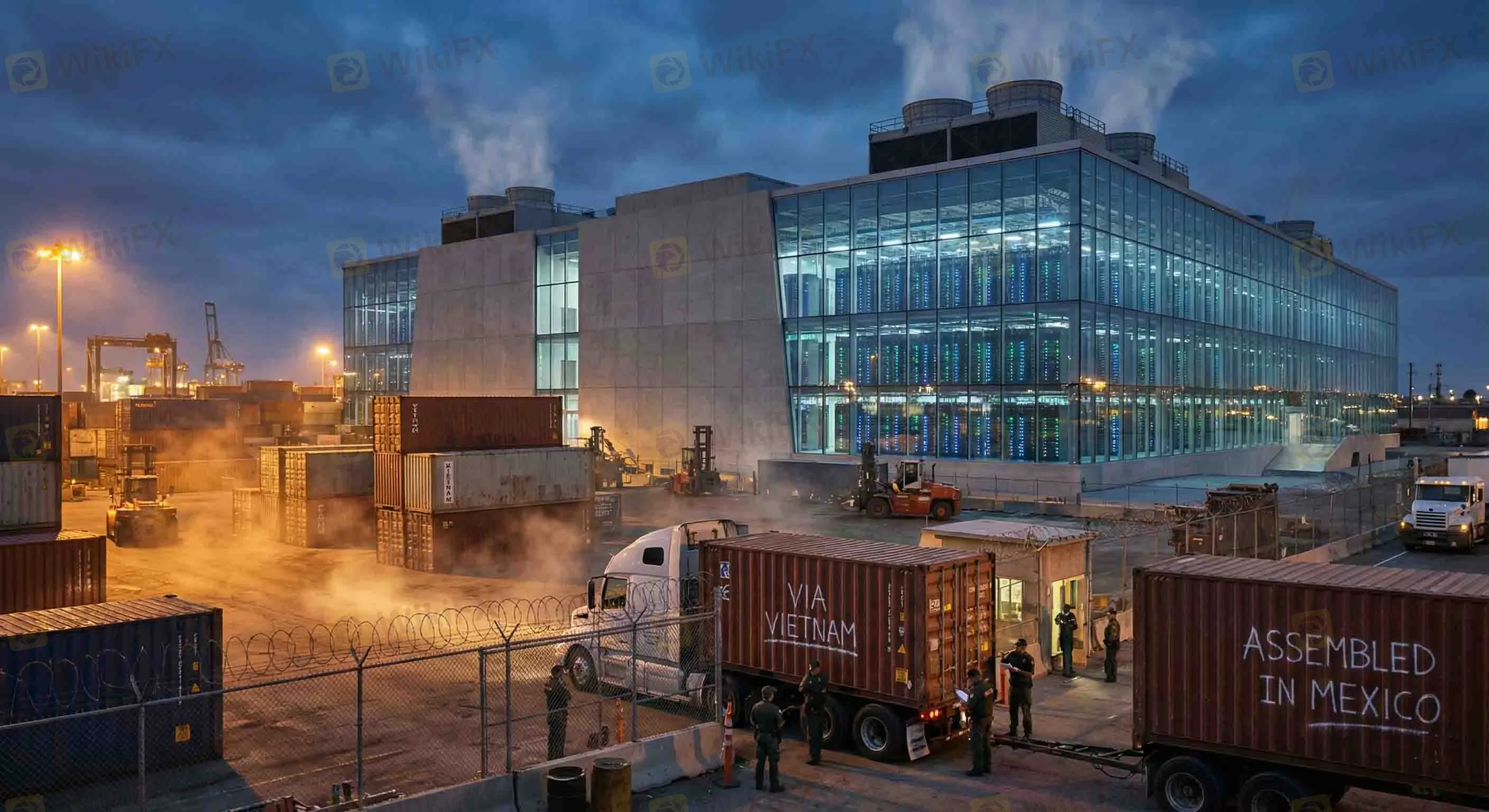
For traders monitoring forex volatility on the WikiFX app, this created a year of “headline risk.” The world's response was a masterclass in economic adaptation. The EU and key allies like the UK and Japan engaged in intense bilateral talks, trading investment pledges and energy deals for tariff exemptions or reduced rates. The global supply chain didn't break; it re-routed. “Made in China” increasingly became “Assembled in Mexico” or “Shipped via Vietnam,” as nations maneuvered to bypass new barriers.
The US Economy: The “K-Shaped” AI Bet
If you looked strictly at the data, the US economy in 2025 was resilient, clocking in at an estimated 2.0% GDP growth. But beneath this stability lies a sharp “K-shaped” divergence.
On the upper arm of the “K,” we have the Artificial Intelligence boom. 2025 wasn't just about software; it was about infrastructure. Major tech giants drove a massive cycle of Capital Expenditure (CapEx), pouring hundreds of billions into data centers and chips. This investment served as a critical engine for the broader economy, propping up equity markets.
On the lower arm, however, the picture is more complex. While the stock market rallied, the labor market underwent a structural cooling. The AI boom hasn't yet triggered mass unemployment, but it has shifted corporate priorities toward efficiency over headcount expansion. Combined with a government deficit hovering around $1.8 trillion, the US economy effectively placed a massive bet on tech productivity to outrun rising debt costs.
Asia's Pivot: The Dragon and The Elephant
Across the Pacific, Asia presented a tale of two distinct trajectories.
China played a strategic defense. Facing external trade headwinds, the world's second-largest economy maintained its resilience, meeting growth targets through strong export adaptability and a pivot in industrial policy. Beijing moved to curb what domestic analysts call “internal price wars”—destructive competition that slashes margins—shifting focus instead toward high-quality manufacturing and stabilizing the property sector.
Meanwhile, India cemented its status as the global growth champion. With major international bodies forecasting growth in the 6.5% to 7.0% range, India emerged as the clear beneficiary of supply chain diversification. Driven by robust domestic demand and a surge in infrastructure spending, India provided a rare bright spot of unencumbered expansion in a fragmented world.
The European Squeeze and the Yen's Test
In Europe, the mood was one of caution. The Eurozone faced a year of sluggish growth (forecasted around 1.1% to 1.2%), with Germany particularly exposed to the dual shocks of energy transitions and trade friction. The continent spent 2025 attempting to pivot from fiscal discipline to necessary investment, aiming to revitalize industrial competitiveness without breaking budget rules.
Japan, conversely, faced the challenge of heat. After decades of fighting deflation, Japan navigated a complex inflationary environment in 2025. The government's push for fiscal stimulus, combined with the central bank's delicate normalization of interest rates, kept the Japanese Yen under sustained pressure. For forex traders on WikiFX, the Yen pairs offered some of the year's most technical volatility, as the currency tested key psychological levels while policymakers balanced growth against the cost of living.
The Verdict: Winners and Losers
So, who won 2025?
- The Growth Leader:India. By capitalizing on the “China Plus One” strategy and internal consumption, India took the pole position for GDP expansion.
- The Survivor:US Big Tech. Shielded by massive cash reserves and the AI narrative, the tech sector decoupled from the broader cyclical slowdown.
- The Safe Haven:The Euro. Surprisingly, amidst the Dollar's policy-driven volatility and the Yen's structural challenges, European assets offered a relative shelter for capital, despite the region's low growth.
- The Structural loser:Traditional Manufacturing. Any sector relying on long, cross-border supply chains without high margins faced a margin squeeze due to the new tariff regimes.
Outlook 2026: The Year of Fiscal Stimulus?
As we look toward 2026, the trend lines are clear. The era of austerity appears to be over. From the US to China, and increasingly in Europe, governments are signaling a reliance on fiscal stimulus to maintain momentum.
The risks are obvious: debt sustainability and persistent inflation. The trade wars have settled into a “new normal,” but the friction costs remain. For the everyday investor, the lesson of 2025 is that passive observation is no longer a strategy. The divergence between sectors and regions is widening. Whether you are hedging against currency risk or looking for emerging market opportunities, having the right data is critical. Platforms like WikiFX will remain essential for verifying brokers and navigating a financial landscape that is becoming increasingly fragmented and complex.
2025 was the year the storm broke. 2026 will be the year we find out if the new economic foundations can hold the weight.
Disclaimer: This article is a retrospective analysis based on economic data and trends from 2025. It does not constitute financial advice. Global economic conditions are subject to rapid change.
WikiFX Broker
Latest News
2025 Global Economic Year in Review: How Tariffs and AI Rewrote the Playbook
WikiFXYen in Peril: Wall Street Eyes 160 as Structural Outflows Persist
WikiFXRM238,000 Lost to a Fake Stock Scheme | Don't Be The Next Victim!
WikiFXWhat Is a Forex Expert Advisor and How Does It Work?
WikiFXCommon Questions About GLOBAL GOLD & CURRENCY CORPORATION: Safety, Fees, and Risks (2025)
WikiFXIs 9X markets Legit or a Scam? 5 Key Questions Answered (2025)
WikiFXWhat Is a Liquid Broker and How Does It Work?
WikiFX“Elites’ View in Arab Region” Event Successfully Concludes
WikiFXCommodities Wrap: Copper Surges on ‘Green Squeeze’ Fears; Oil Dips on Peace Hopes
WikiFXGivTrade Secures UAE SCA Category 5 Licence
WikiFXRate Calc

