A Guide to Determining the Optimum Forex Leverage

Abstract:Want to gain a wider forex market position control by investing a minimal amount? Consider using leverage in forex. It implies using borrowed funds to raise your trading position more than your cash balance can let you do it. Forex traders usually employ leverage to churn out profits from relatively small currency pair price changes. However, there is a double-edged sword with leverage since it can multiply profits as well as losses. Therefore, using leverage in the right amount is key for traders. Forex market leverage can be 50:1 to 100:1 or more, which remains significantly greater than the 2: leverage usually offered in equities and 15:1 leverage in futures.

Want to gain a wider forex market position control by investing a minimal amount? Consider using leverage in forex. It implies using borrowed funds to raise your trading position more than your cash balance can let you do it. Forex traders usually employ leverage to churn out profits from relatively small currency pair price changes. However, there is a double-edged sword with leverage since it can multiply profits as well as losses. Therefore, using leverage in the right amount is key for traders. Forex market leverage can be 50:1 to 100:1 or more, which remains significantly greater than the 2: leverage usually offered in equities and 15:1 leverage in futures.
Elaborating on High Forex Leverage Risks
Leverage in forex is a process that allows traders to borrow from the broker. As forex traders borrow significant capital on initial margin requirements, they can benefit further from successful trades.
During earlier times, many brokers were able to use significantly higher leverage ratios of 400:1. This means that an initial deposit worth $250 was alone sufficient to gain control of the approximate currency price worth $100,000 in global forex markets. However, financial regulations, introduced in 2010, restricted brokers from keep the leverage limit to 50:1 (which is still a massive amount) to US-based traders. Even now, with a leverage of 50:1, traders can gain control worth $12,500 in currency with a deposit of $250. So, what should be the optimum leverage for traders - 5:1 or 50:1? Lets find out using the examples below.
Illustration of Maximum Leverage
Example - Richard has a trading account balance of $10.000 and decides to use the 50:1 leverage. This means that he can trade up to $500,000. In the forex terminology, this will be represented as five standard lots. There are three basic forex trade sizes - a standard lot representing 100,000 units of quote currency, a mini lot of 10,000 units of the base currency, and a micro lot of 100 units of quote currency. Currency movements are measured in pips, with each movement in a standard lot representing a change of 10 units.
Lets assume the trader bought five standard lots with the US dollar (quote currency). In that case, each pip movement will incur $50. Should the trade go against Richard by 50 pips, he would lose 50 pips x $50 = $2,500. This constitutes 25% of the overall trading account balance i.e. $10,000.
Illustration of Less Leverage
Now take the example of Grant, who instead of using leverage at 50:1, chooses 5:1. If Grant has a trading account worth $10,000, he can trade up to $50,000 in currency. This would mean a cost worth $10,000 for each mini lot, with each representing a $1 change. As Grant has 5 mini lots, each pip would lead to a $5 change.
Should the trade go against Grant by 50 pips, he would lose $250 (50 pips x $5). This accounts for a mere 2.5% of the overall position.
How to Determine the Optimum Forex Leverage?
It is expected that traders should review the market and their potential before choosing a leverage level. However, you can apply three easy rules to decide it.
- Maintain low leverage levels.
- Employ trailing stops to limit downside and conserve capital.
- Restrict capital to 1%-2% of the overall trading capital on every position.
Ideally, forex traders must choose the leverage level that ensures a greater degree of convenience. For conservative traders wishing to limit risks, they can opt for a 5:1 or 10:1 leverage. This leverage ratio even applies to those learning to trade currencies. Trailing or limit stops allow traders to cap their losses as a trade goes wrong. Using limit stops allows traders to continue learning to trade currencies and reduce potential losses in the event of a trade failure. These stops are crucial as they help curb the emotional aspect attached to trading and foster a practical trading environment for traders.
Summing Up
Determining the optimum forex leverage is about balancing opportunity and risk. While higher leverage can amplify potential gains, it can equally magnify losses and quickly deplete trading capital. The ideal leverage ratio varies by trader, depending on experience, capital size, and risk appetite. New and conservative traders should begin with low leverage (5:1 or 10:1), focusing on learning and capital preservation. Over time, as skill and confidence grow, leverage can be adjusted strategically. Remember, in forex trading, sustainability matters more than speed — its better to trade smart than to trade big.
To know more about leverage and other forex trading tools, join WikiFX Masterminds (ID:EODL15W5IH) today.
Follow these steps to get started -
1. Scan the QR code placed right at the bottom.
2. Download the WikiFX Pro app.
3. Afterward, tap the ‘Scan’ icon placed at the top right corner
4. Scan the code again.
5. Congratulations on joining the group.

Read more

Hong Kong Regulator Warns Against CoinCola
Hong Kong’s financial watchdog, the Securities and Futures Commission (SFC), has issued a public warning against CoinCola, adding the platform to its Alert List of suspicious virtual asset trading platforms (VATPs). According to the SFC, CoinCola operates through the website and is suspected of conducting unlicensed virtual asset activities while appearing to target or operate in Hong Kong.
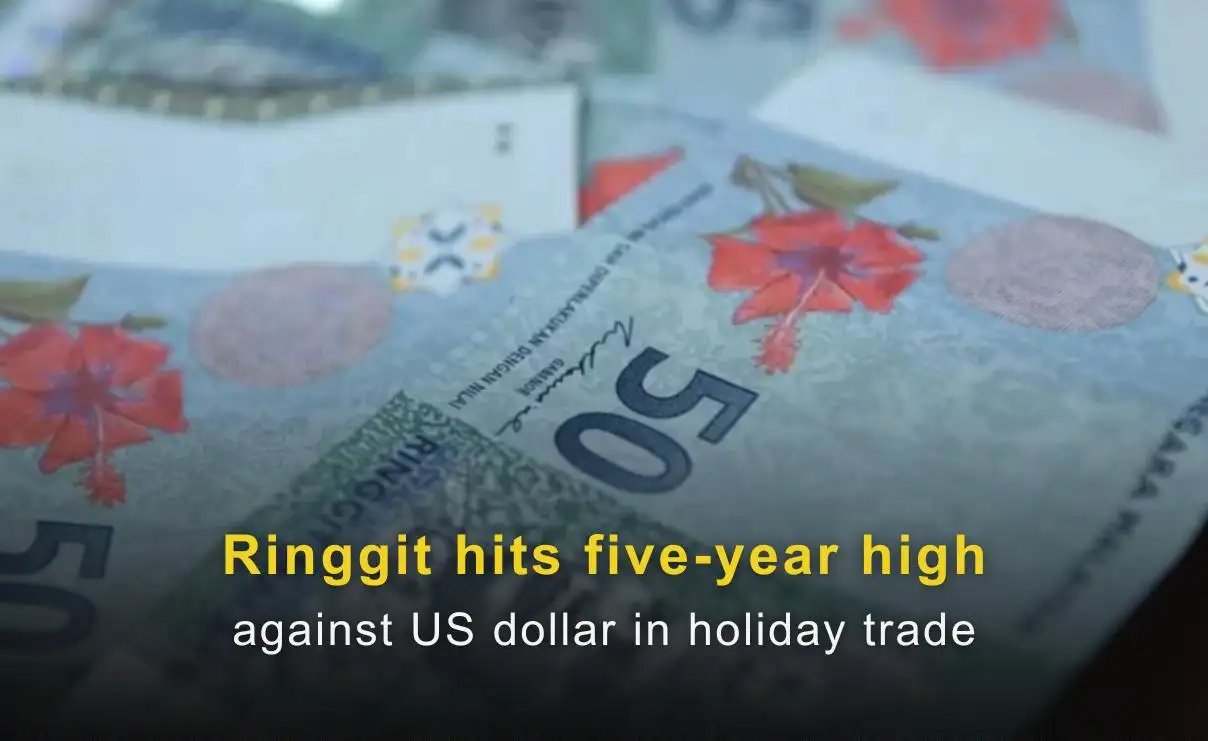
Ringgit hits five-year high against US dollar in holiday trade
The Malaysian ringgit extended its rally, reaching a five-year high against the US dollar, trading in a narrow range of RM4.04-RM4.05.

Inside the Elite Committee: Talk with Narinpat Sittivongseth
WikiFX has launched the “Inside the Elite” Interview Series, featuring outstanding members of the newly formed Elite Committee. During the committee’s first offline gathering in Dubai, we conducted exclusive interviews and gained deeper insights into regional market dynamics and industry developments. Through this series, WikiFX aims to highlight the voices of professionals who are shaping the future of forex trading — from education and compliance to risk control, technology, and trader empowerment.

NFA Charges Japan’s Forex Wizard and Mitsuaki Kataoka With Delaying Withdrawal Requests
The U.S. National Futures Association (NFA) has filed charges against Forex Wizard, a Japan-based forex trading operation, and its principal Mitsuaki Kataoka, accusing them of failing to process customer withdrawal requests promptly.
WikiFX Broker
Latest News
Spring Rally in Chinese Equities Signals Potential Lift for AUS and NZD
WikiFXRinggit hits five-year high against US dollar in holiday trade
WikiFXCommodities: Gold Targets $5,000 as Central Banks Buying Spree Meet Geopolitical Shocks
WikiFXForex vs. Stocks vs. Futures: Which Market Fits Your Wallet?
WikiFXTransatlantic Rift: Visa Wars and Tech Tariffs Threaten EUR/USD
WikiFXJPY Alert: Bond Yields Hit 29-Year High as Market Challenges BOJ
WikiFXIs Finalto Legit or a Scam? 5 Key Questions Answered (2025)
WikiFXUS Banking Giants Add $600B in Value as Deregulation Widens Gap with Europe
WikiFXMarkets Wrap: Gold and Equities Surge to Records as Holiday Liquidity Thinness Rattles Speculative A
WikiFXStop Chasing Headlines: The Truth About "News Trading" for Beginners
WikiFXRate Calc

