US Banking Giants Add $600B in Value as Deregulation Widens Gap with Europe

Abstract:The market capitalization of the six largest US banks surged by approximately $600 billion in 2025, driven by a dual tailwind of financial deregulation and a resurgence in investment banking. This rally has widened the valuation divergence between American lenders and their European counterparts, reinforcing a theme of US financial exceptionalism that continues to influence global capital flows.

The market capitalization of the six largest US banks surged by approximately $600 billion in 2025, driven by a dual tailwind of financial deregulation and a resurgence in investment banking. This rally has widened the valuation divergence between American lenders and their European counterparts, reinforcing a theme of US financial exceptionalism that continues to influence global capital flows.
Transatlantic Divergence
According to S&P Global data, the aggregate market capitalization of the “Big Six”—JPMorgan Chase, Bank of America, Citigroup, Wells Fargo, Goldman Sachs, and Morgan Stanley—closed at $2.37 trillion as of December 23. This figure stands in stark contrast to the top six European banks, whose combined value hovers near just $1 trillion.
The outperformance of US financials, which are poised to beat the S&P 500 for the second consecutive year, underscores a structural shift in investor preference toward US assets. For currency markets, this substantial equity premium and the robust health of the US financial system often provide underlying support for the US Dollar (USD) against the Euro (EUR), particularly as capital seeks higher efficiency and shareholder returns.
Drivers: The Deregulation Pivot
Market analysts identify the relaxation of regulatory frameworks as the primary catalyst. Following the restricted era post-2008, the current administration has moved to unwind stringent capital requirements.
RBC banking analyst Gerard Cassidy noted, “The importance of the changing regulatory environment for stock prices cannot be overstated.”
Key regulatory shifts fueling the rally include:
- Proposals to allow increased leverage ratios.
- Reforms to annual bank stress testing protocols.
- Withdrawal of specific guidance on high-risk lending.
- Expectations that the final “Basel III” implementation will be significantly diluted compared to initial proposals.
This regulatory easing has left major banks with “excess capital,” previously ringfenced for compliance, which is now expected to be deployed into share buybacks, dividend hikes, and business expansion.
Stock Performance & Sector Outlook
Among individual performers, Citigroup emerged as a standout, with shares rallying 77% year-to-date, hitting levels not seen since 2009. Goldman Sachs followed with a 62% gain, buoyed by a recovery in trading revenues and dealmaking. Industry forecasts suggest 2025 banking revenues for equity and fixed-income trading will exceed prior peaks, projecting roughly $92 billion and $163 billion respectively.
While the “de-regulation” trade drives optimism, some analysts caution regarding valuation. HSBC's Saul Martinez described the backdrop as “almost too good to be true,” suggesting that while fundamentals are strong, much of the positive news may already be priced in. Nevertheless, with US banks significantly less levered than in pre-2008 cycles, the market appears comfortable absorbing increased risk appetite for now.
Read more

Ceasefire on the Brink: 14 Nations Condemn Israel as Geopolitical Risk Premiums Rise
Global diplomatic tensions spiked on Wednesday as a coalition of 14 nations—including the UK, France, Germany, and Japan—issued a rare joint statement condemning Israel's approval of new settlements in the West Bank. The diplomatic rift comes at a critical juncture, threatening to derail the fragile ceasefire negotiations in Gaza.
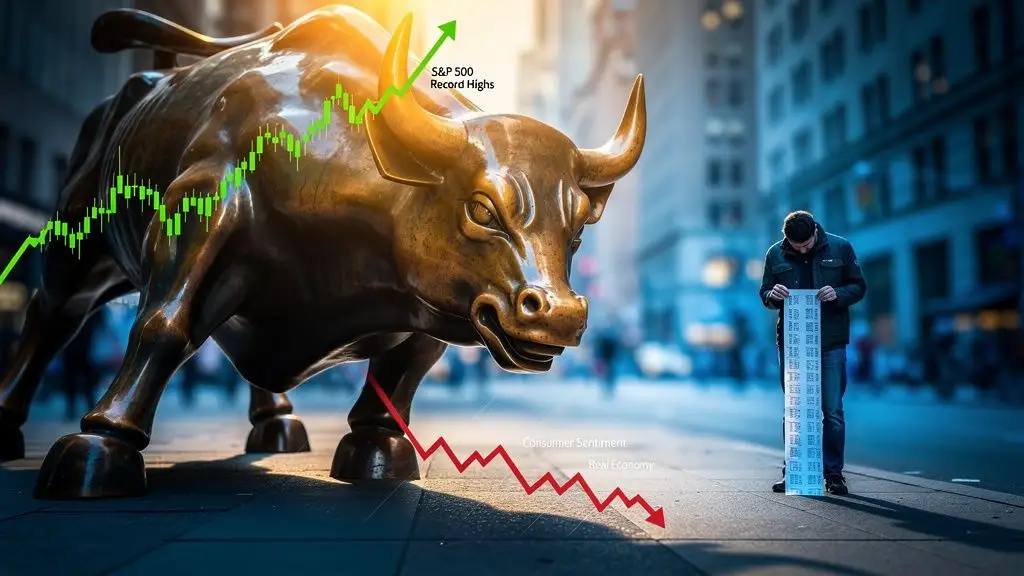
Wall Street at Record Highs Clashes with Deteriorating Consumer Sentiment; Dollar Direction Hears Mi
US equities touched fresh record highs on Christmas Eve, driven by a resilient "Santa Rally" narrative, yet digging beneath the surface reveals a stark divergence between asset prices and the real economy. While the S&P 500 breached the 6,900 resistance level, fresh data indicates US consumer confidence has crumbled to a five-month low, complicating the Federal Reserve’s policy path heading into 2026.
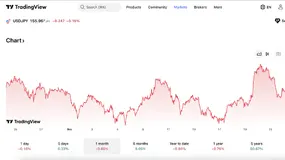
Biggest 2025 FX surprise: USD/JPY
It has been a bearish year for the US dollar, but the biggest surprise has been the USD/JPY pair for me in the FX space. By Christmas eve, the Dollar Index (DXY) was down 9.6% year-to-date, trading around 98.00, its weakest level since 2022.
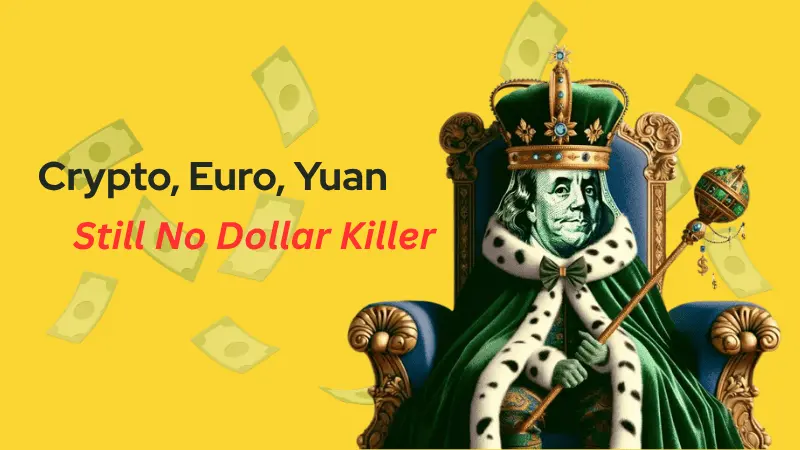
Crypto, Euro, Yuan: Still No Dollar Killer
Despite frequent “de-dollarization” headlines, the U.S. dollar remains unrivaled due to unmatched market depth, global usability, and trusted legal/institutional frameworks. Crypto and other currencies (euro, yuan) lack the stability, convertibility, and infrastructure required to replace the USD, while the Fed’s credibility and the scale of U.S. financial markets continue to anchor demand. Bottom line: no alternative currently offers a complete, credible substitute for the dollar’s global role.
WikiFX Broker
Latest News
Why Your Entries Are Always Late (And How to Fix It)
WikiFXBiggest 2025 FX surprise: USD/JPY
WikiFXNFA Charges Japan’s Forex Wizard and Mitsuaki Kataoka With Delaying Withdrawal Requests
WikiFXSilver Smashes $70: Is the "Forced Central Bank Buying" Thesis Playing Out?
WikiFX【WikiEXPO Global Expert Interviews】Robert Hahm: From Asset Management to AI Innovation
WikiFXTreasury vs. Fed: Bessent leads Trump's Campaign to Reshape US Monetary Policy
WikiFXCeasefire on the Brink: 14 Nations Condemn Israel as Geopolitical Risk Premiums Rise
WikiFXChina’s Export Resilience: A Structural Pivot Towards the 'Global South'
WikiFXRinggit hits five-year high against US dollar in holiday trade
WikiFXForex vs. Stocks vs. Futures: Which Market Fits Your Wallet?
WikiFXRate Calc

