Brokers and Exchanges Are Entering Prediction Markets

Abstract:Traditional brokers and exchanges are moving into prediction markets, integrating event contracts as a new asset class alongside CFDs, futures, and crypto products.
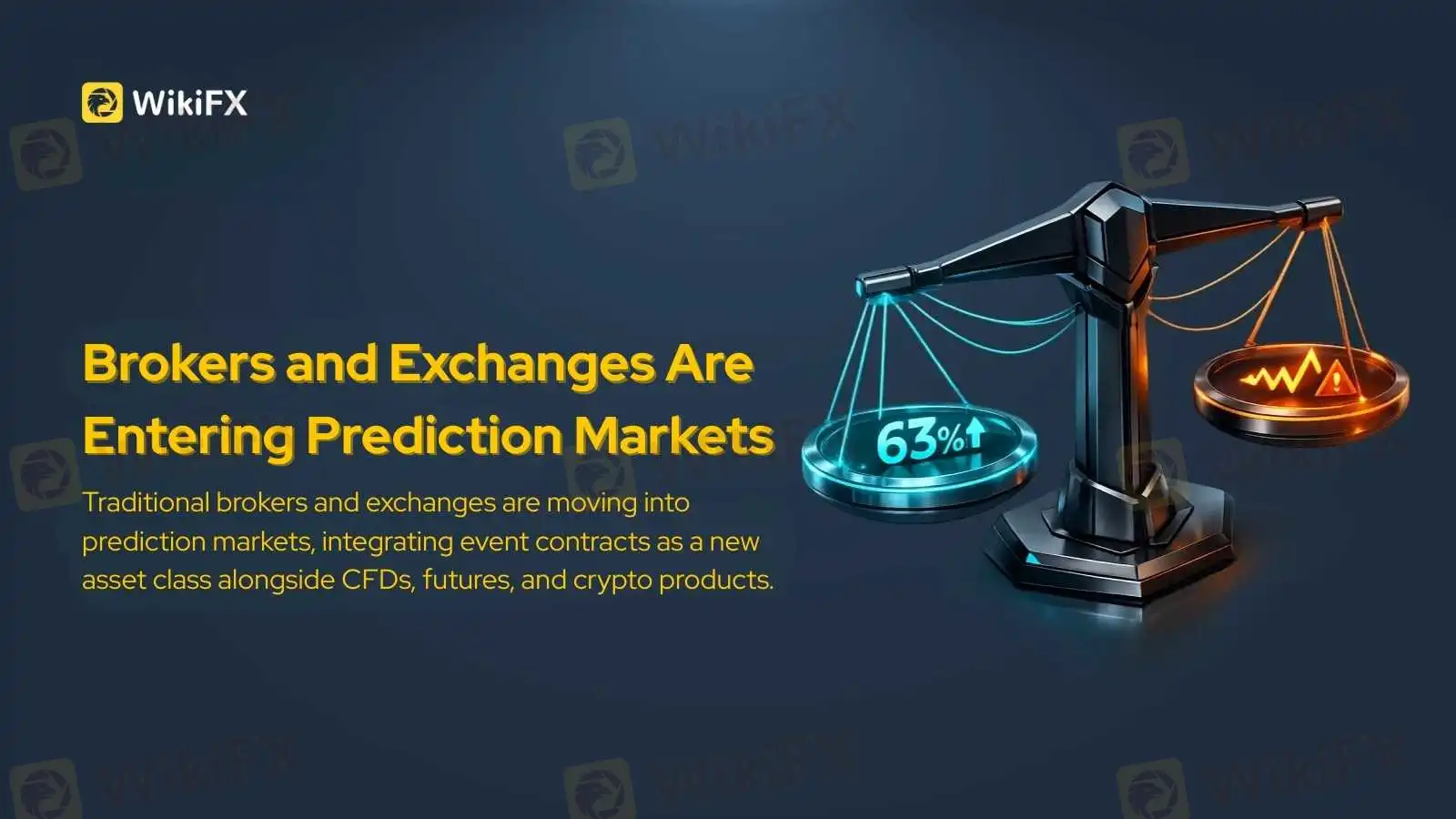
Prediction markets are no longer an experimental side product sitting outside the core trading ecosystem. Over the past year, they have begun to appear inside mainstream brokerage platforms and exchange strategies, signaling a broader shift in how financial firms think about event-based trading.
What makes this transition notable is not just rising volumes, but who is entering the space and how they are doing it. Rather than launching standalone platforms, many brokers are integrating prediction markets directly into existing trading workflows — treating them less like novelty contracts and more like another way to express market views.
From Partnerships to Embedded Distribution
One of the clearest signals came in 2025 when Robinhood integrated prediction markets into its main trading app, giving retail users direct access to event contracts through a familiar interface. Instead of positioning prediction markets as a separate destination, Robinhood embedded them alongside equities and derivatives.
Initially, the firm relied on Kalshi, a CFTC-regulated exchange, for execution and clearing. The impact was immediate. Kalshis market share surged within months, not because its product changed, but because Robinhood controlled distribution. Access, rather than innovation, proved decisive.
Later, Robinhood moved further up the value chain by acquiring LedgerX, signaling a shift from simple integration toward deeper operational involvement. The move suggested that brokers increasingly see prediction markets as infrastructure worth owning, not just accessing.
Interactive Brokers and the “Infrastructure-First” Approach
Not all brokers have moved at the same pace or with the same visibility. Interactive Brokers took a more conservative route, launching ForecastEx, a platform focused on event contracts tied to economic data, policy decisions, and geopolitical outcomes.
For much of its early rollout, ForecastEx deliberately avoided sports-related markets, reflecting a compliance-first mindset. Management framed the product as an extension of derivatives trading rather than a speculative betting tool. Over time, however, the scope has broadened, showing how even cautious entrants are gradually expanding once regulatory comfort increases.
More recently, reports of a separate venture, Lumina Markets, linked to figures closely associated with Interactive Brokers, suggest that experimentation may now be happening beyond the firms primary brand. Whether through internal platforms or adjacent entities, the direction is consistent: established brokers are exploring prediction markets without rushing to fully define the model.
Why Brokers Are Paying Attention Now
Several forces explain why prediction markets are attracting brokerage interest at this stage.
First, product economics. Event contracts typically settle quickly and generate frequent trading activity. In contrast to traditional equities, where commission pressure has eroded margins, prediction markets offer a fee structure that scales with engagement.
Second, trader behavior is evolving. Many active traders already treat political decisions, macro data releases, and regulatory outcomes as inputs to FX, commodities, and index trades. Prediction markets allow those expectations to be expressed directly, rather than through indirect proxies.
Third, distribution advantages matter more than standalone innovation. Once event contracts appear inside a brokers main app or terminal, adoption follows naturally. Traders encounter them the same way they discover new instruments — through the platform they already use.
Exchanges Are Interested for Different Reasons
For exchange operators, prediction markets are less about retail engagement and more about information value. Event prices offer continuously updated probability signals that can complement traditional market data.
This helps explain why major exchange groups have invested in or partnered with prediction market platforms while emphasizing institutional credibility. Rather than positioning these products as entertainment, exchanges frame them as tools for aggregating expectations — similar to how futures curves reflect market sentiment.
In this sense, prediction markets are increasingly viewed as adjacent to derivatives, not separate from them.
Regulation Shapes the Pace, Not the Direction
Regulatory interpretation remains uneven across jurisdictions, but recent developments have reduced uncertainty in key markets. In the United States, event contracts are generally treated as derivatives traded on regulated venues, rather than as wagers placed against a bookmaker.
That framing has encouraged brokers to invest in infrastructure rather than treat prediction markets as provisional experiments. At the same time, firms remain cautious. Outside the U.S., similar products may fall under gambling regulation, forcing brokers to adjust offerings or restrict access by region.
The result is a patchwork expansion: confident in some markets, exploratory in others.
Beyond Access: Building the Trading Stack
As participation grows, supporting infrastructure is evolving. Aggregation tools, automation features, and cross-venue monitoring are emerging to serve more active users. Some platforms now allow traders to watch multiple event markets alongside traditional assets, treating probabilities as another real-time signal.
Crypto-native firms have also entered the space, bundling prediction markets with spot and derivatives trading. For them, event contracts fit naturally into an environment where traders already move between asset classes fluidly.
Not a Trend, but a Structural Shift
Prediction markets still face challenges — from liquidity fragmentation to consumer protection debates — but the direction is clear. Brokers are no longer asking whether these products belong in their platforms. Instead, they are deciding how to integrate them and how much of the value chain to control.
The entry of firms like Robinhood and Interactive Brokers suggests that prediction markets are becoming part of the standard trading toolkit. Whether accessed through partnerships, built internally, or launched via adjacent entities, event contracts are moving closer to the core of modern financial markets.
Probabilities, it seems, are no longer just indicators. They are becoming tradable instruments in their own right.

Read more
Institutional FX Volumes Edge Higher in May 2026
Institutional FX trading volumes rose slightly in May 2026 after a weak April, with most major venues reporting modest month-on-month changes.
The CFD Industry’s Quiet Breakout: What Drove Account Growth in 2025 and What Comes Next
The CFD industry closed 2025 with over 6.8 million active accounts, defying seasonal slowdowns. What’s driving the growth, and can it last into 2026?
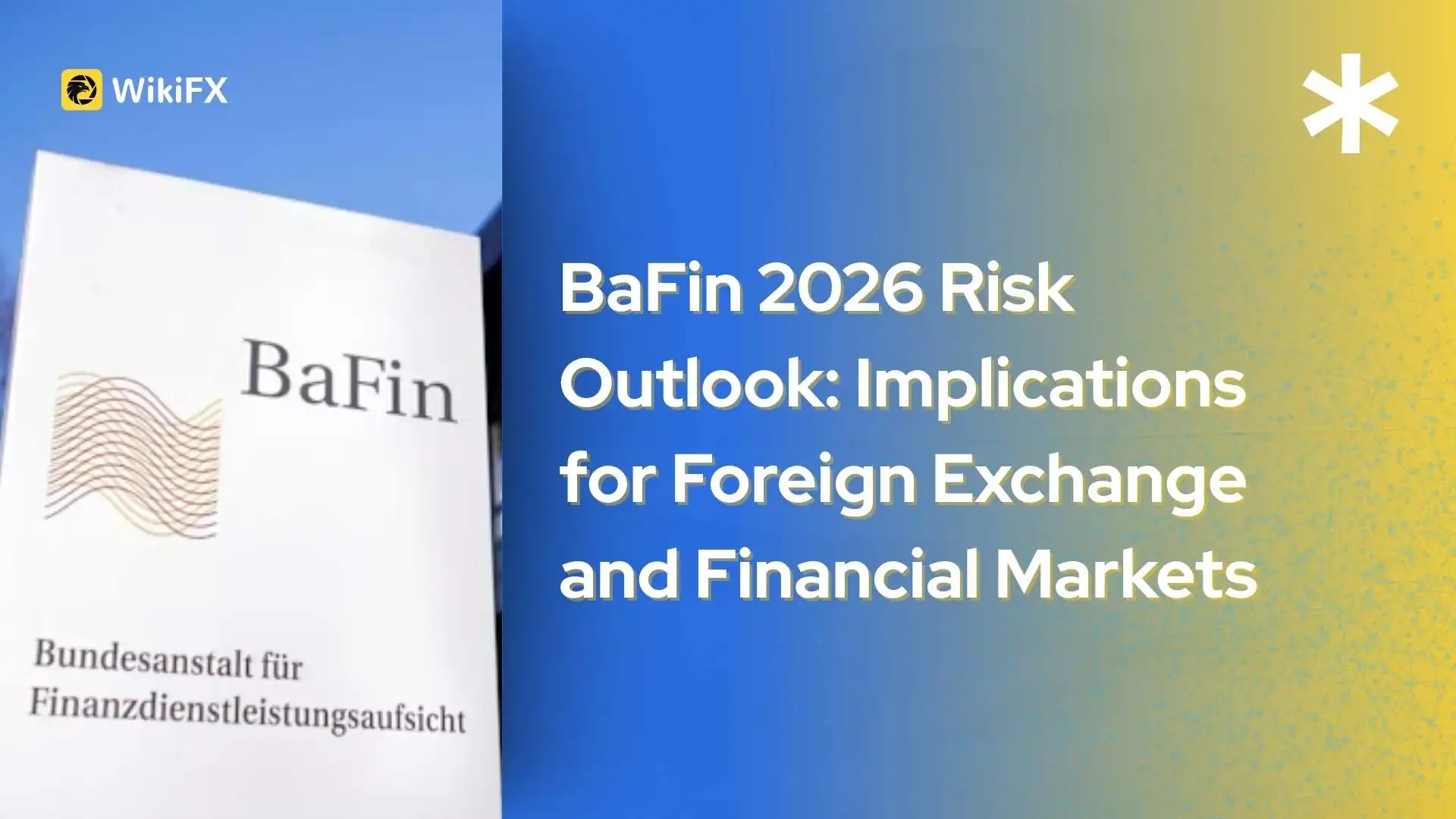
BaFin 2026 Risk Outlook: Implications for Foreign Exchange and Financial Markets
From market corrections to digitalisation risks, BaFin’s 2026 risk report sheds light on regulatory priorities impacting forex and cross-border trading.
WikiFX Broker
Latest News
How to Read Market Reversals Through Price Action and Indicators
WikiFXA Single TikTok Ad Cost Him RM100,000
WikiFXLONG ASIA Review: Broker Complaints, Regulation Gaps, and Withdrawal Alarms
WikiFXHow Proprietary Trading and Artificial Volume Move Prices
WikiFXCrude Jumps Amid Structural FX Shifts
WikiFXAximTrade Review: Regulation Warnings and Broker Withdrawal Complaints
WikiFXHow the Long Shadow Trap Ruins Reversal Trades
WikiFXAsian FX Markets Modernise As Crude Oil Surges
WikiFXInstitutional FX Volumes Edge Higher in May 2026
WikiFXKANAK CAPITAL MARKETS Review 2026: Official Warnings and Withdrawal Risks
WikiFXRate Calc

