Bitcoin Market Predictions: Here is what Recent Crypto Updates Mean

Abstract:Bitcoin’s recent price decline highlights the enduring volatility of the cryptocurrency market, where sharp shifts in sentiment and macroeconomic influences continue to shape valuations. Despite short-term uncertainty, growing adoption, institutional participation, and evolving utility narratives suggest that Bitcoin remains a significant, though high-risk, component of the modern financial landscape.
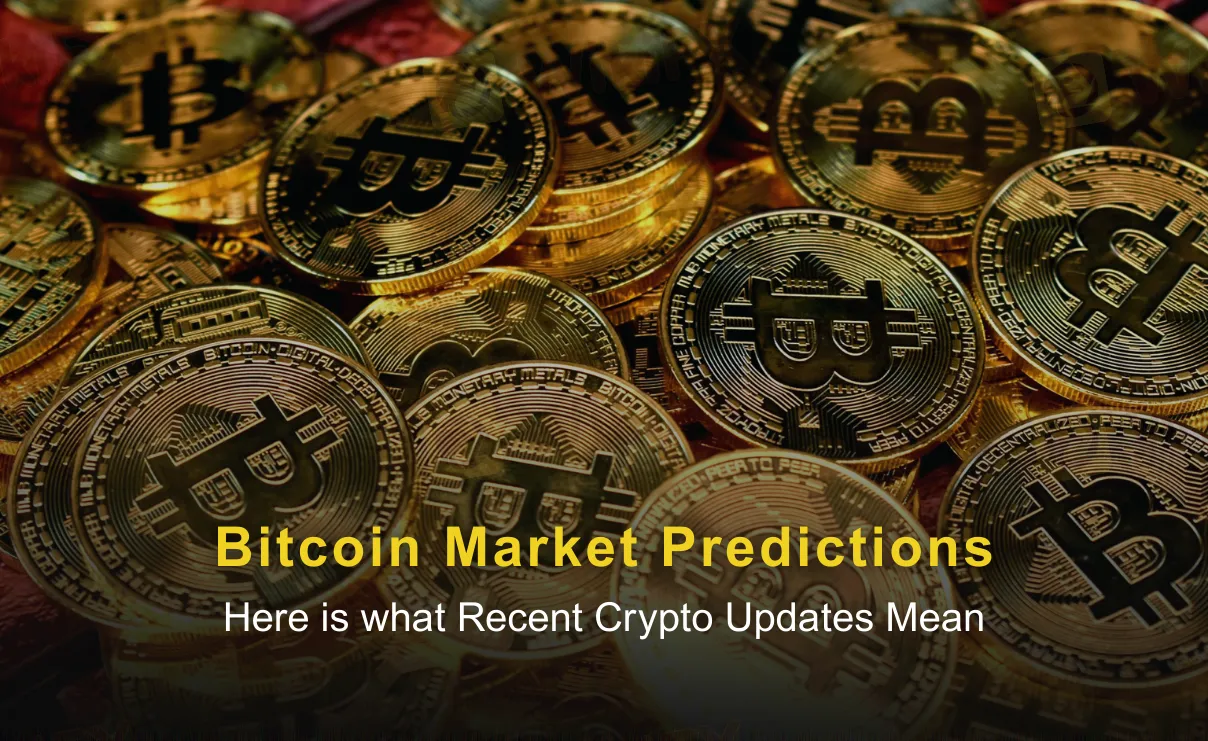
Anyone who has spent even a little time observing the cryptocurrency market, especially Bitcoin, understands one unavoidable reality: volatility is part of the game. Prices can surge dramatically or fall just as quickly, often without warning. This unpredictability is exactly what makes digital assets both attractive and intimidating. Unlike traditional investments, the crypto market rarely moves in a straight line, and periods of optimism can be followed by sharp corrections when least expected.
After reaching an impressive record of around USD 122,260 in October 2025, Bitcoins trajectory began to shift. What initially appeared to be another strong phase of growth gradually gave way to sustained downward pressure. By February 2026, Bitcoin had fallen to nearly half of its peak value, reminding investors yet again how rapidly sentiment can change in the digital asset space.
Recent price movements reflect a market struggling to regain firm footing. As of mid-February 2026, Bitcoin has been trading under visible pressure, hovering near the USD 66,000 range amid persistent volatility. Market observers largely attribute the weakness to broader macroeconomic uncertainties rather than crypto-specific events. Developments in the United States, particularly economic data releases and expectations surrounding Federal Reserve policy, continue to influence investor behaviour across global markets. Analysts have cautioned that if bearish conditions persist, Bitcoin may test lower psychological levels, with some technical assessments pointing to potential support zones between USD 56,000 and USD 60,000.
Looking ahead, forecasts for Bitcoin remain characteristically divided. Short-term perspectives tend to lean toward caution, with expectations of consolidation or corrective movements rather than immediate rebounds. Yet, longer-term outlooks from various analysts still carry a degree of optimism. Some models suggest that Bitcoin could recover momentum later in the year, potentially revisiting higher levels should market conditions improve. Such divergence in projections is hardly unusual for an asset class defined by rapid shifts in sentiment and speculative dynamics.
One notable difference from previous downturns is the expanding role of cryptocurrencies in real-world economic activities. Adoption is no longer confined to niche communities or purely speculative circles. Businesses across industries, including retail, tourism, and e-commerce, increasingly explore crypto-based payment solutions, often motivated by efficiency, cross-border convenience, and lower transaction costs. In parallel, digital asset usage continues to grow within emerging sectors such as blockchain-driven gaming and online entertainment ecosystems, where cryptocurrencies have become an integral part of user experiences.
Bitcoins utility narrative has also evolved. Beyond its reputation as a speculative asset, it is gradually being integrated into unconventional financial products and services. These developments reinforce the idea that digital assets are slowly embedding themselves into broader financial and commercial structures, even as price fluctuations remain significant.
From a long-term investment perspective, Bitcoin still commands attention from both retail and institutional participants. Publicly listed companies continue to accumulate Bitcoin reserves, a trend often interpreted as a signal of confidence in its future relevance. The maturation of regulated investment vehicles, including Bitcoin exchange-traded funds, has further blurred the lines between traditional finance and the crypto ecosystem. While correlations between Bitcoin and conventional markets have become more visible, the asset retains characteristics that differentiate it from standard financial instruments.
Institutional engagement remains a dominant theme shaping market narratives. Major asset managers and financial entities have progressively expanded their digital asset strategies, reflecting a broader shift in how cryptocurrencies are perceived within global finance. Regulatory discussions also play a growing role in influencing expectations. In some jurisdictions, policymakers are exploring frameworks to formalise oversight of crypto-related activities, while debates surrounding Bitcoins potential role in national reserves illustrate how seriously the asset is now being considered at policy levels.
Historical context offers useful perspective during periods of market stress. The crypto market has experienced severe corrections before, each shaped by its own catalysts. The sharp downturn of 2022, triggered by events such as the collapse of TerraUSD and the failure of FTX, led to widespread market disruption and a dramatic decline in Bitcoin‘s price. Confidence took time to rebuild, yet the market eventually stabilised. While past cycles do not guarantee future outcomes, they serve as reminders of the crypto market’s resilience and its capacity for recovery over extended horizons.
For investors, the recurring lesson is one of prudence rather than prediction. Market cycles are inevitable, and sentiment can shift far more quickly than in traditional asset classes. Bitcoins journey continues to be defined by both risk and opportunity, requiring participants to balance optimism with discipline. In a landscape driven as much by psychology as by fundamentals, measured decision-making remains essential.

Read more
ACY Securities Deposit and Withdrawal: The Complete 2025 Guide (Fees, Methods & User Warnings)
Understanding how to add funds to your account and, more importantly, how to take them out is essential for safe trading. For any trader thinking about ACY Securities, making an ACY SECURITIES deposit is simple, but the ACY SECURITIES withdrawal process has many serious complaints and concerns. While ACY says it is an established, regulated broker, many users have complained specifically about withdrawal problems, creating a confusing and often contradictory picture. This guide provides a complete and critical analysis. We will first explain the official steps for deposits and withdrawals, including methods, fees, and stated timelines. We will then take a deep look at patterns found in over 180 real user complaints, examining the potential warning signs and risks. By combining official information with real-world user experiences and regulatory warnings, this article aims to give you the clarity needed to make an informed decision about the safety of your funds with ACY Securities.

XeOne Safety Check: Is This a Fake Broker or a Real Trading Company?
If you're asking 'Is XeOne legit?' or have heard talk about a 'XeOne scam,' you are doing important research. Your capital's safety depends on finding the right answers. In the complicated world of online trading, telling the difference between a trustworthy company and a dangerous one is the most important skill any trader can learn. This review aims to give you a clear, fact-based answer to your questions. We will examine how XeOne works, what regulations it follows, and what users say about it to give you a final answer. To be honest, our research shows that XeOne presents serious risks to traders and works without proper government oversight. This entire review is based on checkable facts gathered by WikiFX, a worldwide platform for checking broker regulations, making sure our findings are clear and based on real information. We will explain exactly why we reached this conclusion and what it means for anyone thinking about investing in this company.
PaxForex Review: Withdrawal Complaints & Regulatory Warnings
Is withdrawing capital from PaxForex too difficult for traders? Has the China-based forex broker made you trade gold, silver and cryptocurrencies despite not having an office in the United States? Do you find its operational style suspicious? You are not alone! Several traders have expressed these concerns when trading with the broker. In this PaxForex review article, we have exposed the broker through user comments made on several review platforms. Take a look!

OneRoyal Trust Score: A Complete Look at Whether It's Real or Fake
When traders ask, "Is OneRoyal legit or a scam?" The answer isn't simply yes or no. OneRoyal is a trading company that has been running for almost twenty years and has important licenses from top financial authorities. This background puts it far away from typical quick scam operations. However, questions about whether it's trustworthy are reasonable and often come from its complicated business structure, the use of overseas companies, and a pattern of specific, serious complaints from users. This article aims to go beyond marketing claims and provide a fact-based analysis of OneRoyal's trustworthiness.
WikiFX Broker
Latest News
NVIDIA Faces Growth Limits: The Challenge of the Law of Large Numbers
WikiFXMoneta Markets Regulatory Status: A Complete Guide to Its Licenses and Company Structure
WikiFXBinomo Review: Safety, Regulation & Forex Trading Details
WikiFXMONETA MARKETS Legitimacy Check: Is This a Fake Broker or a Legitimate Trading Partner?
WikiFXM4Markets Review 2026: A Simple Guide to Its Rules, Costs, and Customer Problems
WikiFXElizabeth Warren demands answers on costs, economic impact of 'illegal and reckless war'
WikiFXZacks Trade Exposure: Examining Account Opening Glitches and Withdrawal Issues
WikiFXBelgium’s FSMA Warns of a New Wave of Fraudulent Trading Platforms
WikiFXUK Regulator Tightens Incident Reporting Rules for CFD Brokers and Other Financial Firms
WikiFXMazi Finance Deposit and Withdrawal Methods: A Complete 2026 Guide
WikiFXRate Calc
