AXIORY Legitimacy Check: A Deep Look into Scam Concerns and Regulatory Warning Signs
Abstract:Picking a forex broker is one of the biggest financial choices a trader will make. The market offers many opportunities, but it also comes with risks. The biggest risk is giving your capital to a dishonest or poorly regulated company. This leads us to the important question you're thinking about: Is AXIORY legit, or is it a potential scam? The answer needs more than a simple yes or no; it requires a complete investigation. This article gives you a clear, fact-based analysis of AXIORY's legitimacy. To make sure we're objective and reliable, our findings are based on detailed data collected by WikiFX, a global broker regulatory research platform. The information we found is worrying. Read to know more.
Is AXIORY a Legitimate Partner?
Picking a forex broker is one of the biggest financial choices a trader will make. The market offers many opportunities, but it also comes with risks. The biggest risk is giving your capital to a dishonest or poorly regulated company. This leads us to the important question you're thinking about: Is AXIORY legit, or is it a potential scam? The answer needs more than a simple yes or no; it requires a complete investigation.
This article gives you a clear, fact-based analysis of AXIORY's legitimacy. To make sure we're objective and reliable, our findings are based on detailed data collected by WikiFX, a global broker regulatory research platform. The information we found is worrying. We encourage you to follow along and check the real-time data on the AXIORY page on WikiFX as you read.
AXIORY's High-Risk Profile
We believe in giving you the most important information first. Based on verifiable data, AXIORY presents a high-risk profile for traders. This conclusion isn't based on opinion but on a combination of serious issues identified through a careful verification process.
The WikiFX Score Warning
The most immediate sign of a broker's standing is its overall score on a verification platform. As of early 2026, AXIORY holds an extremely low WikiFX score of 2.45 out of 10.
This score comes with a clear and direct warning: “Warning: Low score, please stay away!”. A score this low isn't random; it reflects a pattern of significant problems across multiple important areas, from regulation to user experience. It serves as an immediate red flag for any trader considering the platform.
Key Risk Factors
The low score summarizes several underlying risk factors. The WikiFX report flags these issues with specific keywords that every potential user must understand:
· Suspicious Regulatory License
· High potential risk
· Too many complaints
· White label MT4/MT5
· No forex trading license found
Each of these points represents a significant crack in the foundation of a broker's trustworthiness. We will break down each one in the sections that follow.
Analyzing Regulatory Red Flags
Regulation is the foundation of a broker's legitimacy. It is the main mechanism that protects client funds and ensures fair trading practices. AXIORY's regulatory status is its most significant and concerning weakness.
The “Suspicious” Belize License
AXIORY Global Limited is registered in Belize and regulated by the Financial Services Commission (FSC). While this provides an appearance of oversight, expert analysis reveals a critical vulnerability. The FSC is an offshore regulator.
Unlike top-tier regulatory bodies such as the UK's Financial Conduct Authority (FCA) or the Australian Securities and Investments Commission (ASIC), offshore regulators typically enforce much looser standards. They often provide weaker client protection, less strict operational requirements, and minimal help for traders in case of disputes or broker bankruptcy. The WikiFX report emphasizes this danger with a pointed note: “This broker lacks valid forex regulation. Please be aware of the risk!”
Unverified and Missing Licenses
Looking deeper into the regulatory data reveals an even more alarming situation. While the broker's profile mentions a related company in Cyprus, the potential CySEC license is flagged as “Unverified.” More importantly, the core assessment states: “No forex trading license found.”
The implications of this are severe. Without a verified, specific license for conducting forex trading from a reputable jurisdiction, there is no guarantee that AXIORY is operating under any recognized financial standards for this activity. This isn't just a matter of weak regulation; it's a question of whether the broker is authorized to offer forex trading at all. This operational risk places client funds in a dangerous position, far removed from the protections offered by properly licensed firms.
The “White Label” Problem
The WikiFX report identifies another technical but crucial red flag: AXIORY uses “White-label MT4/MT5” platforms. A white-label setup means the broker is essentially renting the trading platform technology from a third-party provider, rather than holding a full, direct license from MetaQuotes, the developer of MT4 and MT5.
While not necessarily fraudulent, this practice is often associated with less-established or under-funded brokers. It raises critical questions about transparency and control. Who truly controls the trading infrastructure? Who has access to trade data? In a dispute, a white-label arrangement can complicate accountability, leaving the trader with less clarity and fewer direct avenues for resolution.
Analyzing Trader Complaints
Regulatory analysis tells one part of the story. The other, equally important part comes from the real-world experiences of traders who have used the platform. Here, the “Experience” component of our evaluation comes to the forefront, and the documented complaints on WikiFX paint a troubling picture.
The Withdrawal Problem
The single most critical function of any broker is allowing clients to access their funds. This is where AXIORY faces its most damning criticism. A review of the “Exposure” reports on WikiFX reveals a consistent pattern of withdrawal problems.
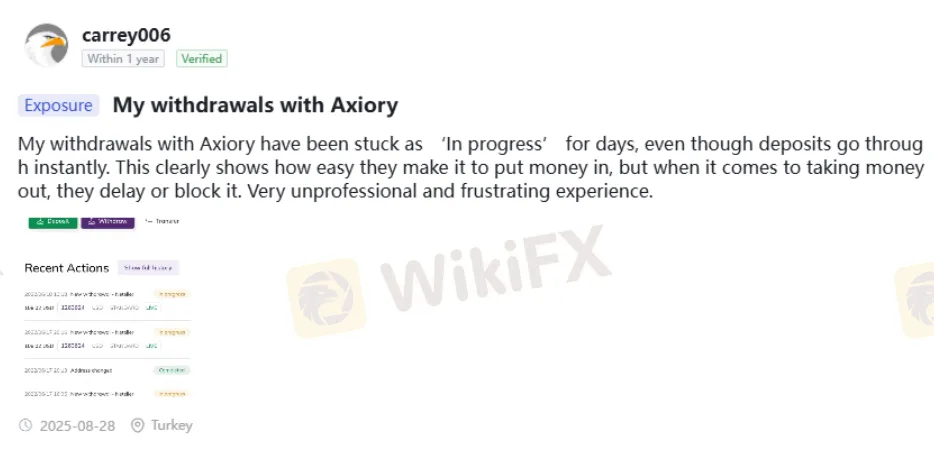
· One user from Turkey reported that their withdrawals have been “stuck as 'In progress' for days,” highlighting a stark contrast with instant deposits.
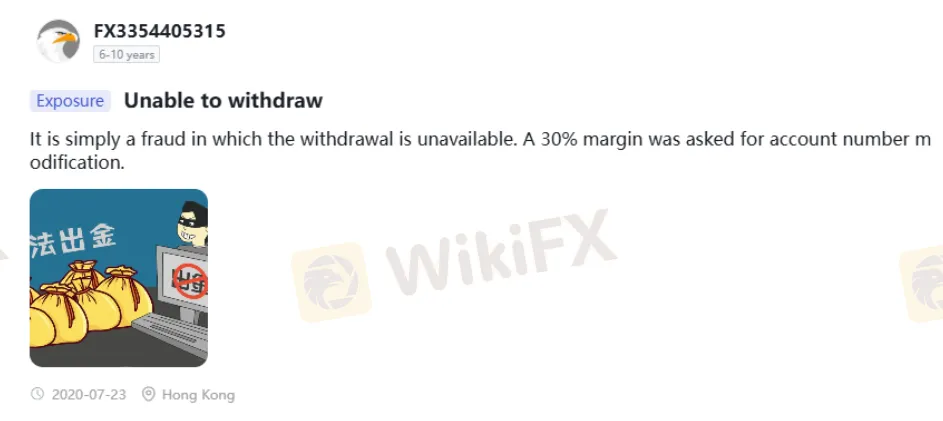
· A trader from Hong Kong labeled the situation a “fraud,” stating they were “unable to withdraw” and were even asked for a “30% margin” just to modify their account number.
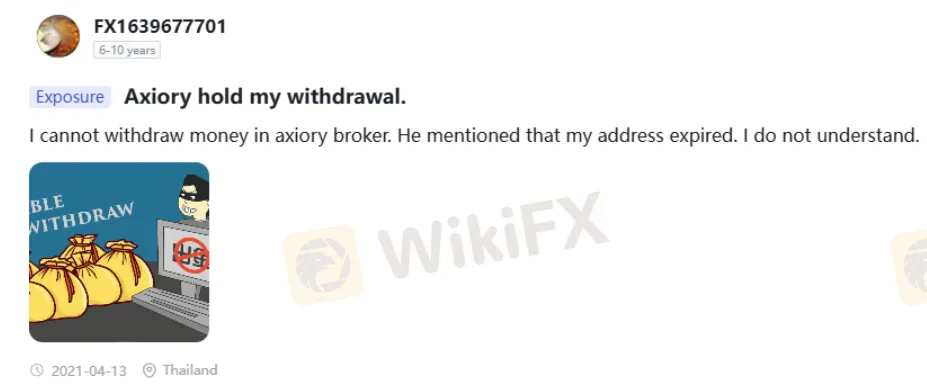
· Another user from Thailand was unable to withdraw because the broker allegedly claimed their “address expired.”
· A report from another user in Thailand cited “VERY SLOW WD” (withdrawal) and support taking 3-5 days to respond, noting the broker's rating was declining.
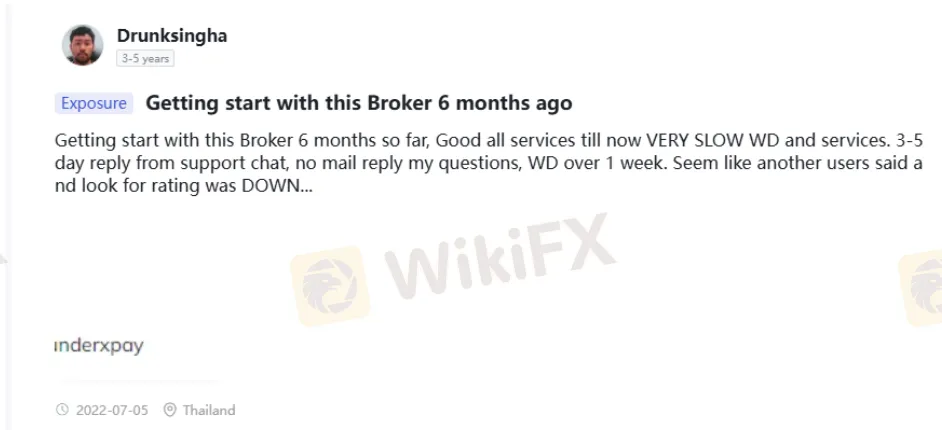
These are not isolated incidents; they are documented user reports that directly impact the broker's trust score. To see the full details and monitor for new complaints, we advise checking the broker's live profile on WikiFX.
A Mixed Bag of Feedback
To maintain a balanced perspective, it's important to acknowledge all forms of feedback. Some users report neutral or even positive experiences, but these are often qualified or contradicted by other reports. A summary of this mixed feedback illustrates the inconsistency.
| Neutral/Positive Mentions | Associated Drawbacks |
| Low initial deposit ($10) | High spreads on certain instruments (e.g., Gold) |
| Bonus campaigns available | Bonuses have been “nerfed”; high fees and low cashback |
| Tight spreads on currency pairs | Issues with “larger slippage” during trades |
| Good customer support (one user) | Very slow support/no reply (multiple users) |
The Underlying Message
While some traders are attracted by the low barrier to entry and occasional promotions, the overwhelming and most serious feedback centers on the fundamental inability to access funds reliably. Positive comments about tight spreads or a low minimum deposit become irrelevant if profits and principal cannot be withdrawn. This persistent theme of withdrawal difficulties is a classic red flag associated with high-risk financial operations.
Weighing Features Against Risks
Brokers often attract clients with enticing features such as high leverage and a wide array of account types. AXIORY is no exception. However, it is crucial to evaluate these offerings not in isolation, but through the lens of the significant risks already identified.
Accounts and High Leverage
AXIORY offers a variety of account types (Nano, Standard, MAX, etc.) with a very low minimum deposit of just $10. This is designed to appeal to beginners and traders with limited capital.
The broker also promotes extremely high maximum leverage, reaching up to 1:2000 on its MAX account. From an expert standpoint, this is a major warning sign. While high leverage can amplify potential profits, it magnifies losses at an exponential rate. Reputable, top-tier regulators in jurisdictions such as the UK, Europe, and Australia strictly cap the leverage available to retail traders precisely to protect them from such catastrophic risk. The offering of 1:2000 leverage is a common tactic used by offshore brokers to attract clients who may not fully understand the dangers involved.
Platforms and Instruments
The broker provides access to a solid range of trading platforms, including MT4, MT5, cTrader, and its proprietary MyAxiory App. It also offers a diverse selection of instruments, from forex and metals to indices and stocks.
However, this is where context is critical. The quality of a trading platform or the breadth of available assets means nothing if the underlying broker cannot be trusted. The “White Label” status of its MT4/MT5 platforms and, more importantly, the overarching regulatory concerns and withdrawal complaints, cast a dark shadow over these features. An advanced platform is useless if the broker controlling it is not subject to stringent oversight, and you face significant hurdles when trying to access your funds.
Your Capital, Your Decision
After a thorough examination of the evidence, we return to the central question of AXIORY's legitimacy. The data points to a broker with a high-risk profile that warrants extreme caution.
Summarizing the Evidence
The key findings are clear and consistent:
1. An extremely low WikiFX score of 2.45/10, accompanied by a direct warning to “stay away.”
2. A “suspicious” regulatory status, relying on a weak offshore license from Belize, with no verified, specific forex trading license found.
3. Significant and repeated user complaints documented on verification platforms, with a strong focus on the inability to withdraw funds.
While AXIORY offers seemingly attractive features, such as a low entry deposit and exceptionally high leverage, these are overshadowed by fundamental issues of trust, safety, and regulatory compliance.
Your Ultimate Legitimacy Check
The final decision to engage with a broker is always yours. However, that decision must be informed by objective evidence, not by marketing promises. The analysis presented here demonstrates a clear pattern of risk.
Before depositing funds with *any* broker, the single most important step you can take is to perform your own research. Use a comprehensive and independent verification platform to check their up-to-date regulatory status, user reviews, and overall safety score. This simple, crucial step can be the difference between a successful trading journey and a potential financial loss. We recommend using a tool, such as WikiFX, as a starting point for this critical verification process. Your capital deserves nothing less.
For extensive analysis in the forex trading landscape, download the updated version of the WikiFX app by scanning this QR code.


Read more
cTrader Mobile 5.9 Adds My cTrader and Improves Chart Navigation
cTrader Mobile 5.9 for iOS introduces My cTrader, streamlines in-app navigation, and adds new chart controls and focus features.
naqdi Exposure Report 2026: Are Traders Facing Long Pending Withdrawals?
naqdi, a South Africa-based forex broker, is reportedly facing criticism from users over the long-pending withdrawal cases. Some users reported four to eight months of unresolved fund withdrawal requests. With no support over these requests, their frustration became evident in the naqdi reviews they shared online. This article sheds light on those complaints while giving users a view of the broker’s regulatory status
Maxpro365 Review 2026: Reported Fund Scams, Withdrawal Hassles & Poor Customer Support Service
Did you lose all your investments on the Maxpro365 platform? Did you fail to witness your deposits on the trading platform? Have you found the procedures regarding fund withdrawals tedious compared to that of deposits? Failed to receive adequate assistance from the customer support team? You are not alone! Many traders, especially from India, have expressed their concerns while sharing the Maxpro365 review online. This article provides an insight into the complaints as well as a regulatory overview of the broker for more informed decision-making.
Clarify Capital Analysis Report
Clarify Capital stands out as a recommended forex broker with an impressive 7.9 out of 10 overall rating, backed by overwhelmingly positive feedback from its trading community. With 200 total reviews and a remarkably low negative rate of just 0.5%, the broker has established itself as a reliable choice for traders seeking a trustworthy platform. The sentiment distribution speaks volumes, with 194 positive reviews compared to only 1 negative and 5 neutral responses, demonstrating consistent satisfaction across its user base. Traders particularly praise Clarify Capital for three standout qualities: responsive customer support that addresses concerns promptly, a solid reputation for safety that instills confidence in clients, and straightforward deposit and withdrawal processes that make fund management hassle-free.
WikiFX Broker
Latest News
Alfa Capital Review 2026: Should You Trade with This Broker?
 WikiFX
Catching Forex Breakouts After a Triangle Volatility Squeeze
WikiFXDollar Slumps On Iran Peace Hopes
WikiFXFBS Review: Regulation Warning Around a Broker Facing Withdrawal and Slippage Complaints
WikiFXRoboForex Review: Regulation Warnings Hit This Broker as Withdrawal Complaints Mount
WikiFXWhy Some Currency Pairs Have Much Wider Spreads Than Others
WikiFXHow Bank Rates, Reserves, and Revaluations Actually Move Currency Prices
WikiFXRupee Gains as Dollar Retreats
WikiFXSilverlight securities Review 2025: Is This Forex Broker Safe?
WikiFXPepperstone Review 2026: Complaints, Withdrawals, and Risk Signals
WikiFXRate Calc

