New trojan campaigns attack hundreds of crypto wallets and banking apps

Abstract:Four Android malware families are targeting over 800 crypto and banking apps, using fake login screens, OTP interception, and stealth techniques to steal sensitive data while evading traditional security tools.
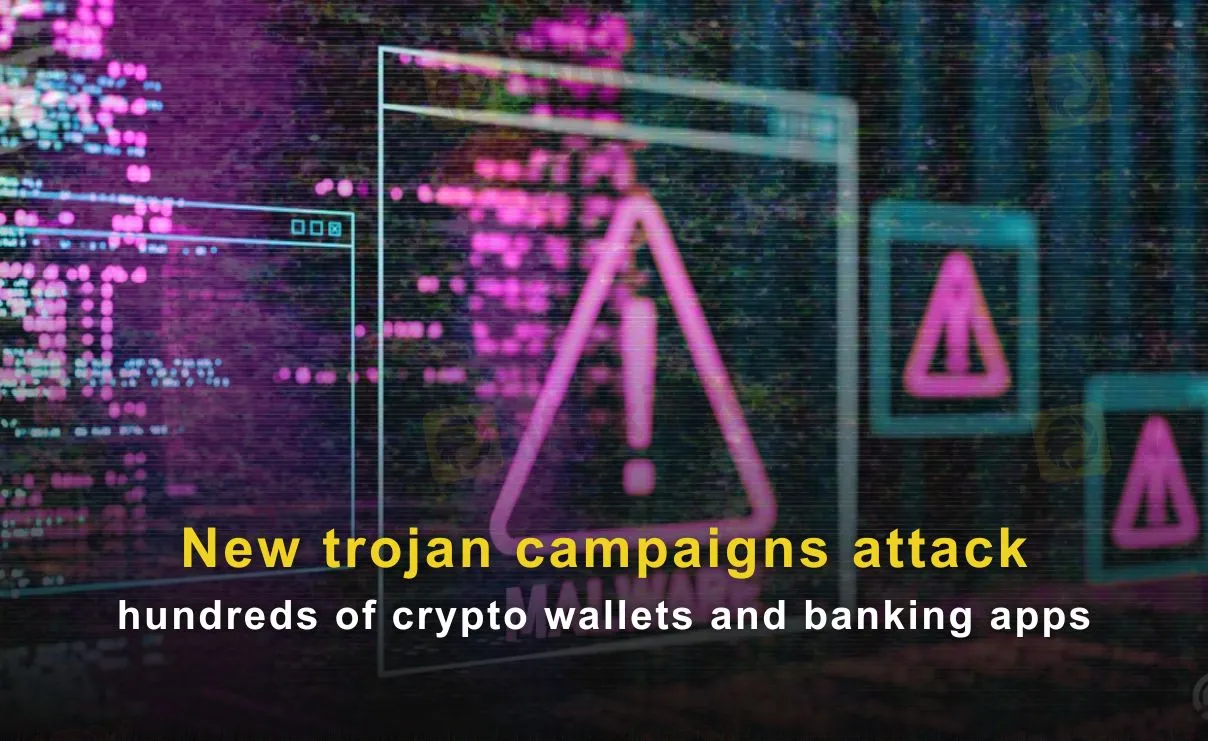
Cybersecurity researchers have identified four active families of Android malware that are currently targeting more than 800 applications, including cryptocurrency wallets and banking platforms. These malware strains, known as RecruitRat, SaferRat, Astrinox and Massiv, are designed to evade traditional security systems, posing a significant risk to users who manage financial assets on mobile devices. The findings were released by Zimperiums zLabs team, which has been tracking these threats and their evolving capabilities.
Each malware family operates through its own command-and-control infrastructure, enabling attackers to steal login credentials, intercept financial transactions and extract sensitive user data from infected devices. Once installed, the malware can overlay fake login screens on top of legitimate applications, capturing passwords and private information in real time. Researchers noted that these malicious interfaces are highly convincing, often using deceptive HTML overlays that closely mimic genuine app environments. By leveraging Androids Accessibility Services, the malware can detect when a user opens a financial application and immediately trigger the attack.
Beyond credential theft, these trojans have advanced capabilities that further increase their impact. They can intercept one-time passcodes, stream a device‘s screen to remote attackers, conceal their own presence by hiding app icons and prevent users from uninstalling them. The distribution methods vary across campaigns, with each malware family using different tactics to lure victims. SaferRat has been spread through fake websites offering free access to premium streaming services, while RecruitRat has been embedded in fraudulent job application processes that direct users to download malicious APK files. Astrinox has used similar recruitment-based tactics through domains such as xhire[.]cc, delivering different content depending on the user’s device. Although iOS users may encounter pages that resemble the Apple App Store, there is currently no evidence of successful iOS compromise. The distribution method for Massiv remains unclear, but all four families rely heavily on phishing techniques, text message campaigns and social engineering strategies that exploit urgency and curiosity.
One of the most concerning aspects of these malware campaigns is their ability to bypass detection. Researchers found that they employ advanced anti-analysis techniques and manipulate Android application package structures to achieve near-zero detection rates against traditional signature-based security tools. Their network communications are also designed to blend in with normal traffic, using encrypted HTTPS and WebSocket connections, sometimes with additional layers of encryption. Furthermore, these threats use multi-stage installation processes to circumvent Androids evolving permission controls, allowing them to maintain persistence on infected devices.
Although the report does not specify which cryptocurrency wallets or exchanges are directly targeted, the nature of overlay attacks, passcode interception and screen monitoring means that any Android-based financial application could be vulnerable if users install software from untrusted sources. The primary risk arises when users download applications from links received through text messages, job postings or promotional websites, rather than from official app stores.
As mobile-based financial activity continues to grow, this development highlights the importance of maintaining strict security practices. Users managing cryptocurrency or banking activities on Android devices are strongly advised to download applications only from verified platforms and remain cautious of unsolicited prompts to install software. Vigilance in app sourcing and awareness of emerging threats remain essential in protecting digital assets in an increasingly complex cybersecurity landscape.

Read more
eToro Review 2026: Why Some Users Report Withdrawal Problems - and What the Evidence Shows
eToro, a United Kingdom-based brokerage entity, is facing serious user allegations concerning the basic facility a trader expects - Fund Withdrawal. Users worldwide are complaining about the lack of a withdrawal option, account restriction, and lack of customer support in real time. Many of their complaints appeared on credible broker review platforms such as WikiFX. In this eToro review, we have examined these complaints.

22K Trader Review 2026: Ongoing User Allegations Raise Fresh Questions About Trust
22K Trader, a United Kingdom-based brokerage entity, is facing severe fund scam allegations from Indian users, in particular. One user reported losing as high as $26,500 on the platform. Similarly, other users have claimed different loss amounts while also criticizing the forced trade execution by the broker. In this 22K Trader review, we have examined several user allegations and provided the regulatory framework the broker operates under.

Maxpro365 Review 2026: Where Is My $23,000? We Investigated User Allegations About Missing Funds
MaxPro365, a Costa Rica-based brokerage entity, is indeed accused of allegations concerning missing funds. The allegations have come specifically from Indian users. One striking claim we came across talked about missing funds worth $23,000. All of these allegations indicate a potential investment scam. In this Maxpro365 review, we have investigated several user allegations and provided an overview of the regulatory framework.
TopFX Review 2026: Profits Earned, Account Terminated, Withdrawal Denied? Check This Investigation
TopFX, a Cyprus-based brokerage entity, continues to face user allegations globally, including those in South Asia. While complaints against the firm are on several issues, the one that is very concerning is the alleged account termination following a withdrawal request by traders upon profit generation on the platform. Traders have even opposed deposit delay and operational glitches concerning leverage. In this TopFX review, we have examined wide-ranging allegations against the broker while also sharing its regulatory framework for an informed decision-making experience.
WikiFX Broker
Latest News
LQH MARKETS Review: Multiple Traders Report Withdrawals Blocked and Accounts Terminated
WikiFXSpread Cheating: The Invisible Trading Cost That Could Be Working Against You
WikiFX"They Want to See Your Face": Inside ATFX Cambodia's Rise
WikiFX57 Booked in Pune Forex Scam Probe: The Fake Trading App Checklist Every Indian Investor Needs
WikiFXFxPro Review: Is This 1.80-Rated Broker Safe for Your Funds?
WikiFXRazor Markets Review: What Traders Should Know Before Depositing
WikiFXAGILE GLOBAL LIMITED Review: What Traders Should Know Before Depositing
WikiFXMASTER MIND CAPITALS Review: Withdrawal Complaints Pile Up Against This Unregulated Broker
WikiFXMangaluru Woman, 61, Loses Rs 16.2 Lakh in Facebook Scheme
WikiFXATFX Trading Volumes Drop 29% After Record Q1
WikiFXRate Calc

