HouseCapital-Overview of Minimum Deposit, Spreads & Leverage
Abstract:Go Partners Limited is a Forex and CFD broker established in the United Kingdom, and House Capital is the trading name of Go Partners Limited. It is important to note that the broker is not registered with the FCA and does not hold any authorized licence.
General Information & Regulation
Go Partners Limited is a Forex and CFD broker established in the United Kingdom, and House Capital is the trading name of Go Partners Limited. It is important to note that the broker is not registered with the FCA and does not hold any authorized licence.
Official Website Unavailable
As of now, House Capital's website is not available. We can only get a rough idea of the information of the broker from some trader review portals.
Market Instruments
House Capital offers investors a range of financial instruments, including CFDs on Forex, indices, commodities, stocks and bonds.
Accounts & Leverage
According to the information, House Capital has about three account types for investors to choose from, the exact names of which are unknown but all of which can be used with a leverage of 1:500.
Spreads
Users can trade more than 50 currency pairs at House Capital. The broker is supposed to charge a certain amount of spreads but the details are still unknown. According to the limited information available, the spread on EUR/USD in the House Capital demo account is 2.8, which is almost twice as much as the regular spread.
Trading Platform
House Capital offers its clients access to the world's financial markets via the MetaTrader 4 (MT4) platform, which is used by millions of traders worldwide.
Deposit & Withdrawal
House Capital also offers its users limited deposit/withdrawal options, mainly via credit/debit cards and bank wire transfers, it does not offer e-wallets such as Neteller, Skrill and PayPal.
Risk Warning
Other online platforms have called for caution against trading scams from House Capital, and combined with the fact that the broker's website is no longer available, it is likely to have closed down and run away.

Read more
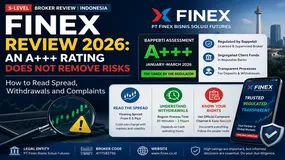
FINEX Review: A+++ Rating Does Not Remove Risks - How to Read Spread, Withdrawals & Other Aspects
FINEX review 2026 for readers comparing an Indonesia forex broker: understand what Bappebti's A+++ rating does and does not show, then check floating spreads, withdrawals, segregated accounts and the complaint route for PT Finex Bisnis Solusi Futures.
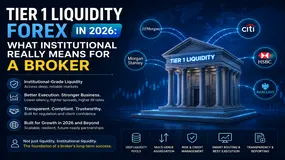
Tier 1 Liquidity Forex in 2026: What Institutional Really Means for a Broker
Choosing a tier 1 liquidity forex is not a search for the lowest displayed spread or the longest provider list. It is a broker decision about pricing integrity, depth, routing, credit, reporting, incident response, and client communication. This 2026 guide explains how an institutional liquidity provider, bank liquidity forex, or interbank liquidity provider arrangement fits into a broker’s execution chain; what to test before onboarding; why a “best tier 1 liquidity forex” claim cannot replace due diligence; and how to compare cost beyond commission. Use the execution-quality scorecard, provider questions, routing scenarios, and 90-day onboarding plan to assess whether a liquidity relationship can support your actual client mix, instruments, risk model, and jurisdiction. The goal is not to make a universal ranking. It is to build evidence that your broker can explain, supervise, reconcile, and recover its execution service when market conditions are difficult.
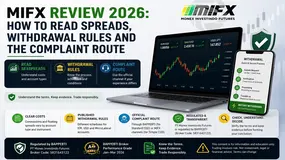
MIFX Review 2026: How to Read Spreads, Withdrawal Rules and the Complaint Route
MIFX review 2026: understand published commissions and spreads, the withdrawal process, Instant Withdrawal conditions, and the PT Monex Investindo Futures complaint route without turning community discussion into factual allegations.

Forex Liquidity Provider in 2026: Why the Tightest Spread is Not Always the Best Execution Decision
Choosing a forex liquidity provider is not a search for the lowest displayed spread or the longest provider list. It is a broker decision about pricing integrity, depth, routing, credit, reporting, incident response, and client communication. This 2026 guide explains how a forex LP, FX liquidity provider, or liquidity provider forex arrangement fits into a broker’s execution chain; what to test before onboarding; why a “best forex liquidity provider” claim cannot replace due diligence; and how to compare cost beyond commission. Use the execution-quality scorecard, provider questions, routing scenarios, and 90-day onboarding plan to assess whether a liquidity relationship can support your actual client mix, instruments, risk model, and jurisdiction. The goal is not to make a universal ranking. It is to build evidence that your broker can explain, supervise, reconcile, and recover its execution service when market conditions are difficult.
WikiFX Broker
Latest News
Luno Review: Users Report Blocked Withdrawals on an Unregulated 'Suspicious Clone'
 WikiFX
Tier 1 Liquidity Forex in 2026: What Institutional Really Means for a Broker
WikiFXBX Trade Review: Is a $1 Minimum Deposit Worth the No-Regulation Risk?
WikiFXCore Prime Review 2026: Unregulated Status, Blocked Accounts, and Key Risks
WikiFXWinvest Review: Is Your Deposit Safe?
WikiFXKCB Review: Is Your Deposit Safe?
WikiFXOcta Review 2026: Severe Withdrawal Complaints and High Risk Signals
WikiFXCrypto Revenue Falls in Q2 as Another Platform Moves Into CFDs
WikiFXRinggit climbs vs US dollar as markets await inflation data
WikiFXUS PPI Cools, but the Core Number Tells a More Complicated Story
WikiFXRate Calc

