WIKIFX REPORT: CYSEC BLACKLISTS FXWET, CRYPTOBANXATRADE, AND SKYECRYPTOFX
Abstract:The Cypriot regulator has warned against entering into transactions today, particularly involving CFDs, cryptocurrency and forex trading, via online trading platforms operated by unlicensed providers.
The Cyprus Securities and Exchange Commission said before that some of these illegal brokers were just spinoffs of previously shuttered companies while others misleadingly claim affiliation with other brokers that are already regulated in Cyprus and hold its CIF License. The watchdog has blacklisted the following domains:
cryptobanxatrade.com
fxwet.com
skyecryptofx.com
capitalbasefx.com
One of the blacklisted brokers, CryptoBanxaTrade, claims to be based in New York and licensed in the UK for offering binary options, Forex and spreads. The shady website also falsely claims to be properly regulated by the US CFTC and the IFSC of Belize, as well as CySEC, which the Cypriot watchdog has just denied.
Meanwhile, Skyecryptofx touts itself as one of the largest stock exchange-listed FX & CFD brokers in the world. It further claims that it has offices in more than 10 countries including Belize, UK, Poland, Germany, Spain and France.
CySEC stresses that these firms are not licensed to operate a brokerage business in Cyprus, nor are they affiliated with a regulated entity. Additionally, it warns that if consumers lost their money on platforms that are not licensed, they are not protected under the Investor Compensation Fund (ICF). This serves to protect the claims of covered clients and provide them with compensation in case a member was unable to meet its financial obligations.
While many providers claim to be Cyprus-based, CySEC said, previously it believed such companies were based overseas and providing false addresses, adding that it would look into taking further action if companies were actually based within the country. It further explains that it is sometimes hard to find the names of the platforms operators on their websites, and that the addresses given as the company headquarters are often offshore letterbox addresses.
Under current laws, CySEC has no powers to force internet companies to refuse financial advertisements or block access to their domains. It can only ask them to take down fraudulent promotions once they have been spotted. As a result, fraudsters and promoters of high-risk schemes have been able to place advertisements claiming to be based or licensed in Cyprus.

Read more
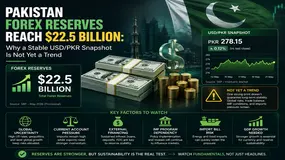
Pakistan Forex Reserves Reach $22.5 Billion: Why a Stable USD/PKR Snapshot is Not Yet a Trend
Pakistan forex reserves stood at $22.506 billion on 13 August 2026, while the SBP dashboard showed a USD/PKR mark to market rate of 277.5713 on 20 August. This article separates the SBP forex reserves facts from predictions about the Pakistan rupee and the forex market Pakistan.
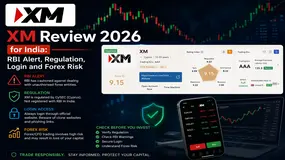
XM Review 2026 for India: RBI Alert, Regulation, Login and Forex Risk
The RBI Alert List, updated on 19 November 2025, names XM and www.xm.com at row 33. RBI says listed entities are not authorised to deal in forex under FEMA or operate an authorised forex ETP in India. XM also publishes overseas licence and risk information. These facts must stay separate. An overseas licence does not create RBI authorisation for an Indian resident.

eToro Review 2026 for India: RBI Alert, Regulation, Login and Forex Risk
The RBI Alert List, updated on 19 November 2025, names eToro and www.etoro.com at row 5. RBI says listed entities are not authorised to deal in forex under FEMA or operate an authorised forex ETP in India. eToro also lists regulated companies in the UK, Europe, Australia, and other markets. Those overseas licences are entity-specific. They do not create RBI authorisation.
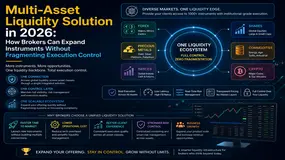
Multi-Asset Liquidity Solution in 2026: Expand Instruments Without Fragmenting Execution
A multi-asset liquidity solution can help a broker support FX, CFDs, commodities, and indices through a more unified operating model. But adding asset classes can also create fragmented symbols, pricing, routing, margin rules, records, and client messages if controls are not designed first. This 2026 guide explains how a multi asset liquidity provider, forex CFD liquidity setup, commodity liquidity provider, and indices liquidity provider fit into a broker-owned execution service. It outlines the due-diligence questions, shared-control model, cost drivers, and 90-day implementation plan that help teams expand without making the execution chain harder to explain. The aim is not to promise deeper liquidity or better trading outcomes. It is to create evidence that a broker can supervise market access, trace order events, reconcile costs, and communicate consistently to the relevant clients when conditions are difficult.
WikiFX Broker
Latest News
DA finance chief steps aside over R4bn SARB forex probe
 WikiFX
Review 2026: EMAR MARKETS Complaints, Regulation, and Account Access Risks
WikiFXSri Lanka to Criminalize Unauthorized Forex Transfers
WikiFXBessent says Treasury buyback operation could be more than $4 billion
WikiFXTPFx Review 2026: An A+++ Result and an Impersonation Warning - What to Check Before Funding
WikiFXQuotex Review: Regulation Warnings, Broker Complaints, and Blocked Funds
WikiFXFiji-deported man faces charges in $165M crypto Ponzi
WikiFXXORKETS FX Review 2026: Withdrawal Demands and Unregulated Risks
WikiFX18.3 Million Malaysians Participated in National Anti-Scam Campaign
WikiFXAtom Group Wins DFSA Nod for DIFC Entry in Amaltas Deal
WikiFXRate Calc

