WIKIFX REPORT: Canada’s Chief Watchdog Flags Unicorn FX over Forged License
Abstract:Canada’s mega regulator, the Investment Industry Regulatory Organization (IIROC) today warned Canadian investors not to be fooled by Unicorn FX.

Unicorn FX is falsely claiming to hold a local registration while not actually licensed by the commission or any other competent authority. According to the IIROC, the broker is posting on its website a certificate of incorporation carrying its name and purporting to be incorporated in Canada, yet this certificate is a complete forgery, the watchdog says.
“UnicornFX, also known as Unicorn Global Limited, is falsely claiming to be a legitimate foreign exchange broker regulated by IIROC. This unregulated, offshore company is using a forged certificate claiming to be regulated by IIROC. IIROC does not issue certificates to regulated firms,” the regulator said.
The IIROC also warns of the substantial potential for fraud at this time, saying that crooks often try to capitalize on high-profile news events to lure investors into financial cons.
Of note, IIROC enjoys a unique structure as it regularly updates FX margin trading requirements subject to FX volatility.
While IIROC rarely uses this power, but the watchdog intervenes, particularly in situations where no other domestic regulator has the power to act (such as where a firm is proposing to offer a foreign-produced highly-leveraged product to retail clients).
The chief regulatory body in Canada has recently proposed a regulatory framework that provides clarity for derivatives activities. Among other things, all highly leveraged products offered to retail clients must be approved in advance by IIROC. Brokers must obtain prior approval for their leveraged products either when releasing new instruments or introducing any changes to the current offerings.
CFD sellers also have their rights restricted with regard to the level of promotion of CFD contracts in order to eliminate existing regulatory arbitrage situations. Further, an additional risk warning is now required, clearly indicating the level of risk to which CFD buyers would be exposed. The risk disclosure statement provided must be approved by IIROC.
The self-regulatory organization has also revised the “institutional client” definition. The new approach aims to avoid drawbacks of the current classification methodology where all individual clients are considered retail, regardless of their investment knowledge or assets they have under administration.
While a retail client can be a wealthy individual or a small business, both are often knowledgeable and, therefore, less likely to make uneducated investments. As such, the predominant distinction between retail and institutional clients will be their financial assets. Specifically, individuals and firms may be eligible to reclassify as a professional client whenever their capitals exceed $5 million and $25 million, respectively.
The updated rules harmonize Canadas regulations with product approval requirements introduced in Europe by ESMA, which banned offering binary options and restricted leverage on CFDs.

Read more
Spreadex Review: Wider Spread & Unexplained Account Closure Allegations for This 2-Decade-Old Broker
Did you incur trading losses on the Spreadex platform due to wider spreads? Have you experienced delays in trade processing by the United Kingdom-based forex broker? Has your Spreadex trading account been closed without any explanation? You are not alone! Many traders have expressed concerns on online broker review platforms. In this Spreadex review 2026, we have covered user allegations and provided a regulatory framework the broker operates under.
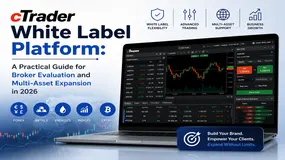
cTrader White Label Platform: A Practical Guide for Broker Evaluation and Multi-Asset Expansion in 2
A broker can launch a white-label platform quickly and still fail the first serious operating test. The failure often begins quietly: an assets expansion has been approved, the client app is branded, and a new account journey looks complete. Then a client asks why a trade-related status, funding hand-off, or account restriction looks different across channels. Support cannot see the same reference trail as operations. The product owns the screen, but no one owns the explanation. The issue is not a missing feature. It is an untested operating model. That is why a cTrader white label platform should be evaluated as a route to a multi-asset service - not as a shortcut to a more attractive terminal. The central question is whether the broker can add instruments, client channels, integrations, and service capacity without making its controls harder to operate or explain.

Perry Warjiyo Resigns: Why the Rupiah Moved Above Rp18,000 per US Dollar
Perry Warjiyo resigned as Bank Indonesia governor, Destry Damayanti became acting governor, and the rupiah traded above Rp18,000. Here is what forex traders should monitor next.

Is TradingPRO Safe? FCA Warning, Indonesia Blocklist Evidence, and 7 Checks Before You Deposit
This Trading Pro broker review checks the FCA warning, Indonesia blocklist evidence, licence claims, and what South Asian users should verify before depositing.
WikiFX Broker
Latest News
OtetMarkets Review: Traders Report Frozen Funds and Withdrawal Blocks , Score Sits at 2.00
 WikiFX
Is Octa Safe for Malaysian Traders? Deep Dive into Octa's Regulatory Status
WikiFXPocket Broker Review: Is Your Deposit Safe?
WikiFXReview 2026: Dollars Markets Regulation, Withdrawal Complaints, and Platform Risks
WikiFXCapital Guard Liquidated: $17.4m Raised, Most Funds Gone
WikiFXSingapore Dollar Holds Tight Range as FOMC Looms
WikiFXHow a 'Legitimate' Investment Became a RM67.5 Million Ponzi Scheme That Scammed 206 Investors
WikiFXRupee Hits Two-Week High as RBI Defends 97 Mark
WikiFXForexMart Review: Profit Canceled, Principal Withheld, and a Broker Warning Traders Cannot Ignore
WikiFXTitan Capital Markets Review 2026: Complaints, Withdrawals, and Severe Risk Signals
WikiFXRate Calc

