USD/JPY Weekly Forecast: Cautious Ahead Of US Inflation
Abstract:The annual inflation rate for the United States is 6.5% for the 12 months ended December 2022 after rising 7.1% previously, according to U.S. Labor Department data published Jan. 12. The next inflation update is scheduled for release on Feb. 14, 2023, at 8:30 a.m.
The annual inflation rate for the United States is 6.5% for the 12 months ended December 2022 after rising 7.1% previously, according to U.S. Labor Department data published Jan. 12. The next inflation update is scheduled for release on Feb. 14, 2023, at 8:30 a.m.
The fear of US inflation causes The USD/JPY weekly forecast to be bullish as Fed policymakers continue emphasizing the need for more hikes. However, there is caution ahead of the US inflation report.
Ups And Downs Of USD/JPY
As The dollar was on the back foot on Friday after an overnight slide as investors tread with caution ahead of U.S. inflation data next week, with worries over an economic slowdown and the pace of the Federal Reserve's rate hikes hitting sentiment.
While The Japanese yen weakened 0.12% to 131.74 per dollar. Japan's government is planning to present the new Bank of Japan governor nominee and two deputy governor nominees to parliament on Feb. 14, Reuters reported on Thursday.
USD/JPY ended last week higher. Although Fed Chair Powell reiterated that “disinflation” is already underway on Tuesday, he said rates might need to increase if the US economy stayed strong.
Contrary to forecasts, more people than normal in the United States applied for unemployment benefits last week. However, the fundamental trend remained consistent with a tight labor market.
The government of Japan will probably choose academic Kazuo Ueda as the new governor of the Bank of Japan. Initially, the news caused the yen and bond yields to rise, which fueled wagers that the 71-year-old would end the super-low interest rates.
The Japanese yen lost some gains when Ueda stated it was reasonable for the BOJ to maintain its ultra-easy policy.
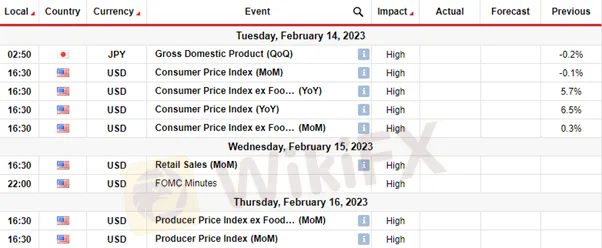
Next Weeks Key Events For USD/JPY
Next week, all focus will be on the US inflation report. Investors are anxious about the upcoming US inflation report, which could reveal a figure higher than markets had predicted. This is because data on Friday indicated expectations for a sustained price increase over the coming year.
USD/JPY Weekly Technical Forecast: Bulls Push Above The Strong 22-SMA Resistance
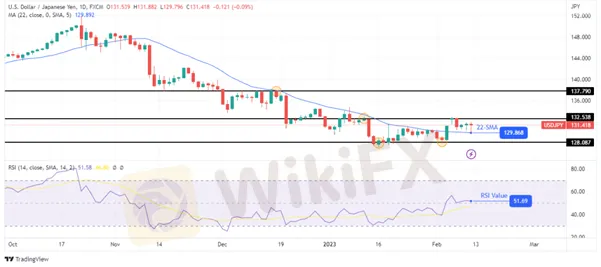
The daily chart shows USD/JPY trading above the 22-SMA for the first time since November last year. The price has been in a very clear downtrend, respecting the 22-SMA as resistance. It made consistent lower lows and lower highs until it got to the 128.08 support.
The bears could no longer make a lower low as the 128.08 support proved too strong to break. This allowed bulls to return with a strong candle that broke above the 22-SMA. The RSI has also crossed above the 50-mark, indicating a shift in sentiment from bearish to bullish.
However, for a new bullish trend to be confirmed, the price must make higher highs and higher lows. It might also consolidate before pushing higher. The bearish trend can only go on if the price breaks below the SMA and the 128.08 support.


Read more

Crypto, Euro, Yuan: Still No Dollar Killer
Despite frequent “de-dollarization” headlines, the U.S. dollar remains unrivaled due to unmatched market depth, global usability, and trusted legal/institutional frameworks. Crypto and other currencies (euro, yuan) lack the stability, convertibility, and infrastructure required to replace the USD, while the Fed’s credibility and the scale of U.S. financial markets continue to anchor demand. Bottom line: no alternative currently offers a complete, credible substitute for the dollar’s global role.
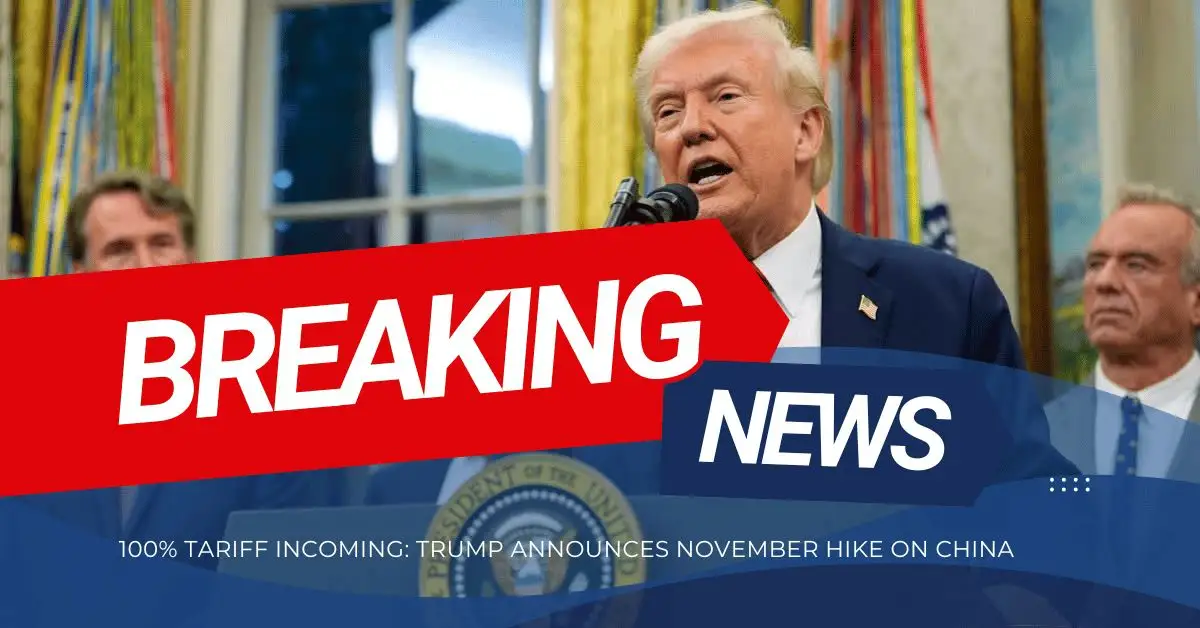
100% Tariff Incoming: Trump Announces November Hike on China
The U.S. will impose an additional 100% tariff on Chinese imports starting Nov. 1, 2025—potentially earlier—alongside new export controls on “critical software,” escalating tensions after Beijing’s rare-earth curbs, new port fees, a Qualcomm probe, and a halt to U.S. soybean purchases. Stocks fell on the news. Key context: some U.S.-China tariffs remain paused until Nov. 10, a Supreme Court case could reshape Trump’s tariff authority, new U.S. duties on cabinets (Oct. 1) and wood products (Oct. 14) are in force, and a pause on Mexico tariffs is set to end next month.

What is NFP in Forex? An Insightful Guide for Traders
The Non-farm Payroll (NFP) report may be for the US. However, the report, which is issued every month, impacts the forex market globally. The monthly report estimates the number of jobs gained in the US in the previous month. The job numbers stated on this report exclude those of farms, private households, and non-profit organizations. Usually released on the first Friday of the month, the report also includes the US unemployment rate, average hourly earnings, and participation rate. In this article, we have answered the question - what is NFP in forex - and shared other pertinent details. Read on!

Fed Rate Cuts May Not Happen in July, Markets Await Policy Meeting Minutes Release
Federal Reserve officials had a meeting on June 17-18 during which some of them expressed a fall in interest rates in July. However, a lot of policymakers are still worried about the inflationary pressures that might emerge from US President Donald Trump’s import tariff decisions aimed at changing global trade. So, it seems the rate cut may not happen in July. Read this to know more.
WikiFX Broker
Latest News
Gold Holds Record Highs as Geopolitical Fractures Widen from Arctic to Middle East
 WikiFX
USD/CAD Breaches 1.3900 as Loonie Succumbs to Oil Collapse and King Dollar
WikiFXOil Rout: Crude Plunges 3% as Geopolitical Risk Premium Evaporates
WikiFXGold Price Surges Above $4,600 as Fed Rate-Hold Bets Offset Fading Safe-Haven Demand
WikiFXCastle Market Forex Broker Review: Regulation, Risks & Verdict – Is It Safe or Scam?
WikiFXGeopolitical Risk: Trump Pauses Iran Strike, Markets Weigh "Tactical Delay" vs. De-escalation
WikiFXUS Inflation Stickiness and Geopolitical Rift Keep Dollar Firm; Gold Volatile
WikiFXSilver Volatility Explodes: Tariff Reprieve and Demand Destruction Fears
WikiFXGoldman Sachs 2026 Outlook: Dollar Overvalued by 15%, Tech 'Exceptionalism' is Key Risk
WikiFXTrump tells Hassett he wants to keep him where he is; Warsh Fed Chair odds jump
WikiFXRate Calc
