Bank of Canada says rates may be at peak, excess demand now gone
Abstract:Bank of Canada Governor Tiff Macklem said on Wednesday that interest rates might be at their peak, given excess demand has vanished and weak growth is expected to persist for many months.

Bank of Canada Governor Tiff Macklem said on Wednesday that interest rates might be at their peak, given excess demand has vanished and weak growth is expected to persist for many months.
The Bank of Canada (BoC) - seeking to control soaring inflation - hiked rates 10 times between March of last year and July 2023, pushing them up to a 22-year high of 5.00%. The inflation rate, which spiked to more than 8% last year, eased to 3.1% in October but is still above the bank's 2% target.
“This tightening of monetary policy is working, and interest rates may now be restrictive enough to get us back to price stability,” Macklem told the Saint John Region Chamber of Commerce in the Atlantic province of New Brunswick.
“We expect the economy to remain weak for the next few quarters,” he added. “The excess demand in the economy that made it too easy to raise prices is now gone.”
Macklem reiterated that the bank was prepared to raise rates again if needed.
Analysts and money markets expect that the bank's next move will be to cut rates by the middle of next year.0#BOCWATCH
Responding to questions after his speech, Macklem said that the BoC can begin lowering interest rates when inflation is on a clear path to the 2% target, but “right now, it is not time to start thinking about cutting interest rates”.
When the BoC's policy setting governing council last met and announced on Oct. 25 that rates would remain on hold, some members thought another increase in borrowing costs would be needed, according to a summary of their deliberations.
“Our view is that further economic weakness will be seen over the remainder of this year and early in 2024,” said Royce Mendes, head of macro strategy at Desjardins Group, after the speech. “That will be enough to prompt rate cuts in the second quarter of 2024.”
Macklem spoke a day after the government released its Fall Economic Statement, which included new spending measures aimed at providing more affordable housing. It said deficit spending would be much higher than previously forecast in coming years, with debt coming down more slowly.
In recent months, Macklem has said monetary and fiscal policy should be rowing in the same direction to bring down inflation.
In his speech on Wednesday, Macklem recognized the impact of restrictive monetary policy.
“Higher interest rates are squeezing many Canadians, but these rates are relieving price pressures,” Macklem said.
“To return to low inflation and stable growth in the years ahead, we need these higher interest rates and slow growth in the short term,” he added.
On Nov 9, the bank said the era of super-low interest rates was likely over and warned businesses and households to plan for higher borrowing costs than they have been used to in recent years. Some 60% of mortgage holders have yet to renew their home loans at higher rates, the BoC says.


Read more
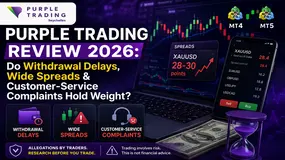
PURPLE TRADING Review: Do Withdrawal Delays, Wide Spreads & Customer-Service Complaints Hold Weight?
PURPLE TRADING, a Seychelles-based forex brokerage entity, is constantly criticized by numerous traders on review platforms such as WikiFX. While withdrawal delays or denials are reportedly a common issue here, there are also complaints about wide spreads and poor customer services. This PURPLE TRADING review examines user-reported allegations against the trading enterprise. Additionally, the article takes a close look at the broker’s regulatory status.
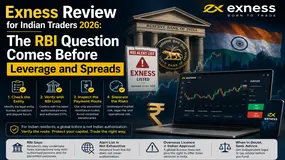
Exness Review for Indian Traders 2026: The RBI Question Comes Before Leverage and Spreads
Exness review for Indian traders in 2026. This guide explains what the RBI Alert List says, what it does not say, why a global license is not Indian authorization, and how to verify permitted forex routes before funding an account.
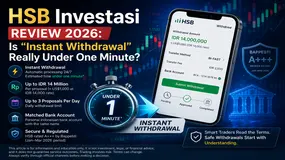
HSB Investasi Review 2026: Is “Instant Withdrawal” Really Under One Minute?
HSB Investasi review 2026: check the Instant Withdrawal claim, the IDR 14 million per-proposal limit, the three-request daily cap, transfer costs, transaction statuses, and what Bappebti data does—and does not—tell traders.

Branded Trading Platform in 2026: When Does Your Brand Become a Real Operating Advantage?
A branded trading platform can look like the fastest route to a modern branded trading environment, but a fast launch is not the same as a controlled launch. This 2026 broker guide explains what the custom trading platform is, where a provider broker solution can sit in a wider operating stack, and how to evaluate the difference between a white label, a server license, and a connected CRM or Client Office setup. It also unpacks proprietary platform costs beyond the monthly headline, including implementation, integration, support, data, governance, migration, and exit assumptions. Use the practical questions, workflow tests, comparison table, and launch checklist to assess a platform provider without mistaking a feature demo for evidence that your brokerage can run the service safely at scale.
WikiFX Broker
Latest News
Traze Review: What Traders Should Know Before Depositing
 WikiFX
Match-Trade Gives AI Direct Access to Broker Trading APIs
WikiFXWhy Sovereign Debt Can Sink a Currency: The Credit Risk Channel
WikiFXUS July CPI Could Take a Fed Rate Hike Off the Table
WikiFXEMAR MARKETS Review 2026: Severe Withdrawal Complaints and Risk Signals
WikiFXBYBIT Review: What Traders Should Know Before Depositing
WikiFXPocket Broker Review: What Traders Should Know Before Depositing
WikiFXIC Markets Global Review for South Asian Traders: A Global License Isn't the Same as Local Permit
WikiFXTrader's Way Review: Trades Vanished Overnight , And There's No Regulator to Call
WikiFXLockwood Review: AMF-Blacklisted Broker with Users Reporting Blocked Withdrawals
WikiFXRate Calc

