NinjaTrader Fined $250,000 for Anti-Money Laundering Lapses
Abstract:NinjaTrader fined $250K by NFA for AML failures, missing suspicious trades and high-risk accounts. Learn about the brokerages compliance issues and regulatory history.
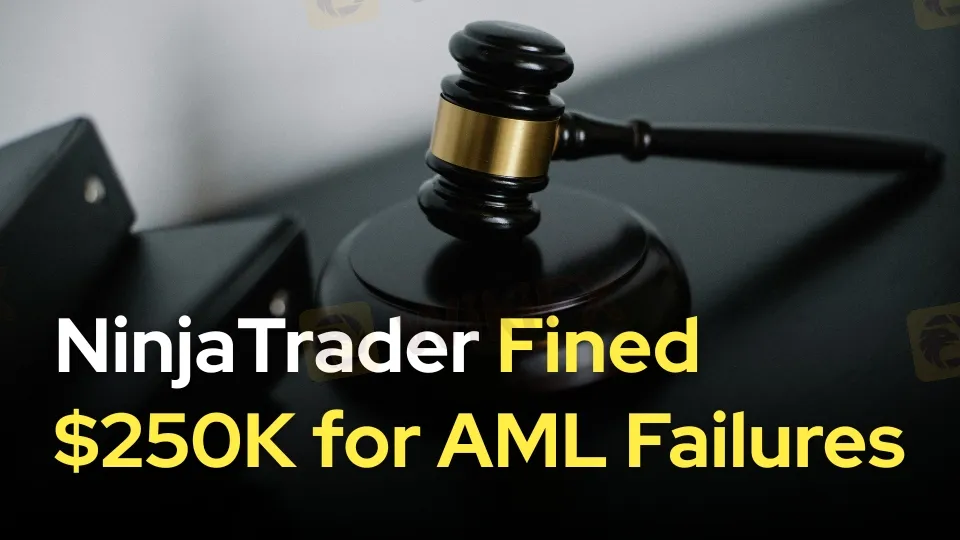
The National Futures Association (NFA) has fined NinjaTrader $250,000 following an in-depth investigation that revealed critical lapses in the brokerage firm's anti-money laundering (AML) program. The fine, issued in May, highlights a pattern of missed red flags, poor internal communication, and a failure to adequately screen suspicious customer activity.
The Chicago-based broker, now owned by cryptocurrency exchange Kraken, was found to have allowed dozens of questionable accounts to operate without proper scrutiny. According to the NFA, NinjaTrader failed to track key warning signs such as unusual wire transfers, accounts tied to high-risk jurisdictions, and evidence suggesting some users were operating on behalf of others — a serious regulatory violation if left unapproved.
The NFA‘s review found that NinjaTrader’s compliance systems often failed to detect obvious patterns. In one particularly troubling case, a customer claiming to be a 20-year-old beneficiary of inheritance funds was in fact a front for his father — a convicted money launderer — who was managing the trades behind the scenes.

Another case involved a 70-year-old trader who made a staggering 11,000 trades in a single month, up from just a handful the previous period. The individual contacted the company multiple times daily but was nonetheless allowed to continue trading until the NFA intervened.
Investigators also discovered that nearly 500 accounts from countries on NinjaTraders internal “blocked list” remained active, despite known compliance risks. The firm claimed it redefined its “risk profile” after a 2020 change in ownership, but failed to update its written AML procedures accordingly.
Compounding the issue, NinjaTrader had not screened tens of thousands of client accounts against key anti-money laundering and anti-terrorism databases maintained by the Financial Crimes Enforcement Network (FinCEN). This oversight was blamed on internal miscommunication within the compliance team, yet the NFA viewed it as a significant vulnerability that could have exposed the firm to greater legal and reputational risks.
NinjaTrader settled the matter without admitting or denying the allegations, though it has reportedly begun overhauling its AML systems. Still, the NFA cautioned that the firm's fragmented internal structure and weak cross-departmental coordination created an environment where risk was routinely downplayed or overlooked altogether.
This is not NinjaTraders first clash with regulators. Its predecessor, York, was fined in 2012 by the Commodity Futures Trading Commission (CFTC) and again in 2020 by the NFA for similar compliance failings. Regulators noted that despite the rebranding and change in ownership, many of the same patterns have persisted.
The 2023 review also drew criticism of NinjaTrader President Michael Cavanaugh, who approved the firms AML program but failed to ensure it was actually enforced. Under his leadership, the company continued to accept high-risk accounts without aligning its policies or protocols with compliance best practices.
The NFA‘s actions send a clear signal to other brokerage firms in the industry: a robust and consistently implemented AML framework is not optional — it’s a regulatory requirement. In NinjaTraders case, failing to connect the dots internally came at a significant cost, both financially and reputationally.
Stay updated on financial regulations! Subscribe to our newsletter for the latest NinjaTrader and brokerage industry insights.


Read more
datian Review: Examining Slippage and Forced Liquidation Allegations Against the Broker
Did you face losses due to a sudden change in the trading price on the datian platform? Were your transaction records deleted by the Hong Kong-based forex broker? Did the broker liquidate your trading account multiple times despite not reaching the stage where it mandated this move? Have you experienced heavy slippage on the trading platform? Concerned by these issues, traders have complained about the broker online. We will let you know of these with attached screenshots in this datian review article. Keep reading!
TopstepFX Review: Investigating Fund Withdrawal Denial Claims & Other Trading Issues
Did you face constant rejections of your fund withdrawal applications by TopstepFX? Have you been denied withdrawals in the name of hedging? Did you witness an account block without any clear explanation from the forex broker? There have been numerous user claims against TopstepFX regarding its withdrawals, payout delays and other issues. In the TopstepFX review article, we have investigated the top complaints against the US-based forex broker. Keep reading!
Mazi Finance Regulatory Status: A Complete Guide to Its Licenses and High-Risk Warnings
When choosing a broker, the first question is always about safety and legitimacy. Is my capital safe? For Mazi Finance, the answer is clear and worrying: Mazi Finance is an unregulated broker. While the company, MaziMatic Financial Services LTD, is registered in the offshore location of Saint Lucia, this business registration does not replace strong financial regulation from a top-level authority. Independent analysis from regulatory watchdogs shows a very low trust score, made worse by official warnings from government financial bodies and many user complaints about serious problems. This article provides a clear, fact-based analysis of the Mazi Finance regulation status. Our goal is to break down the facts and present the risks clearly, helping you make an informed decision and protect your capital.
Checking if Mazi Finance is Real: Is This a Fake Broker or a Real Trading Company?
If you're wondering, "Is Mazi Finance legit?" or worried about a possible Mazi Finance scam, you are asking the right questions. These are the important first steps every trader must take to protect their capital. In a market full of chances to make money, there are just as many traps. Our goal is to give you a clear, fact-based answer. We have done a complete investigation into Mazi Finance, looking at its legal status, company structure, user experiences, and trading conditions. This is not a review based on marketing claims; it is a check for legitimacy based on facts we can prove. To be direct, our findings show that Mazi Finance operates with serious warning signs that should worry any trader. The biggest problem is its complete lack of proper regulation from any respected financial authority. This fact alone puts it in a high-risk category. This article will explain exactly what that means for you and your money.
WikiFX Broker
Latest News
CBN Bolsters Forex Liquidity: Resumes BDC Sales as Reserves Hit $47 Billion
 WikiFX
China’s "Deposit Migration" Myth Debunked: A Gradual Shift, Not a Flood
WikiFXTheos Markets Review 2026: Is this Forex Broker Legit or a Scam?
WikiFXINVESTIZO Review: Profit Cancellation Claims, Withdrawal Denials & Poor Customer Support
WikiFXAssetsFX Review : Read This Before You Put Money In it
WikiFXDeltaFX Broker: No Regulation Exposed
WikiFXIs Stonefort Legit Company? Understanding the Risks
WikiFXMazi Finance Regulatory Status: A Complete Guide to Its Licenses and High-Risk Warnings
WikiFXWarsh Likes It Hot, And Will Move The Fed's Inflation Target To 2.5-3.5%
WikiFXdatian Review: Examining Slippage and Forced Liquidation Allegations Against the Broker
WikiFXRate Calc
