TriumphFX Faces Regulatory Warnings and Fraud Investigations
Abstract:TriumphFX is under scrutiny with multiple regulatory warnings and fraud investigations worldwide. Stay informed on its license status and avoid potential scams.
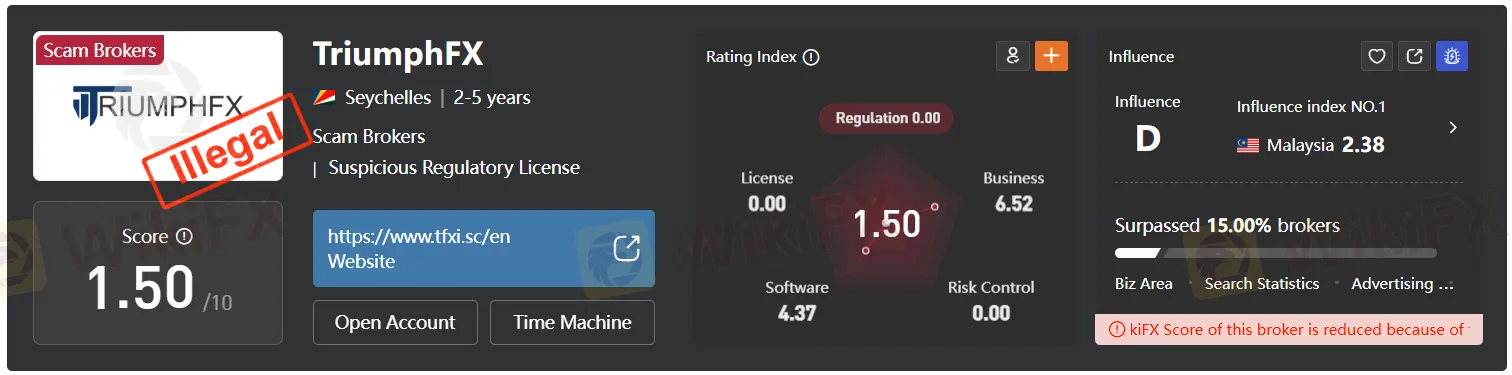
TriumphFX, known for its forex and CFD services, is operated by Triumph Int. (Cyprus) Ltd and Triumph Int. (SC) Ltd has landed in hot water with regulators around the world. Even though it held a license from the Cyprus Securities and Exchange Commission (CySEC) before the revocation, the companys activities and leadership have been repeatedly questioned, sparking a wave of cautionary warnings for potential investors.
Regulatory Trouble Spanning the Globe
The regulatory rollercoaster started rolling in December 2023 when CySEC took the extraordinary step of suspending voting rights for TriumphFX‘s sole indirect shareholder, Chong Chun Hseung. Along with this, the firm’s executive directors, Christoforos Christoforou and Joel Prakash Benedict, were handed a two-year ban on any management roles. These actions will stay in place until TriumphFX gets itself off investor alert lists in places like Singapore and Malaysia.
But the red flags didnt start or end there:
- Singapores Monetary Authority (MAS) added TriumphFX to its Investor Alert List back in August 2021, warning that the brokerage might be misleading people into thinking it was licensed locally.
- Malaysias Securities Commission joined in even earlier, blacklisting TriumphFX in 2020 for unauthorized activities tied to capital markets.
- New Zealand‘s Financial Markets Authority (FMA) and Australia’s ASIC have both issued bulletins, warning that TriumphFX is not a registered or licensed provider in their countries, and advising extreme caution for would-be investors.
This global pushback has cast doubt over TriumphFXs compliance claims, raising serious questions about its credibility as a regulated broker.
Investors Burned—and the Authorities Take Notice
Things escalated in Malaysia, where 72 police reports from frustrated investors revealed collective losses exceeding $5.3 million. Authorities didn‘t stop at the original operation—investigators also unearthed a TriumphFX clone scam, which enticed with quick profits but left victims with nothing but regret. Malaysia’s fraud investigators are now knee-deep in multiple ongoing cases, seeking accountability for the widespread financial losses.
Although TriumphFX continues to advertise itself as a licensed, regulated brokerage, a flood of negative reviews and complaints tells a different story. Customers routinely voice disappointment over management issues, poor communication, lengthy withdrawal processes, and a general lack of transparency—a pattern that raises further alarms about the firms practices.
The Companys Shaky Regulatory Foundation
TriumphFX currently holds licenses in Cyprus and the Seychelles. However, its track record is anything but reassuring. The company formerly operated under a license from the Vanuatu Financial Services Commission (VFSC) but lost that privilege after its license was revoked—a detail that adds to doubts about its reliability and intentions.
Multiple regulatory warnings from varied jurisdictions underline the importance of skepticism. Ongoing investigations in several countries only amplify concerns, signaling that authorities aren‘t yet convinced of TriumphFX’s trustworthiness or regulatory compliance.
What Savvy Investors Should Do
When it comes to choosing an online broker, doing your homework isn‘t just wise—it’s necessary. TriumphFX‘s regulatory headaches and mounting customer complaints make it a high-risk choice for anyone thinking about investing. Here’s what every investor should keep in mind:
- Scrutinize license credentials. Never take a brokers word for it—confirm licenses through official channels, and note any red flags such as negative press, lack of registration, or regulatory investigations.
- Read customer feedback. A steady stream of complaints or unresolved withdrawal issues is a major warning sign.
- Prioritize transparency and oversight. Reliable brokers are transparent about their regulations, fees, and ownership, and they communicate clearly with clients.
Choosing a broker with a spotless regulatory reputation can help you avoid headaches and financial loss. As TriumphFX faces growing international scrutiny, investors would be wise to consider safer alternatives and to stay informed by monitoring official warnings and real user experiences.
Safeguard your investments by staying diligent, skeptical, and proactive—because your financial security is too important to leave to chance.
You may also check other traders' negative experiences with TruimphFX by accessing its broker's page: https://www.wikifx.com/en/dealer/2785101112.html


Read more
Spreadex Review: Wider Spread & Unexplained Account Closure Allegations for This 2-Decade-Old Broker
Did you incur trading losses on the Spreadex platform due to wider spreads? Have you experienced delays in trade processing by the United Kingdom-based forex broker? Has your Spreadex trading account been closed without any explanation? You are not alone! Many traders have expressed concerns on online broker review platforms. In this Spreadex review 2026, we have covered user allegations and provided a regulatory framework the broker operates under.
cTrader White Label Platform: A Practical Guide for Broker Evaluation and Multi-Asset Expansion in 2
A broker can launch a white-label platform quickly and still fail the first serious operating test. The failure often begins quietly: an assets expansion has been approved, the client app is branded, and a new account journey looks complete. Then a client asks why a trade-related status, funding hand-off, or account restriction looks different across channels. Support cannot see the same reference trail as operations. The product owns the screen, but no one owns the explanation. The issue is not a missing feature. It is an untested operating model. That is why a cTrader white label platform should be evaluated as a route to a multi-asset service - not as a shortcut to a more attractive terminal. The central question is whether the broker can add instruments, client channels, integrations, and service capacity without making its controls harder to operate or explain.
Is TradingPRO Safe? FCA Warning, Indonesia Blocklist Evidence, and 7 Checks Before You Deposit
This Trading Pro broker review checks the FCA warning, Indonesia blocklist evidence, licence claims, and what South Asian users should verify before depositing.
MT4 White Label Cost in 2026: What Brokers Must Budget Beyond the Platform Fee
The visible fee in an MT4 white label proposal is rarely the real cost of operating it. For an existing broker, the decision is not simply whether an MT4 white label platform is “cheap” or “expensive.” The real question is whether the commercial model remains viable after integration, support, data, client migration, compliance, and exit costs are included. That is why an MT4 white label cost review should be built as a 24- to 36-month operating case. It should compare three credible choices: 1. Keep the present MT4 setup and improve its weakest controls. 2. Replace the MT4 white label provider but retain the client proposition. 3. Migrate selected clients or products to another platform while running MT4 in parallel. This guide explains how to build that case without relying on headline prices or generic vendor claims.
WikiFX Broker
Latest News
Why the Dollar Moves Almost Every Forex Pair
 WikiFX
BX Trade Review: Is This Unregulated Broker Worth the Risk?
WikiFXSTMARKET Review: Withdrawal Complaints Cloud a Low-Rated Broker, What to Know Before You Deposit
WikiFXDeriv Review: What Traders Should Know Before Depositing
WikiFXDollar Steadies as Rupee Finds Market Support
WikiFXPRIME VEST SAFE Review: Is Your Deposit Safe?
WikiFXWinvest Review: What Traders Should Know Before Depositing
WikiFXCONSOB Orders Blocking of 24 Unauthorized Investment Websites
WikiFXBitDelta Receives UAE Category 5 Licence for Introducing Activities
WikiFXRinggit Gains on Majors but Slips vs US Dollar Ahead of Fed
WikiFXRate Calc

