Tell LTD Named by DFSA for Posing as Licensed Firm
Abstract:DFSA issued a warning naming Tell LTD for false license claims. Discover the risks of broker impersonation and how to protect your funds.
Warning overview
The Dubai Financial Services Authority (DFSA) has issued an investor alert naming Tell LTD for impersonating a DFSA-authorised firm. The alert explains that the operators use DFSAs name and regulatory language to look legitimate while not appearing on the DFSA Public Register.
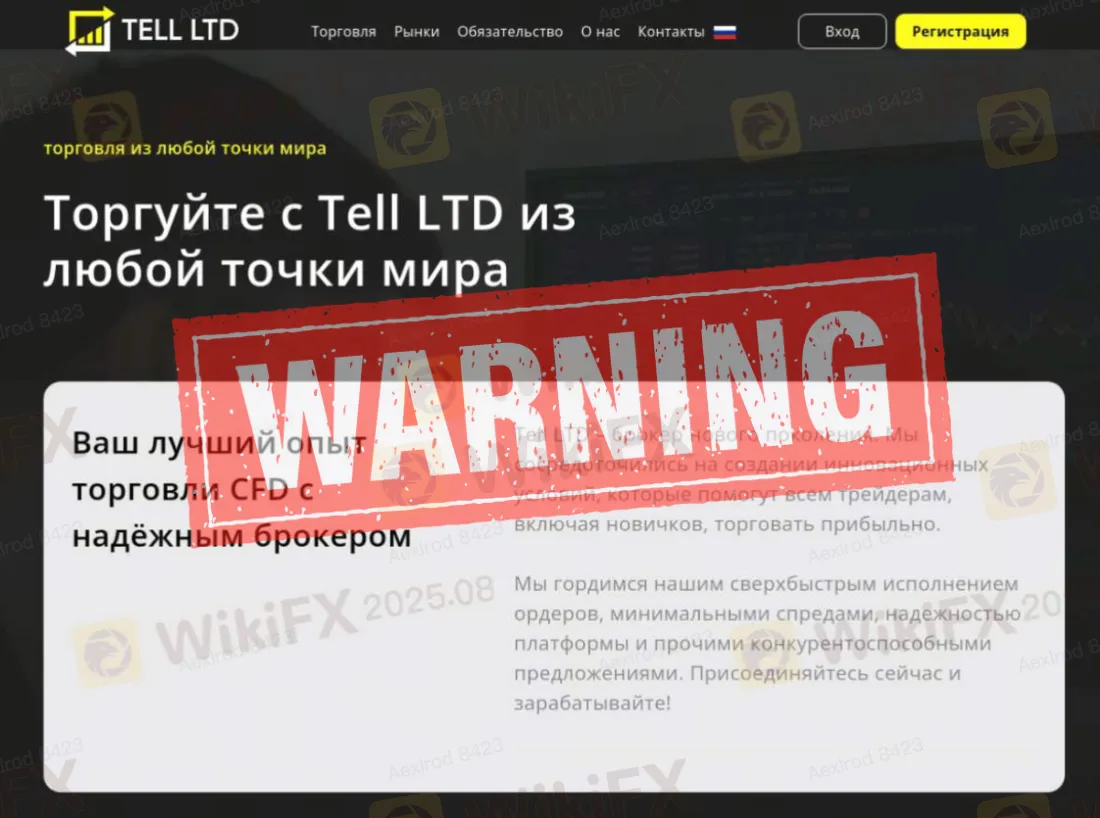
Typical touchpoints include polished websites, social-media ads, unsolicited emails or messaging-app outreach, and follow-up calls by “account managers” who push quick onboarding. Victims are urged to transfer money to third-party accounts or to send crypto to wallets the promoters control.
The warning stresses a few essentials: being “based in Dubai” or citing the DIFC in marketing does not equal DFSA authorisation; screenshots of “certificates,” licence numbers pasted on webpages, or logos embedded in PDFs are not proof of a licence; and investors should treat any request for remote-access apps or identity documents as a red flag. The regulator urges the public to refuse payments, preserve evidence (URLs, emails, wallet addresses, phone numbers), and report the incident.
How to recognise an impersonation playbook
Scams that pretend to be regulated usually follow repeatable patterns. Watch for these tells:
- Name mismatch. The company name on the website or contract doesnt match any entry in an official register; the legal entity changes across pages, footers, or bank beneficiary details.
- Look-alike domains. One-letter swaps, extra hyphens, or different TLDs that mimic a known brand.
- Fuzzy “proof.” Blurry “licences,” unverifiable licence numbers, or links to self-hosted “verification” pages rather than an official register.
- Payment detours. Requests for crypto, e-wallets, or transfers to private/overseas accounts that dont match the named firm.
- Pressure and promises. Pushy deadlines, “limited slots,” or claims of effortless returns.
- No audit trail. Missing client agreements, no complaints procedure, generic webmail addresses, and phone numbers that constantly change.
If just one of these shows up, pause. If several appear together, walk away.
One-stop verification with WikiFX
Before you fund any account, run a background check on WikiFX. The platform aggregates licence status, risk alerts, and user exposures across regions in a single broker profile.
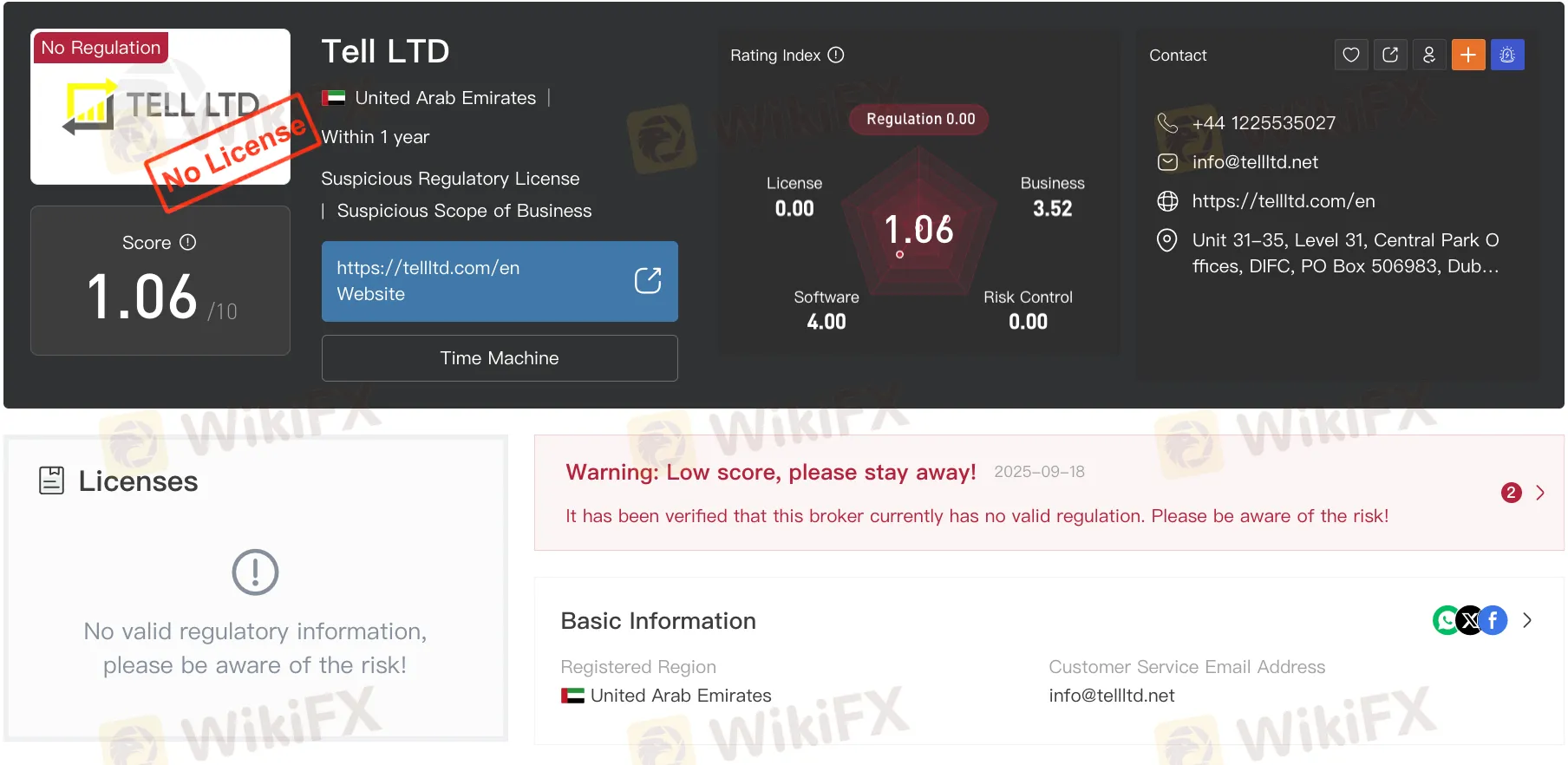
For Tell LTD, the WikiFX page does not show a DFSA licence—in fact, it shows no valid authorisation from recognised regulators. That alone is a deal-breaker for risk-aware traders. Use the broker profile to read recent exposure posts, compare entity names, and confirm whether the website youre viewing matches any licensed corporate body. If the licence section is blank or labelled “unverified/revoked,” treat it as a hard stop.

Read more
Is TradingPRO Safe? FCA Warning, Indonesia Blocklist Evidence, and 7 Checks Before You Deposit
This Trading Pro broker review checks the FCA warning, Indonesia blocklist evidence, licence claims, and what South Asian users should verify before depositing.

The Rise of Deepfake Investment Scams: ASIC Shares Key Warning Signs
Artificial Intelligence (AI) has grown remarkably recently. However, it has also amplified the scope for financial fraud. One such is the rapid use of deepfake technology involving AI-generated videos, images and audio clips imitating real people. Fraudsters are leveraging these technologies to impersonate financial advisers, celebrities, business leaders and government officials to lure victims into fake investment schemes. Understanding the emerging implications, the Australian Securities and Investments Commission (ASIC) has cautioned investors of investment avenues promoted through convincing AI-generated content. Seemingly authentic, deepfakes are designed to manipulate trust and make people transfer funds before authenticating the investment’s legitimacy.
ABET Review 2026: Users Allege Missing Funds and Trade Manipulation - Our Investigation
ABET, a Bulgaria-based brokerage firm, faces severe allegations from users for the reportedly inefficient way it handles their funds. While some alleged illegitimate account blocks by the broker, others reported fund scams and trade manipulations. These ABET reviews have raised question marks over the broker’s legitimacy.
22K Trader Review 2026: Ongoing User Allegations Raise Fresh Questions About Trust
22K Trader, a United Kingdom-based brokerage entity, is facing severe fund scam allegations from Indian users, in particular. One user reported losing as high as $26,500 on the platform. Similarly, other users have claimed different loss amounts while also criticizing the forced trade execution by the broker. In this 22K Trader review, we have examined several user allegations and provided the regulatory framework the broker operates under.
WikiFX Broker
Latest News
Winvest Review: What Traders Should Know Before Depositing
 WikiFX
Trade Nation Review: What Traders Should Know Before Depositing
WikiFXRate Calc

