Israel's Recognition of Somaliland Sparks Red Sea Geopolitical Concerns; Oil and Safe Havens in Focu

Abstract:Israel has formally recognized Somaliland as an independent sovereign state, signing a diplomatic agreement that has triggered immediate furor from the Somali government. While the diplomatic rift is regional, the strategic implications extend to the Red Sea shipping lanes, a critical artery for global trade and energy supplies. For financial markets, this development introduces a new layer of complexity to the Middle East geopolitical risk premium, potentially influencing Crude Oil (WTI/Brent) and Safe Haven flows.
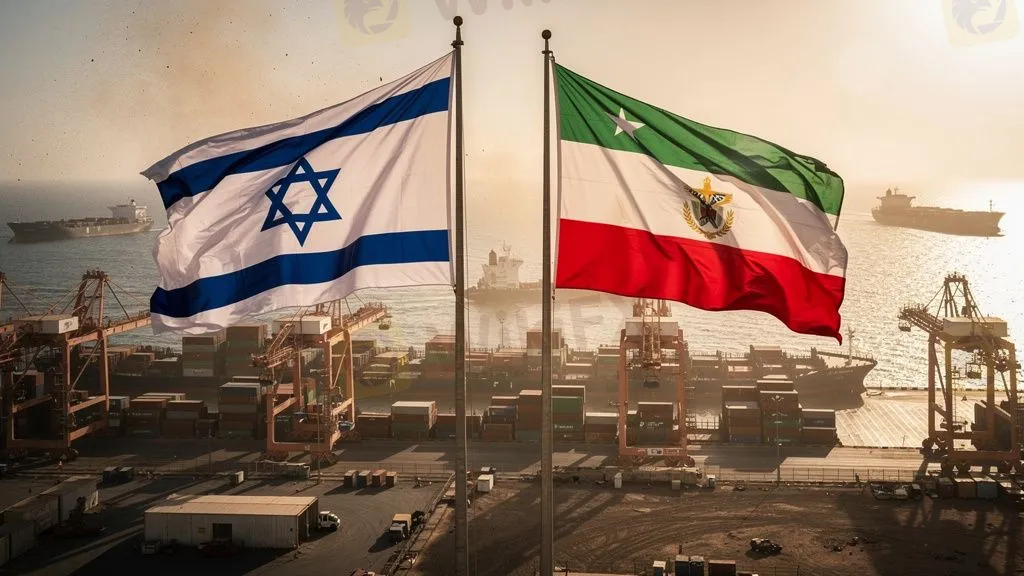
Israel has formally recognized Somaliland as an independent sovereign state, signing a diplomatic agreement that has triggered immediate furor from the Somali government. While the diplomatic rift is regional, the strategic implications extend to the Red Sea shipping lanes, a critical artery for global trade and energy supplies. For financial markets, this development introduces a new layer of complexity to the Middle East geopolitical risk premium, potentially influencing Crude Oil (WTI/Brent) and Safe Haven flows.
Strategic Pivot to the Horn of Africa
Market analysts view Israel's move not merely as diplomatic recognition, but as a calculated strategic pivot to secure influence in the Horn of Africa. Somaliland is situated along the Gulf of Aden, directly adjacent to the Bab el-Mandeb Strait—a global choke point recently plagued by Houthi attacks on commercial vessels.
By solidifying ties with Somaliland, Israel gains potential access to the Berbera Port, which could serve as a logistical or military forward base.
- Security Context: Enhanced Israeli presence could seek to counter Houthi influence and secure maritime passage for Israeli-linked shipping.
- Market Risk: An increased militarization of the Red Sea coast could provoke retaliatory actions, keeping oil supply volatility and shipping insurance costs elevated.
Regional Instability and the “Abraham Accords”
The Somali government, led by President Hassan Sheikh Mohamud, has condemned the move as a violation of international law and territorial integrity, asserting that Somaliland remains an indivisible part of Somalia. The friction threatens to destabilize an already fragile region, with potential spillover effects engaging broader Arab nations who may back Mogadishu.
Conversely, Somaliland has expressed willingness to join the Abraham Accords, aiming to normalize ties with Israel in exchange for international legitimacy—a goal it has sought since declaring unilateral independence in 1991.
Outlook for Traders
While major currency pairs (EUR/USD, USD/JPY) are unlikely to react immediately to this specific headline, the cumulative effect of rising tension in the Red Sea reinforces the “higher-for-longer” geopolitical risk narrative. Traders should monitor the situation for any signs of proxy conflict escalation, which would fundamentally support Gold (XAU/USD) and the US Dollar as liquidity seeks safety.
Read more
Geopolitical Radar: Middle East 'Showdown' and Russian Threats Keep Risk Premiums Elevated
Global markets are bracing for a week of heightened geopolitical stakes as incoming US President Donald Trump prepares for a critical summit with Israeli Prime Minister Benjamin Netanyahu, while tensions in Eastern Europe flare following fresh warnings from Moscow.
50% Tariff Imposed on India: The Sectors That Will Be Hit the Hardest
Finally, the day (August 27, 2025) arrived that India did not want. The imposition of 50% tariff by the US administration on most products exported from India. As per the US, the tariff is largely due to India continuing to purchase Russian oil. The extra 25% duty was added over 25% imposed at the beginning of August 2025 as India refused to stop purchasing Russian crude and defence hardware. Check out the sectors that will be hit the hardest with this tariff increase.
Musk, Dimon, McMahon: 20 Trump advisers to reopen the US economy - Business Insider
Apple CEO Tim Cook, Dallas Mavericks owner Mark Cuban, and former Secretary of State Condoleezza Rice also made the cut.
Trump retweets call to fire Fauci who said US response will cost lives - Business Insider
It's not clear whether it's more than a vague threat, but Trump has fired several prominent public servants over the last few weeks.
WikiFX Broker
Latest News
Yen in Peril: Wall Street Eyes 160 as Structural Outflows Persist
WikiFXRM238,000 Lost to a Fake Stock Scheme | Don't Be The Next Victim!
WikiFXFX Markets: Dollar Holds Firm at 98.00; Euro and Kiwi Breach Key Technical Levels
WikiFX“Elites’ View in Arab Region” Event Successfully Concludes
WikiFXBond Markets Signal 'Hawkish' Risk: The Era of Cheap Money is Officially Over
WikiFXFP Markets Marks 20 Years of Global Trading
WikiFXGivTrade Secures UAE SCA Category 5 Licence
WikiFXIs 9X markets Legit or a Scam? 5 Key Questions Answered (2025)
WikiFXWhat Is a Liquid Broker and How Does It Work?
WikiFXWhat Is a Forex Expert Advisor and How Does It Work?
WikiFXRate Calc

