Should You Delete Every Indicator from Your Charts? Let’s Talk Real Trading

Abstract:Trading is about confluence—getting different clues to tell the same story.
I see your screenshots in the chat groups. I see them on social media.
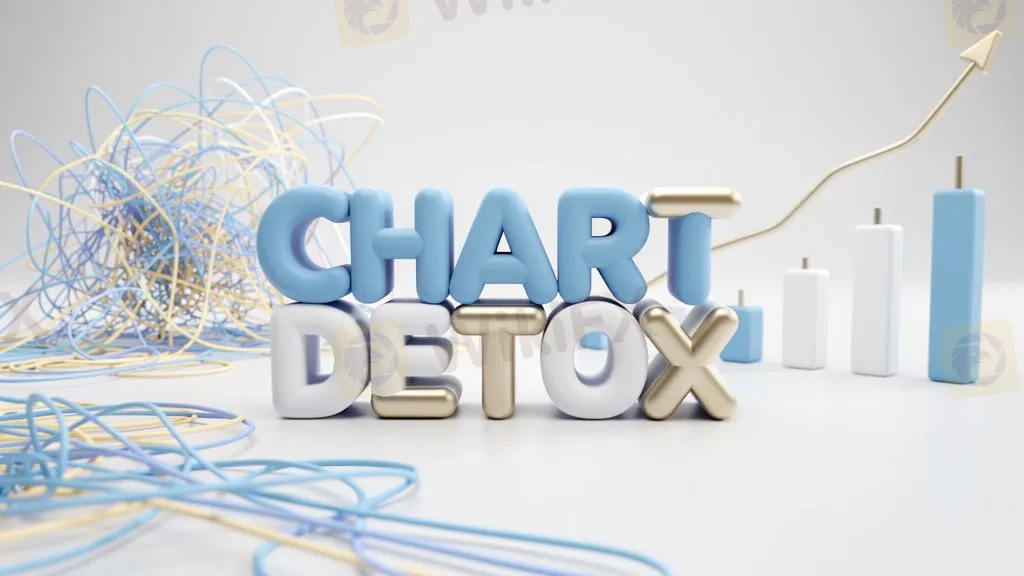
Your chart looks like a neon Christmas tree.
You have the RSI at the bottom, the MACD crossed over, three Moving Averages tangling like spaghetti, and Bollinger Bands squeezing the life out of the price. You can barely see the candlesticks because of all the clutter. And yet, you are still losing trades.
This brings up the golden question every rookie asks me eventually: “Coach, should I just delete everything and trade naked?”
Lets cut through the noise. Here is the truth about trading indicators.
The “Magic Arrow” Myth
First, we need to kill a bad habit. Most of you are treating indicators like a GPS that tells you exactly where to turn. You are looking for a “Green Arrow” to buy or a “Red Arrow” to sell.
If trading were that easy, algorithms would have extracted all the money from the market by now, and there would be nothing left for us.
Indicators are mathematical formulas. That's it. RSI doesn't know that the Federal Reserve just raised interest rates. The MACD doesn't know there is a war starting in Europe. They only know what the price did in the past. They are lagging. Relying 100% on them is like driving your car while staring only in the rearview mirror.
Can You Make Money Trading Naked (Price Action Only)?
Yes. In fact, most professionals eventually strip their charts down.
Think of it this way: Price Action (candlesticks, support, and resistance) is the windshield. It shows you the road right now. Indicators are the dashboard.
You can drive home safely looking only through the windshield. But if you try to drive home looking only at your speedometer (dashboard), you are going to crash.
Does that mean you should throw the dashboard away? No. It helps to know how fast you are going (momentum) or if you are running out of gas (oversold/overbought).
My advice: Don't abandon indicators, but stop letting them drive the car.
The Danger Zone: Scams and “Holy Grails”
Here is where new traders get hurt. It‘s not just about losing a trade; it’s about losing your savings to predators.
Market gurus love to sell you “Secret Indicators” that claim 90% win rates. They show you back-tested data that looks perfect. They promise that if you buy their proprietary tool, you will print money.
Don't buy it.
There is no holy grail. The industry is full of sharks selling snake oil to desperate beginners. And worse, some unregulated brokers will manipulate their software to make your indicators give false signals, forcing you to lose so they can pocket your deposit.
Before you trust a broker or buy into a “guaranteed” system, do your homework. Open the WikiFX app and verify the broker's regulatory license. If the broker has a low score or warnings on WikiFX, it doesn't matter what your RSI says—your money is already gone. Protect your capital first; worry about the strategy second.
How to Fix Your Charts Today
If you are confused and losing money, try this “detox” for one week:
- Delete Everything: Remove every single line and oscillator from your chart.
- Mark the Zones: Look for where price bounced before. Draw a horizontal line. That is Support/Resistance.
- Add One Tool: Add one indicator back. Just one. Maybe a 50-period Moving Average to see the trend direction.
- The Rule: If Price Action says “Buy” (at support) and your Indicator says “Buy” (trend is up), you take the trade. If they disagree, you sit on your hands.
Trading is about confluence—getting different clues to tell the same story.
Stop looking for a magic line to save you. Look at the price. It tells you everything you need to know.
Disclaimer: This article is for educational purposes only and does not constitute financial advice. Trading involves significant risk, including the loss of principal. Always perform your own research before making investment decisions.
Read more
Stop Chasing Green Arrows: Why High Win Rate Strategies Are Bankrupting You
Listen to me closely because what I’m about to tell you might hurt your feelings, but it will save your trading account.
The Copycat Trap: Why You Lose Money Using a "Winning" Strategy
The market is a mirror. If you are disorganized, emotional, and impatient, the charts will reflect that right back at your bank balance. Get your mind right, and the strategy will follow.

Stop Buying the Top: Why You Always Enter at the Worst Time
Trading isn't about predicting the future; it's about waiting for the right odds.

5 Mental Traps That Are Burning Your Trading Account Today
Trading is 10% skill and 90% psychology. You can learn technical analysis in a month, but mastering your own head takes a lifetime.
WikiFX Broker
Latest News
JRJR Review: Why a "Valid" License Can't Hide the Withdrawal Nightmare
WikiFXZarVista Review 2025: A Complete Look at Its High-Risk Profile
WikiFXVoices of the Golden Insight Award Jury | Greg Matwejev, Chief Market Strategist of BCR
WikiFXEC Markets Opens New Marketing Hub in Central Limassol
WikiFXLondon Capital Group – Regulation & Genuine User Reviews
WikiFXWhy Do You Always Lose When Trading?
WikiFXCoinbase Expands Into Stocks and Tokenized Assets
WikiFXTitan Capital Markets: The "Token" Trap Hiding Behind a Forex Mask
WikiFXShould You Delete Every Indicator from Your Charts? Let’s Talk Real Trading
WikiFXIs ZarVista Legit? A Critical Review of Its Licenses and Red Flags
WikiFXRate Calc

