JPMorgan’s MONY Pushes Tokenized Cash Mainstream
Abstract:JPMorgan launches MONY, a blockchain-native money market fund, signaling tokenized finance’s shift into institutional competition.
JPMorgans Landmark Blockchain Move
JPMorgan Chase made headlines by introducing MONY, a tokenized money market fund built directly on Ethereum. The announcement marked a turning point for traditional finance, challenging long-held assumptions that blockchain would never reach core cash products. For years, executives suggested distributed ledgers might streamline payments or settlements but not touch the foundation of cash itself. That belief has now been decisively overturned.
JPMorgan, a $4 trillion financial institution, placed one of the safest and most established financial instruments onto a public blockchain. Tokenization—the process of converting real-world assets such as cash, securities, or property into digital tokens—allows ownership, transfer, and settlement to occur seamlessly on-chain.
Why Tokenized Funds Matter
Supporters argue that blockchain-based money market funds deliver efficiency gains. Settlement can occur nearly in real time rather than waiting until the end of the trading day. On-chain ownership records are programmable, transparent, and auditable. Integration with digital payments becomes easier, enabling cash to move as fluidly as information across networks.
What makes MONY distinctive is its native blockchain design. Unlike tokenized records of off-chain funds, MONYs ownership tokens exist directly on Ethereum. This opens pathways to interoperability with broader digital asset infrastructure, even though access remains tightly controlled for now.
Regulatory Confidence and Institutional Adoption
The timing aligns with regulatory clarity. In the United States, the GENIUS Act has established oversight for stablecoins and tokenized assets, giving banks greater confidence to deploy compliant on-chain products. Institutions that once observed crypto from the sidelines now face a recalibrated risk environment.
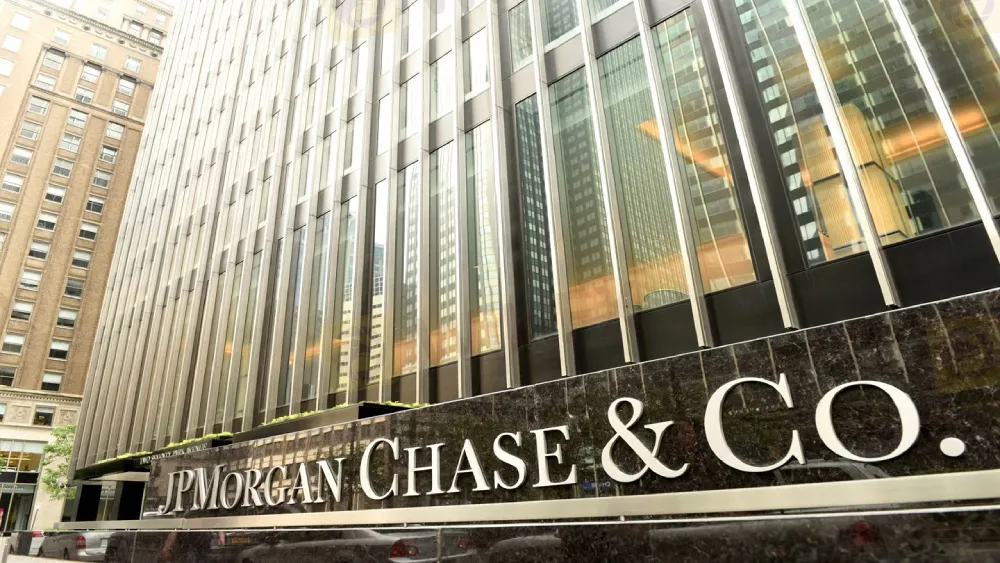
For JPMorgan, MONY signals that tokenized finance is no longer experimental. It is entering the competitive arena of global banking, where compliance frameworks and risk management are prerequisites for scale.
Competing Visions in Tokenized Finance
Goldman Sachs and BNY Mellon
JPMorgan is not alone in pursuing tokenized cash. Goldman Sachs and BNY Mellon previously launched a joint initiative focused on tokenizing ownership records of existing funds. Their approach mirrored traditional assets rather than creating blockchain-native products.
BlackRock, Fidelity, and State Street
BlackRock has already attracted billions into tokenized Treasury offerings, while Fidelity and State Street are exploring similar structures. In Asia, Hong Kong regulators approved tokenized short-term yield products for institutional investors, underscoring global momentum.
Diverging Approaches to Blockchain
These initiatives reveal a divide in philosophy. Some institutions view blockchain as a new operating layer for finance, reshaping infrastructure entirely. Others treat it as a more efficient database that preserves existing control structures. Both camps claim progress, but they are building toward different futures.
Critics highlight that MONY remains inaccessible to retail investors and requires high minimum commitments. Secondary market liquidity is limited, raising concerns that tokenization could reinforce financial gatekeeping rather than dismantle it.
Supporters counter that institutional trust must precede openness. Large capital pools demand compliance, custody, and risk management before broader access. From this perspective, bank-led tokenization is not a betrayal of blockchain principles but a necessary step toward scale.
Strategic Implications for Boards and Investors
The critical question is not whether tokenized money market funds will expand, but how leaders respond. Boards should evaluate how on-chain cash products could reshape treasury operations, settlement risk, and competitive positioning. Ignoring tokenized finance may soon carry as much risk as adopting it prematurely.
For individual investors, access remains limited, yet the signal is clear. Tokenized cash demonstrates how yield and liquidity are likely to evolve—faster settlement, programmable ownership, and greater digital control.
From Experimentation to Competition
The launch of MONY is less about a single product and more about a market signal. Tokenized cash has advanced from pilot projects into direct competition among the worlds largest financial institutions. The debate is no longer about whether tokenized finance will grow, but how quickly it will reshape the systems underpinning everyday money management.

Read more
Is SGFX Legit? A 2026 Deep Dive Investigation
Finding a trustworthy forex and CFD broker can be overwhelming, especially with new platforms constantly appearing. One name that has raised questions from traders is SGFX, also known as Spectra Global. With promises of advanced trading technology and competitive conditions, it might seem appealing. However, the important question remains: Is SGFX legit? This complete 2026 review looks beyond the marketing materials to provide a thorough, fact-based analysis. We will examine SGFX's company structure, check its regulatory claims, review its fee structure, and look at recent user feedback. Our goal is to give you the information needed to make a safe and smart decision about your trading capital.
SGFX Review 2026: A Trader's Warning on Spectra Global
If you are looking for an "SGFX Review" or want to know the "SGFX Pros and Cons," you have found an important resource. You probably want to know, "Is SGFX a safe and trustworthy broker?" Based on our detailed research, the answer is clearly no. While SGFX (also called Spectra Global) looks modern and professional, we have found serious warning signs that every potential investor needs to know about before investing. This review will get straight to the point. We will immediately discuss the main problems that make this broker extremely risky. These include weak and misleading regulation from offshore locations, questionable trading rules designed to get large deposits, and a worrying pattern of serious complaints from users, especially about not being able to withdraw. This article will give you a complete, fact-based analysis of how SGFX operates to help you make a smart and safe decision.
ZFX Review 2026: A Complete Guide to Trading Conditions, Costs & Safety
When traders look for trustworthy brokers in today's busy market, ZFX stands out as a major global company backed by the Zeal Group. The main question for anyone thinking about using them is simple: What is ZFX, and can you trust it? This broker has an interesting but important split personality. It works under a parent company that follows strict UK financial rules, but most regular customers actually sign up through a different offshore company. This creates a gap between how safe people think it is and how much protection traders actually get. The goal of this 2026 review is to give you a complete, fair look at ZFX's safety, costs, and features. We'll give you an honest view of what's good and bad about it, so you can make a smart choice based on facts, not advertising. Our analysis will look at its regulations, trading conditions, fees, and the important risks you need to know about.
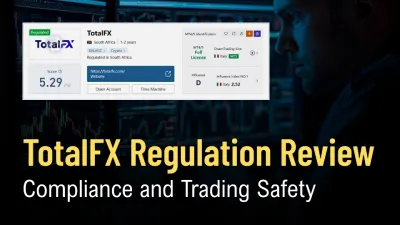
TotalFX Regulation Review: Compliance and Trading Safety
TotalFX review reveals FSCA oversight with license No. 51105, proving compliance and secure trading safety across forex, crypto, and CFDs.
WikiFX Broker
Latest News
Fed’s Paulson Douses Rate Cut Hopes, Strengthening 'Higher for Longer' Case
 WikiFX
Precious Metals Surge: Central Banks and Fed Outlook Fuel 'Bare-Knuckle' Bull Market
WikiFXRIFAN FINANCINDO BERJANGKA Review (2025): Is it Safe or a Scam?
WikiFXIs BotBro Legit or a Scam? 5 Key Questions Answered (2025)
WikiFXWAYONE CAPITAL Review 2025: Institutional Audit & Risk Assessment
WikiFXBull Waves Regulation Uncovered: A Deep Look into Their FSA License and Safety
WikiFXOPEC+ Stands Pat: Output Steady Amidst Geopolitical Storm
WikiFXXTRADE Broker Analysis: Understanding XTRADE Regulation & Verified XTRADE Review
WikiFXOil Markets on Edge: OPEC+ Holds Firm Amid Venezuelan Turmoil
WikiFXGeopolitical Shock: Trump's Venezuela Raid Sparks Oil Volatility & Impeachment Threats
WikiFXRate Calc

