India’s Love Affair with Gold: Investment Demand Rises 40% of Consumption in CY25

Abstract:In the latest news that further establishes India as the destination for gold, the data issued by CareEdge Ratings demonstrated the country’s never-ending love for the yellow metal with a record investment surge of approximately 40% of overall consumption in Calendar Year 2025. This is arguably the highest in recent times. The ETF inflows alone added 37.5 tonnes, surpassing the combined investment of the last ten years. According to the ratings agency, geopolitical uncertainty and record prices made people quickly move away from jewellery.

In the latest news that further establishes India as the destination for gold, the data issued by CareEdge Ratings demonstrated the countrys never-ending love for the yellow metal with a record investment surge of approximately 40% of overall consumption in Calendar Year 2025. This is arguably the highest in recent times. The ETF inflows alone added 37.5 tonnes, surpassing the combined investment of the last ten years. According to the ratings agency, geopolitical uncertainty and record prices made people quickly move away from jewellery.
Investment Demand Continues to Remain Robust at 35-40% in FY27
Investment demand continues to remain strong at 35-40% of overall gold consumption in FY27. Factors contributing to this buoyant demand include continued portfolio diversification, central bank purchase of the yellow metal, and sustained uncertainty around macroeconomics, according to Care Edge Ratings Director Akhil Goyal. Despite intermittent volatility, gold prices are estimated to trade in a higher range throughout 2026.
A Change in India‘s Gold Consumption Mix
India’s gold consumption mix is reshaping fast in the changing market dynamics. The share of jewellery in gold purchases has fallen from the historic 70% to less than 60% in CY 2025. Jewellery demand, on the other hand, grew 10% annually to reach INR 4.8 lakh crore (value terms). However, volume fell 15% as consumers switched to lighter, lower-carat pieces due to high prices.
How Much Revenue Will Retail Jewellers Have in FY26?
Large and listed retail jewellers are estimated to record revenue growth of nearly 35% annual growth in FY26. The projected growth is attributable to store additions and market share gains by virtue of sector formalization, according to another expert at CareEdge Ratings. However, the growth will moderate to 20-25% in FY27. Their gross margins are estimated to grow 170-200 basis points in FY26 on inventory gains from unhedged gold. The margins will, however, fall to 14-14.5% in FY27, according to the rating agencys estimates. EBITDA margins are estimated to range around 6.5-7% in FY27 due to the front-loaded costs from new stores.
Around 62% of the overall retail stores are estimated to have been operating on a franchise model in FY26, a rise of more than 2% from below 60% in FY23.
Silver Gains Traction, But Can‘t Replace Gold
Even though younger buyers and select organized retailers have found interest in silver, the love for gold is not going to be over anytime soon. Despite the price surge and falling currency, India continues to import gold to meet its domestic requirements. According to news reports, India’s projected gold import for FY26 hit a record high of USD 71.98 billion despite lower volumes.
Key Takeaways
Indias gold market is undergoing a clear structural shift, not a decline. While high prices and global uncertainties have nudged consumers away from heavy jewellery toward investment-led buying, overall demand for gold remains resilient. The rising share of ETFs, portfolio diversification, and central bank accumulation show that gold is increasingly being viewed as a strategic financial asset rather than just a cultural purchase.
At the same time, the industry is adapting—retail jewellers are expanding, formalization is improving, and lighter, lower-carat jewellery is gaining traction. Even though silver is attracting some attention, it still cannot challenge gold‘s dominance in India’s psyche or portfolio strategy. Looking ahead, with sustained macroeconomic uncertainty and strong investor interest, gold is expected to retain its premium status, with demand patterns continuing to evolve rather than weaken.
Download the WikiFX app to read in-depth broker exposure reports along with the latest trading strategies & tips.

More insightful articles for you
& Account Freeze Instances



Read more
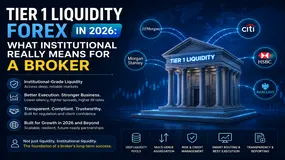
Tier 1 Liquidity Forex in 2026: What Institutional Really Means for a Broker
Choosing a tier 1 liquidity forex is not a search for the lowest displayed spread or the longest provider list. It is a broker decision about pricing integrity, depth, routing, credit, reporting, incident response, and client communication. This 2026 guide explains how an institutional liquidity provider, bank liquidity forex, or interbank liquidity provider arrangement fits into a broker’s execution chain; what to test before onboarding; why a “best tier 1 liquidity forex” claim cannot replace due diligence; and how to compare cost beyond commission. Use the execution-quality scorecard, provider questions, routing scenarios, and 90-day onboarding plan to assess whether a liquidity relationship can support your actual client mix, instruments, risk model, and jurisdiction. The goal is not to make a universal ranking. It is to build evidence that your broker can explain, supervise, reconcile, and recover its execution service when market conditions are difficult.

Forex Liquidity Provider in 2026: Why the Tightest Spread is Not Always the Best Execution Decision
Choosing a forex liquidity provider is not a search for the lowest displayed spread or the longest provider list. It is a broker decision about pricing integrity, depth, routing, credit, reporting, incident response, and client communication. This 2026 guide explains how a forex LP, FX liquidity provider, or liquidity provider forex arrangement fits into a broker’s execution chain; what to test before onboarding; why a “best forex liquidity provider” claim cannot replace due diligence; and how to compare cost beyond commission. Use the execution-quality scorecard, provider questions, routing scenarios, and 90-day onboarding plan to assess whether a liquidity relationship can support your actual client mix, instruments, risk model, and jurisdiction. The goal is not to make a universal ranking. It is to build evidence that your broker can explain, supervise, reconcile, and recover its execution service when market conditions are difficult.

IC Markets Global Review for South Asian Traders: A Global License Isn't the Same as Local Permit
IC Markets Global review for South Asian traders. Learn how to separate the contracting entity, offshore licence, local forex rules, payment route, platform claims, and unverified online withdrawal discussions before opening or funding an account.
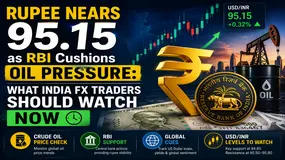
Rupee Nears 95.15 as RBI Cushions Oil Pressure: What India FX Traders Should Watch Now
India's rupee is expected to open near 95.14-95.16 per US dollar after closing at 95.2075 on Friday, while Brent crude was quoted at $84.50 and RBI market presence supported the currency. This report separates a reported market intervention from a fixed exchange-rate target, explains why oil, US employment data and Federal Reserve expectations matter, and gives a practical risk checklist for forex trading India. It also explains why volatility is not a reason to trust unverified online forex trading platforms.
WikiFX Broker
Latest News
Winvest Review: Is Your Deposit Safe?
WikiFXKCB Review: Is Your Deposit Safe?
WikiFXCrypto Revenue Falls in Q2 as Another Platform Moves Into CFDs
WikiFXOcta Review 2026: Severe Withdrawal Complaints and High Risk Signals
WikiFXWhy More Commodity Revenue Doesn't Instantly Strengthen a Currency
WikiFXExness Review for Indian Traders 2026: The RBI Question Comes Before Leverage and Spreads
WikiFXTraze Review: What Traders Should Know Before Depositing
WikiFXMatch-Trade Gives AI Direct Access to Broker Trading APIs
WikiFXWhy Sovereign Debt Can Sink a Currency: The Credit Risk Channel
WikiFXUS July CPI Could Take a Fed Rate Hike Off the Table
WikiFXRate Calc

